Get Full Government Meeting Transcripts, Videos, & Alerts Forever!
Get email alerts on the Medical Residency Expansion topic
No spam. Unsubscribe anytime.
Idaho seeks expanded residency slots, saying training in‑state boosts workforce and immediate patient capacity
Summary
Legislative analysts and medical residency directors told JFAC that state support for graduate medical education increases the number of practicing physicians in Idaho, improves retention and immediately increases clinical capacity across hospitals and clinics; programs asked for additional slots and ongoing funding.
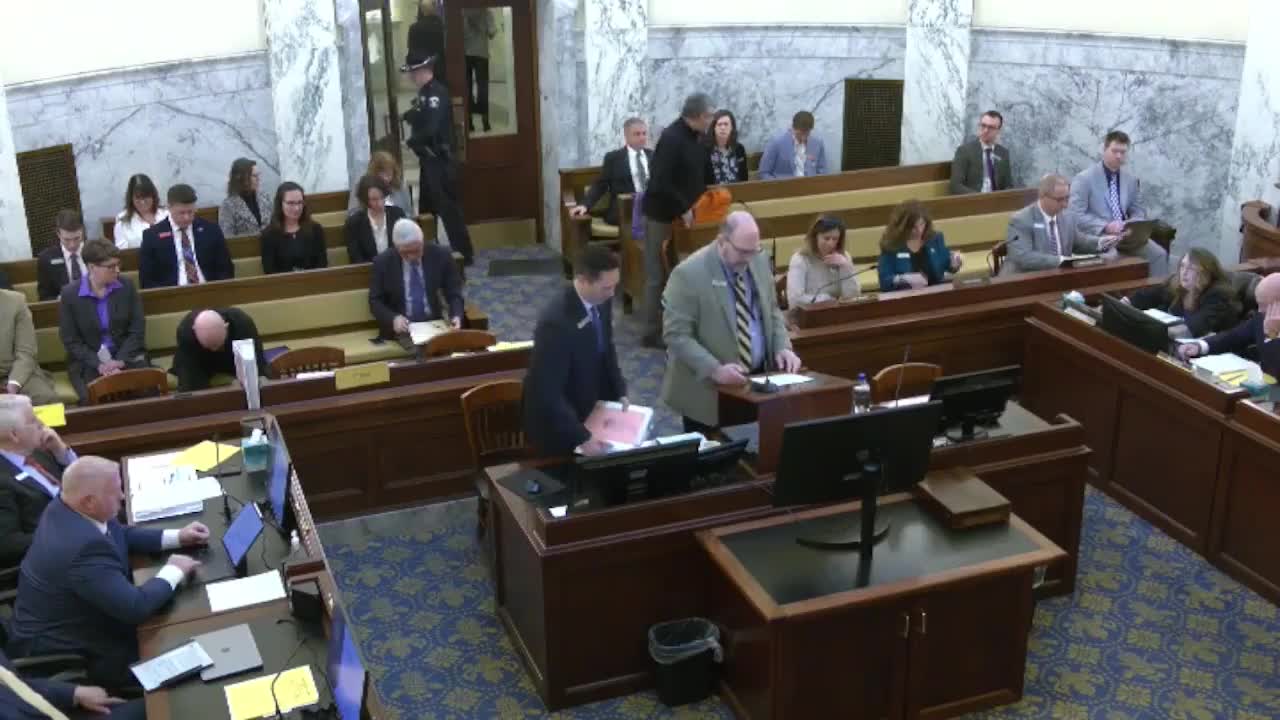
Legislative analysts and multiple Idaho residency program directors told the Joint Finance‑Appropriations Committee during a Jan. 17 hearing that continued state investment in graduate medical education (GME) — family medicine, internal medicine and psychiatry residencies — both increases the long‑term supply of Idaho physicians and immediately expands clinical capacity in hospitals and community clinics.
Kevin Campbell, a Legislative Services Office analyst, reviewed appropriations for Eastern Idaho Medical Residency (EIMR), Boise Internal Medicine and a suite of family medicine residency (FMR) programs across the state and summarized recent appropriations history. "Residents in Eastern Idaho Medical Residency are employees of the medical center," Campbell said, noting the three‑way funding partnerships that typically support residency slots: sponsoring institution, health system and the state.
Why it matters: Idaho remains below the national average in physicians per capita, and residency training is a principal predictor of whether a doctor will remain in the state. The committee heard both retention statistics and testimony that residents also expand immediate access to care while in training.
Key points from presenters and program requests
- Retention: The American Medical Association (2022), cited by legislative staff, found about 55% of graduates from Idaho residencies and fellowships stay in Idaho — a retention rate that places Idaho in the top 10 of states for retention, the analyst said. Separately, division and program presenters emphasized that loan‑repayment recipients in the department’s rural physician incentive program have very high retention: "Almost 91% of the providers that receive these loan repayments stay in the state and practice in the state," Division Administrator Elke Shaw Tullock said. - Costs per resident: Legislative staff reported an updated per‑resident estimated cost of about $210,000 per year (salary, training costs, liability insurance and supervision). Historically, the state has funded roughly one‑third of per‑resident costs in three‑way partnerships with sponsoring institutions and health systems; the state’s third has been approximately $60,000 per resident in earlier years but legislative staff noted that costs have risen. - Eastern Idaho Medical Residency (EIMR): EIMR hosts family medicine, internal medicine and psychiatry training at Eastern Idaho Regional Medical Center. The program reported 56 residents and requested funding in FY 2026 for an additional psychiatric cohort (EIMR requested $240,000 for four psychiatric residents in 2026 to fund the third/fourth‑year steps of a four‑year psychiatry track, per the analyst.) - Boise Internal Medicine: The Boise program reported 41 residents and fellows (including two addiction‑medicine fellows). The program requested $60,000 ongoing for one additional internal medicine resident for FY 2026. - Family Medicine Residency (FMR) system: FMR is a collection of programs (Full Circle Health, Idaho State University programs, Kootenai Clinic and others) totaling roughly 130 residents. FMR requested funding for several new positions, including a St. Alphonsus‑Nampa program request totaling $420,000 ongoing for six residents and one fellowship (materials cited $420,000 for six new residents and one fellowship in recent enhancements).
Clinical capacity and near‑term benefits
Program directors said residents provide immediate clinical care while training. Psychiatrist Matthew Larson told the committee that residents in his psychiatry program see patients daily under supervision and that his program’s presence increases local access: "Even if no one stayed in the state afterwards, you still have 16 additional doctors practicing psychiatry in Idaho Falls and the surrounding areas just from my program," he said.
Residency expansion strategy and comparisons
Residency leaders described the state’s effort as a 10‑year expansion plan begun in 2018. Program directors said Idaho has grown from nine residency programs with about 134 residents to roughly 16 programs and about 262 residents in the years since. Directors described Idaho’s model — a three‑way funding partnership among sponsoring institutions, health systems and the state — as regionally competitive and, they said, a model other states look to emulate.
Immediate openings and readiness to expand
Speakers said some positions are ready to start quickly if funding is available: program directors noted a child‑psychiatry training pathway and additional fellowships that could stand up with timely appropriation and partnership commitments.
Ending
Lawmakers heard broad support for continuing the residency expansion and for pairing state investments with other incentives (loan repayments, scholarship and residency slots) to address shortages in rural and specialty care. Several presenters asked the committee to allow the multi‑year expansion effort to continue so new programs can complete their accreditation and training cycles.