Get Full Government Meeting Transcripts, Videos, & Alerts Forever!
Get email alerts on the Higher Education Community Colleges topic
No spam. Unsubscribe anytime.
College of Eastern Idaho warns capacity constraints are limiting CTE growth; asks for $2 million ongoing from CTE allocation
Summary
College of Eastern Idaho President Laurie Barber told the Joint Finance‑Appropriations Committee that rapid enrollment and employer demand have outpaced campus capacity and staffing; the college requested a $2 million ongoing share of proposed CTE funding and described industry partnerships that expanded enrollment.
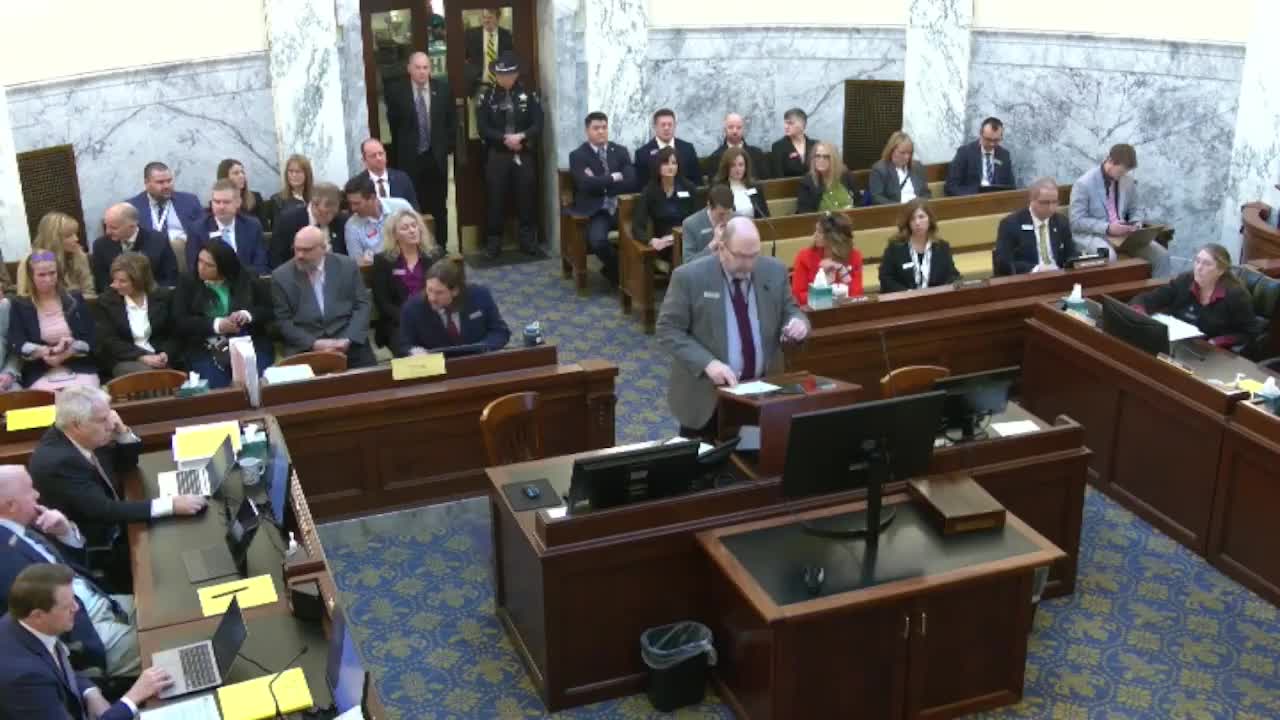
At a Joint Finance‑Appropriations Committee hearing, College of Eastern Idaho President Laurie Barber described rapid institutional growth, CTE wait lists and staffing shortfalls, and she asked committee members to support a portion of the governor's proposed postsecondary funding for community and technical colleges.
Legislative Services Office analyst Kevin Campbell told the committee that CEI (the newest Idaho community college) grew from roughly 700 students when it was formerly Eastern Idaho Technical College to about 3,600 degree‑seeking students and more than 14,000 workforce‑training students. Campbell said the FY 2024 appropriation to CEI was $7,003,700 and that CEI typically spends 100% of its state appropriation.
Barber told legislators that CEI's nursing program expanded from enrolling 35 students in 2017 to a capacity of about 220, and that the college has seen 273% growth in credit‑seeking headcount since 2017. Barber said CEI's workforce training division provided over 14,000 trainings serving 54 local employers in FY 2024 and that the college is ‘‘capacity constrained’’ across classrooms, equipment and staffing.
Barber said fall 2024 data showed about 465 students wanted space in CTE programs but could not be placed; she said the college tries to redirect students into prerequisites or general‑education classes but that a substantial number could not be enrolled in the program of choice. Barber identified the college's primary needs as additional faculty (particularly in science and math to support health programs), modernized equipment for programs such as welding and fabrication, and expanded student support services.
On compensation, Barber said CEI has about 20 full‑time faculty paid below the local K‑12 average (which she cited at roughly $62,000) and that lifting adjunct and full‑time faculty to parity would require roughly $2.26 million (her estimate provided to the committee). She gave an example of losing a graphic designer to local private sector pay that was about $30,000 higher than CEI could match.
Barber described employer partnerships as part of CEI's capacity response. She said the Department of Energy's Idaho National Laboratory (INL) provided instructors that allowed CEI to nearly double cybersecurity enrollment, and that Teton Toyota collaborated on a micro‑credential/apprenticeship‑style program in automotive technology where students work during the day and take didactic classes at CEI in the evening.
Barber asked the committee to support the postsecondary funding package and specifically requested that CEI receive at least $2,000,000 ongoing from the governor's $10 million bucket designated for community and technical college CTE expansion; she said that amount would be ‘‘transformational’’ for CEI's ability to expand program capacity. Campbell and committee members discussed EWA numbers for CEI during the hearing and asked DFM for a spreadsheet of how EWA was applied across institutions.
The committee did not take votes during the CEI presentation. Members asked CEI and LSO for additional details about program‑level capacity and possible use of proposed CTE funds.