Get Full Government Meeting Transcripts, Videos, & Alerts Forever!
Get email alerts on the Higher Education Community Colleges topic
No spam. Unsubscribe anytime.
College of Western Idaho tells JFAC rapid enrollment is straining capacity; EWA cap limits state adjustment
Summary
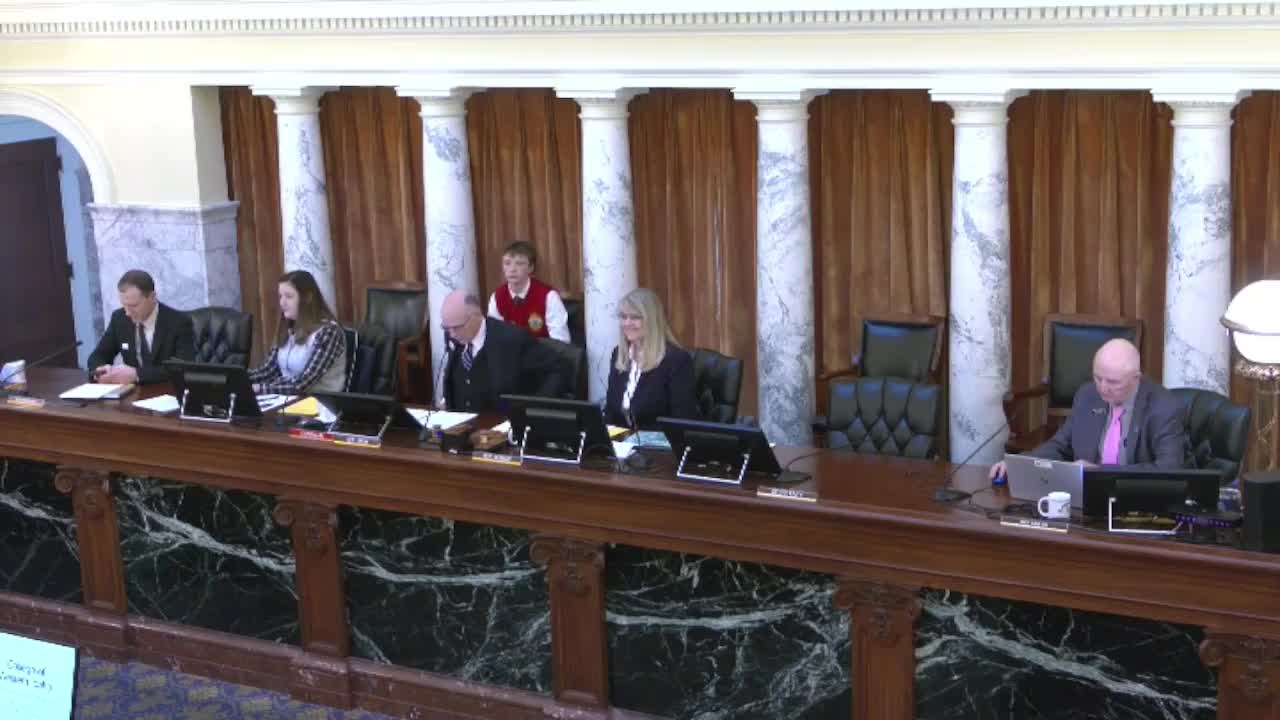
At a Joint Finance‑Appropriations Committee hearing, College of Western Idaho President Gordon Jones and Legislative Services Office analyst Kevin Campbell outlined rapid enrollment growth, program wait lists and how a State Board 3% cap on the enrollment workload adjustment (EWA) has limited the college's state funding increase.
At a Joint Finance‑Appropriations Committee hearing, College of Western Idaho President Gordon Jones and Legislative Services Office analyst Kevin Campbell outlined rapid enrollment growth, program wait lists and how a State Board 3% cap on the enrollment workload adjustment (EWA) has limited the college's state funding increase.
Jones told legislators that CWI's enrollment has grown substantially since the college opened; the Legislative Services Office presentation said CWI had nearly 22,000 for‑credit students and more than 30,000 students served in the 2023–24 academic year, while Jones referred to ‘‘over 31,000 individuals’’ who use CWI services. Campbell told the committee the FY 2024 state appropriation to CWI was $20,816,700 and that the college typically spends 100% of its state appropriation.
The nut of the discussion centered on capacity and the EWA. Campbell outlined five‑year budget history and enhancements, noting average annual base budget growth of 6.6% and that FY 2023 was an outlier. He said enhancements in FY 2024 totaled $1.1 million for increased nursing capacity, STEM student capacity, outreach and additional compensation equity (CEC). For FY 2026, Campbell said CWI requested an ongoing addition of $265,000 in the enrollment workload adjustment.
Jones cautioned that EWA as applied to CWI was smaller than the raw formula output because of a State Board policy that effectively caps year‑over‑year increases at 3% for the college. Jones said the formula would have produced about $493,000 for CWI but the 3% cap limited the amount to $265,000. He also noted that EWA previously produced both additions and reductions in different years and that the treatment of EWA moved between maintenance and enhancements budgets in recent years.
Committee members asked about where growth is occurring and about capacity constraints. Jones described overall academic enrollment growth of about 13% in the year he cited; he said career and technical education (CTE) fields were among the fastest‑growing, dual‑credit enrollment was the highest in the state, and academic transfer enrollment was growing more modestly. Jones said CWI has roughly 1,000 students across all program wait lists and ‘‘almost a hundred’’ students on the nursing waiting list specifically. He identified main capacity constraints as (1) facility space, (2) instructor‑to‑student ratios determined by accrediting standards (notably in nursing), and (3) student support services such as academic advising.
Jones gave examples of how targeted funds support adaptive CTE programming: an electric‑vehicle (EV) technician program that trains on industry vehicles, and new mining technician training tied to expected permit activity in southwest Idaho. He emphasized that CWI operates on a relatively lean budget — he cited total operating dollars in the order of $75 million to educate the college's reported population — and said state investment affects the college's ability to respond quickly to employer needs.
On compensation and tuition, Jones told the committee that many CWI faculty hold master's or terminal degrees but are paid roughly $10,000 to $20,000 less than comparable 4‑year faculty and that community college faculty commonly teach five classes per semester. He said CWI's tuition has been held at $139 per credit hour for eight years and that, adjusted for inflation, the college is cheaper now than when it opened. Jones and committee members discussed the tradeoffs between public investment and student share of tuition.
Committee follow‑ups and next steps: members asked Campbell and CWI for a breakdown of capacity constraints across the three categories (facilities, faculty, student services) to aid committee evaluation of possible budget actions. Campbell said he would provide the requested data. No formal committee votes or other legislative actions occurred during the CWI presentation.