Get Full Government Meeting Transcripts, Videos, & Alerts Forever!
Get email alerts on the Public Health Budget topic
No spam. Unsubscribe anytime.
Idaho public health budget hearing presses for restorations, data modernization and rural physician incentives
Summary
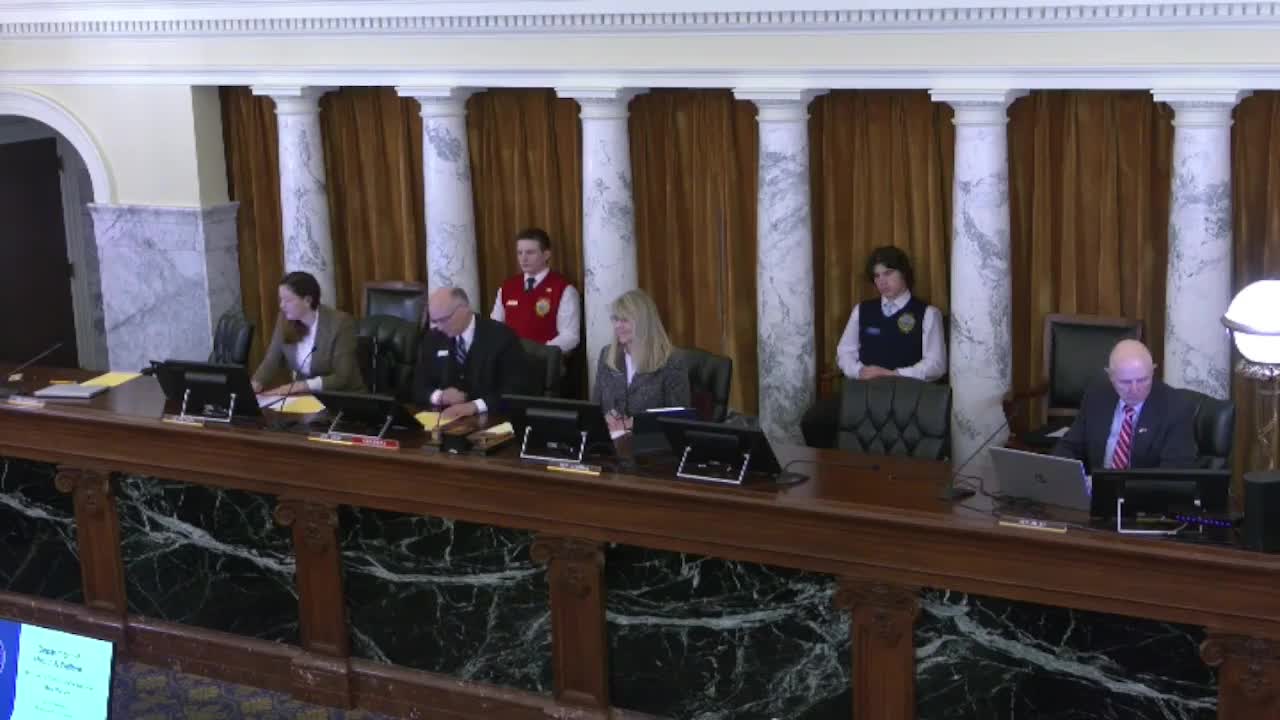
At a Jan. 17 Joint Finance‑Appropriations Committee hearing, the Department of Health and Welfare asked lawmakers to restore multiple public‑health programs moved to one‑time funding last year and to approve one‑time and ongoing enhancements for data modernization, workforce and prevention programs.
At a Jan. 17 Joint Finance‑Appropriations Committee (JFAC) hearing, the Department of Health and Welfare laid out its 2026 budget request for the Division of Public Health Services, asking lawmakers to restore a series of programs moved from ongoing funding to one‑time appropriations and to approve a package of one‑time and ongoing enhancements aimed at workforce, data and service delivery improvements.
The division’s director, Alex Adams, and division administrator, Elke Shaw Tullock, appeared before JFAC to summarize the division’s portfolio — five program areas that include physical health services, emergency medical services (EMS), laboratory services, suicide prevention and the health care policy initiatives program — and to explain requests totaling millions for restorations and modernization. “I would characterize it as a healthy exercise,” Director Alex Adams said of the budgeting changes that pared about 6% from the division’s overall budget year over year.
Why it matters: The public health division runs core state public‑health functions — vital records, disease surveillance, laboratory testing, immunization programs and community grants — that affect how Idaho tracks and responds to outbreaks and how residents access preventive services. Lawmakers pressed agency officials on the structure of the budget, the longevity of federal ARPA and CARES Act funding, whether some services should be moved to other agencies, and the status of data modernization projects.
Major numbers and requests
- Fiscal 2025 base appropriation cited by staff: $164,020,000. The division showed a 5‑year trend in which CARES and ARPA inflows earlier in the decade created a much higher authorized budget in 2021, with expenditures now beginning to align with appropriations. - Division authorized FTE: 256.52, with four vacancies as of Aug. 31, 2024. - Division cost mix noted in the hearing: roughly 50% trustee and benefit payments (T&B), 18.6% personnel (~$27 million) and $46 million in operating expenditures. - One‑time enhancement total listed on agency summary: $8,752,500 (federal funds and ARPA‑related items); governor recommended all of the one‑time requests presented. - Governor’s ongoing recommendation for the division’s enhancements: $21,464,500 (agency request was $20,846,300).
Requested restorations and program highlights
The department proposed restoring multiple programs that had been converted to one‑time funding last year. Among the ongoing restorations and enhancements presented on the record:
- Suicide prevention: $1,807,700 from the general fund and $195,000 federal to support the statutory program created in 2016 that advances the Idaho suicide prevention plan. - Drug overdose prevention: restore four FTE and $2,820,200 ongoing for data‑driven prevention and naloxone training activities. - Refugee health screening: restore 1.5 FTE and $991,000 ongoing to continue medical screening and follow‑up services for new arrivals resettling in Boise and Twin Falls. - Alzheimer’s and dementia coordination: $275,200 ongoing to support the statewide alliance and strategic plan implementation. - Fit and Fall Proof (older adult fall‑prevention program): $140,000 ongoing. - Diabetes, HIV, oral health and hepatitis programs: several restorations (examples from the hearing: $1,063,700 for diabetes efforts; $957,300 for HIV prevention; $379,600 for oral‑health workforce activities; $599,200 for integrated hepatitis surveillance and prevention) to support prevention, surveillance and access in identified shortage areas. - Women, Infants and Children (WIC) and related nutrition grants: one of the larger ongoing restorations cited was $6,944,600 for supplemental nutrition funding that works with WIC services. - TANF (temporary assistance) support: $400,000 ongoing. - Home visiting: $725,900 ongoing (federal funds) to expand voluntary home‑visiting services to counties identified by a needs assessment. - Immunization assessment: the department’s slides listed a larger fund figure and also requested $2,500,000 ongoing from dedicated funds to support the Idaho immunization program; the materials noted the assessment/fund at an increased level versus the last increase in 2014.
One‑time and data modernization items
Agency staff described multiple one‑time data modernization projects funded by federal epidemiology and laboratory capacity grants and public‑health infrastructure grants. Items called out include modernizing vital‑records systems (birth and stillbirth registration and data exchange to the CDC’s National Center for Health Statistics), WIC system upgrades, public‑health data‑processing improvements and a multi‑year communicable‑disease prevention grant that would support limited‑service positions.
Governance, agency placement and program alignment questions
Several committee members asked whether certain programs would be better housed in other agencies. Representative Scott named the example of Project ECHO funding, which received a $200,000 base appropriation previously; Director Adams said he has sought to reduce pass‑through grants that leave the department with limited control and suggested that university programs should be budgeted within their sponsoring institutions. “A lot of what I’ve been trying to do throughout these budgets is minimize the pass‑through nature of my budget,” Adams said.
Senators pressed the department on whether functions such as preventive programs (e.g., elements tied to the aging commission or an Office of Drug Policy) might be better aligned elsewhere. Adams said the department is open to discussing transfers where mission alignment makes sense, but restored programs were requested in their current division pending those conversations.
Accreditation and DEI concerns
A committee member raised questions about the Office of Accreditation and Planning and cited concerns about diversity, equity and inclusion (DEI) language in accreditation standards. Director Adams told the committee the department has pursued national public‑health accreditation since 2012 and said the department added internal review questions — including whether programs comport with “Idaho values, specifically family values” — before moving grants or communications forward.
Federal funding risk and refugees
Committee members asked about federal funding interruptions. Adams said that an earlier federal funding pause and subsequent injunction had been rescinded but that some areas (for example, refugee resettlement work) may see renewed discussion. He characterized the department’s response as “TBD” on impacts and advised that conversations about specific federal grants will continue.
What the hearing produced
No formal committee votes were recorded on the public‑health items during the hearing transcript reviewed. JFAC was noted to have passed a technical correction on a cancer data‑registry supplemental on Jan. 17; that action was described by staff as a prior JFAC action.
Ending
Department staff encouraged legislators to follow up with analysts for detail on specific line items, and the department said it would provide supplemental materials on progress for data‑modernization projects. Several lawmakers emphasized they will continue working outside the hearing to reconcile ongoing versus one‑time designations and to evaluate where programs fit best across state government.