Get Full Government Meeting Transcripts, Videos, & Alerts Forever!
Get email alerts on the Breast Cancer Screening topic
No spam. Unsubscribe anytime.
Senate committee forwards bill to require insurers to cover supplemental breast screening for high-risk Idahoans
Summary
The Senate Health and Welfare Committee voted to send House Bill 134 to the Senate floor with a do-pass recommendation after testimony that private insurers should cover supplemental breast imaging (MRI, contrast mammography or ultrasound) for people clinically identified as high risk.
The Senate Health and Welfare Committee voted to send House Bill 134 to the Senate floor with a do-pass recommendation after hearing testimony that private insurers should cover supplemental breast imaging — including MRI, contrast-enhanced mammography or whole-breast ultrasound — for people clinically identified as high risk for breast cancer.
The bill would require health insurance plans regulated by the state, excluding Medicaid and self-insured plans outside state regulation, to cover supplemental screening for patients who meet specified clinical criteria, such as carrying a BRCA1 or BRCA2 mutation, prior chest radiation, or extremely dense breast tissue.
Proponents framed the measure as targeted and fiscally prudent. "This bill is about aligning existing benefits," Representative Brooke Green (D-18) told the committee, and she said the measure “ensures payment parity” for supplemental imaging when clinically appropriate. Representative Gayann Healy (R-15), a co-sponsor, said existing coverage often applies to diagnostic testing but those services fall behind a patient’s deductible; the bill would move qualifying supplemental imaging into a preventive category and reduce out-of-pocket barriers.
Medical witnesses told the committee that adjunct imaging substantially increases cancer detection among patients with dense tissue or other high-risk features. "Mammography alone detects about 70 to 80 percent of breast cancers," Dr. Barbara White, a fellowship-trained breast radiologist in Meridian, said. "Adjunct screening increases the detection to 95 percent." Dr. Aime Smith, a board-certified breast surgeon who runs a hereditary cancer-risk clinic, and Dr. Rhiannon Menon, a breast surgeon at St. Luke's, described seeing high-risk patients who cannot afford supplemental imaging.
Witnesses and sponsors gave several cost examples during testimony. Dr. Menon said diagnostic mammography can require about $800 out of pocket and an MRI about $3,000 out of pocket for patients paying without coverage. Representatives cited a fiscal-note range of about $300,000 to $600,000 to the state plan, while reporting that regents’ calculations put the state-plan cost in the $36,000 to $72,000 range. Representative Green and other witnesses argued early detection could avert substantially higher treatment costs; Green said the cost of her own mastectomy exceeded $100,000.
Committee members pressed sponsors on why insurers do not already cover the supplemental tests if they reduce long-term costs. Representative Green and the doctors said insurers often provide diagnostic coverage that applies toward deductibles; patients may decline testing because of the out-of-pocket cost. Sponsors said they met with payers during drafting and that payers stated a neutral position on the bill.
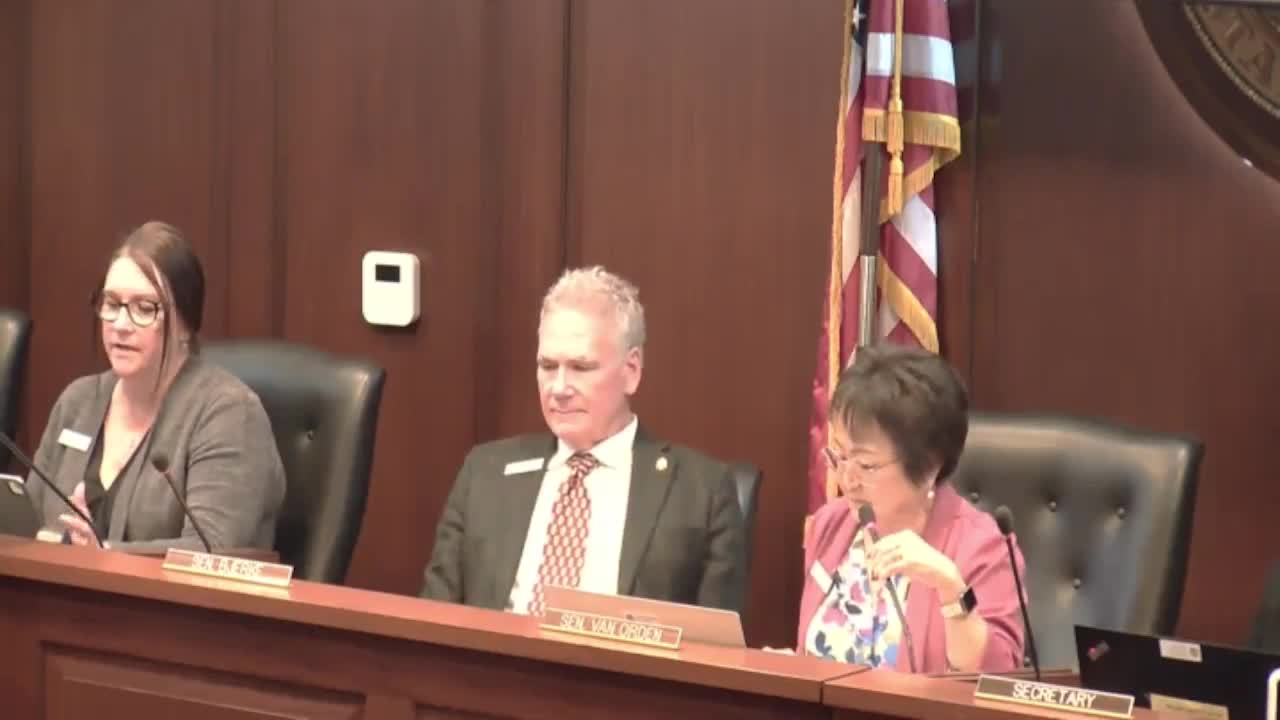
After roughly an hour of testimony and questions from senators including Shippey, Wintrow and others, Senator Lenny moved and Senator Kaiser seconded a motion to send HB 134 to the floor with a do-pass recommendation. The committee approved the motion by voice vote; no opposition was recorded on the floor of the committee.
Votes at a glance: House Bill 134 — Motion to send to the Senate floor with a do-pass recommendation; moved by Senator Lenny, seconded by Senator Kaiser; approved by voice vote (no opposition recorded).