Get Full Government Meeting Transcripts, Videos, & Alerts Forever!
Get email alerts on the Breast Cancer Screening topic
No spam. Unsubscribe anytime.
Senate committee sends bill to floor to require insurers cover supplemental breast imaging for high‑risk patients
Summary
The Idaho Senate Health and Welfare Committee voted to send House Bill 134 to the Senate floor with a do‑pass recommendation after hearing testimony that supplemental breast imaging (MRI, contrast mammography or ultrasound) can detect cancers mammograms may miss for people at high risk.
The Idaho Senate Health and Welfare Committee voted to send House Bill 134 to the Senate floor with a do‑pass recommendation after hearing testimony that supplemental breast imaging can detect cancers that mammograms may miss for people identified as high risk.
Representative Brooke Green of District 18, one of the bill sponsors, told the committee the measure would require private health plans — excluding Medicaid and certain self‑insured plans — to cover supplemental breast screening, including MRI, contrast‑enhanced mammography or ultrasound, for people with clinical risk factors such as BRCA1 or BRCA2 mutations, prior radiation to the chest or extremely dense breast tissue. "This bill is about aligning existing benefits," Green said. "This bill also corrects inconsistencies. And lastly, this bill provides and ensures payment parity."
Representative Healy of District 15, a co-sponsor, said insurance in practice sometimes covers the tests but applies them to a deductible, which can leave patients facing large out‑of‑pocket charges. "What we're asking is for this to become a screening," Healy said, explaining the sponsors want the supplemental imaging categorized as preventive for people who meet the bill's clinical criteria.
Three clinicians who testified before the committee described clinical and financial consequences they associate with gaps in access. Dr. Barbara White, a fellowship‑trained breast radiologist who practices in Meridian, said mammography detects about 70 to 80 percent of breast cancers and that adding adjunct screening can raise detection to about 95 percent. "Every day, women are forced to turn down adjunct screening because of the out‑of‑pocket cost," White said.
Dr. Aime Smith, a board‑certified breast cancer surgeon who runs a hereditary cancer‑risk clinic, said about 6 to 10 percent of breast‑cancer patients have hereditary risk and that targeted supplemental screening is most valuable when limited to clearly defined high‑risk groups. "I would not want to do this supplemental imaging for somebody at average risk," Smith testified, describing the importance of stratifying candidates to limit unnecessary follow‑up from false positives.
Dr. Rhiannon Menon, a breast surgeon who practices in the Treasure Valley and at St. Luke's, said diagnostic mammograms can run roughly $800 out of pocket and MRIs about $3,000 out of pocket for patients who lack coverage for supplemental imaging. Menon said many patients she recommends for high‑risk screening cannot afford it. "In my clinic, just about every single day, I see a woman and I say, 'I've ordered your high‑risk screening,' and they say it's not something I can afford," she said.
The bill's fiscal estimates were discussed during testimony. Representative Green and other witnesses said a fiscal note presented to the committee estimated state costs between about $300,000 and $600,000, but that regents had run alternative numbers estimating the state plan cost at roughly $36,000 to $72,000. Green and supporters argued that early detection could avert much higher downstream treatment costs: "My mastectomy this past January exceeded $100,000," Green said, describing personal experience with treatment costs.
Senators asked how the change would be implemented and why insurers had not already adopted broader coverage if early detection reduces costs. Senator Shippey pressed on who would bear costs; Green replied the proposal is a mandate on private insurers and said payers had been brought to the table and were neutral on the bill. Senator Wintrow asked whether clinicians would need to document clinical evaluation or a referral to qualify patients for supplemental imaging; Green and clinicians said the bill targets those who meet specific clinical criteria and that screening would generally follow a clinical assessment or referral.
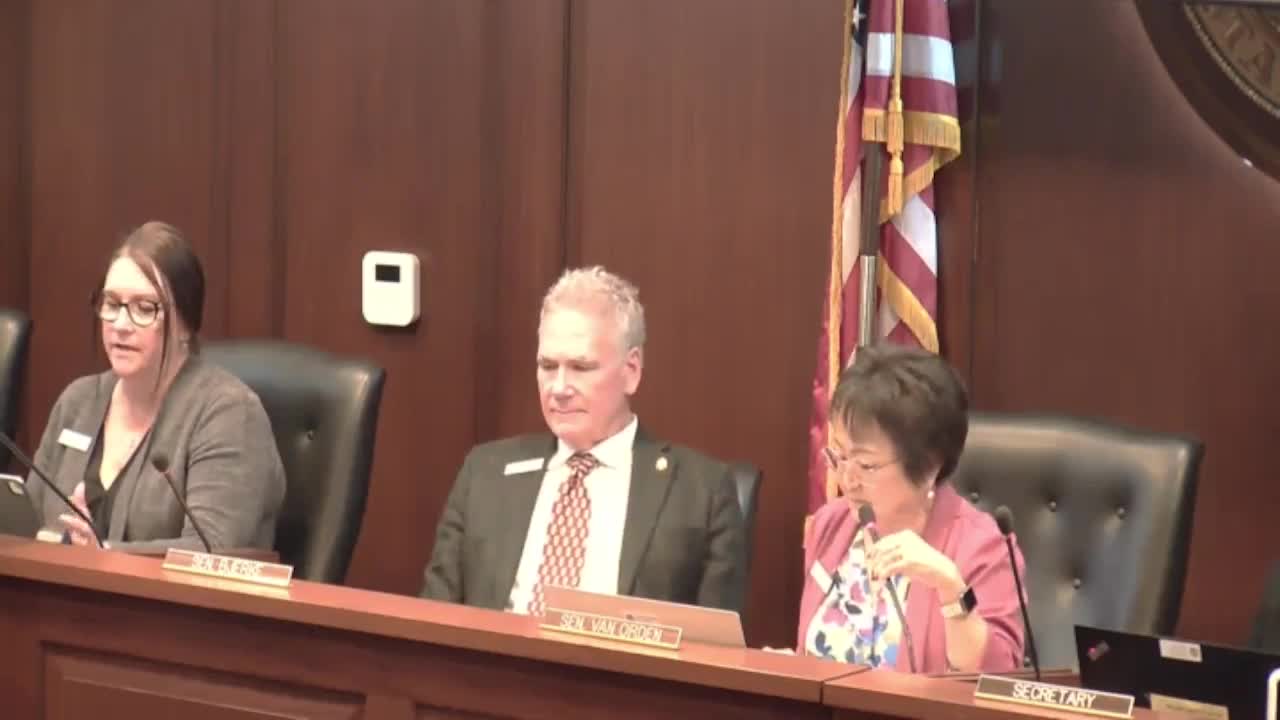
After testimony and questions, Senator Lenny moved and Senator Keizer seconded to send House Bill 134 to the Senate floor with a do‑pass recommendation. The committee approved the motion by voice vote; no opposition was recorded during the session.
The bill's sponsors and clinical witnesses framed the measure as narrowly targeted to high‑risk patients rather than a broad mandate for all screening. Supporters emphasized both clinical benefit and potential long‑term savings if cancers are detected earlier and require less aggressive treatment. The committee did not take a roll‑call vote; proponents said insurers had been engaged during bill drafting and that the bill included specific qualifiers to limit eligibility.