Get Full Government Meeting Transcripts, Videos, & Alerts Forever!
Get email alerts on the Health Workforce Delegation Medical Assistants topic
No spam. Unsubscribe anytime.
Committee approves bill letting nurses delegate nonclinical tasks to certified medical assistants
Summary
House Bill 327 would allow nurses licensed under the nursing chapter to delegate nonclinical tasks to certified medical assistants; the committee voted to send the bill to the floor with a due-pass recommendation after testimony and clarification about scope and training requirements.
Representative Healy introduced House Bill 327 as a measure to clarify that advanced practice registered nurses and other nurses licensed under the nursing chapter may delegate nonclinical tasks to certified medical assistants. “This bill does simply put it into code that a nurse can oversee a medical assistant in this setting,” Representative Healy said, adding that medical assistants are distinct from CNAs, LPNs and RNs and historically were supervised within physician-led offices.
Healy told the committee that the change is intended to reflect modern clinic staffing, where advanced practice nurses often manage patient care and medical assistants perform routine tasks. “They can go in and they can obtain medical information… they can obtain labs or they can obtain vital signs,” Healy said. “But they are not making clinical judgment based off of that.” The bill would allow delegation where tasks do not involve the exercise of independent clinical judgment and where the delegating nurse maintains appropriate supervision.
Senator Blaylock said delegation is important for staffing and asked why the change needs statute-level language; Healy replied that medical assistants are not currently specified in the nursing code (chapter 54) or IDAPA nursing rules and therefore lack a clear statutory place for delegation. Healy noted the bill intentionally leaves task lists vague to avoid overriding clinics that have already defined robust delegation practices, while enabling smaller organizations to use medical assistants appropriately.
Robert Vandermeer, who identified himself to the committee as a supporter, testified in favor and described clinically oriented scenarios in which nurses need to delegate routine tasks to medical assistants when physicians are not present. “The nurse could then say I'm delegating this task to a medical assistant… nurses delegate to nursing assistants; physicians delegate to medical assistants,” Vandermeer said, supporting the bill as reflecting modern staffing patterns in small clinics.
Committee members asked for and received clarification that the bill’s language requires formal training and certification. Representative Healy pointed to language in the bill that duties must be ones “that an individual has received formal training to perform and that individual is certified to perform by a national organization acceptable to the board.” He said that would prevent unqualified staff from being treated as medical assistants unless they obtain appropriate certification.
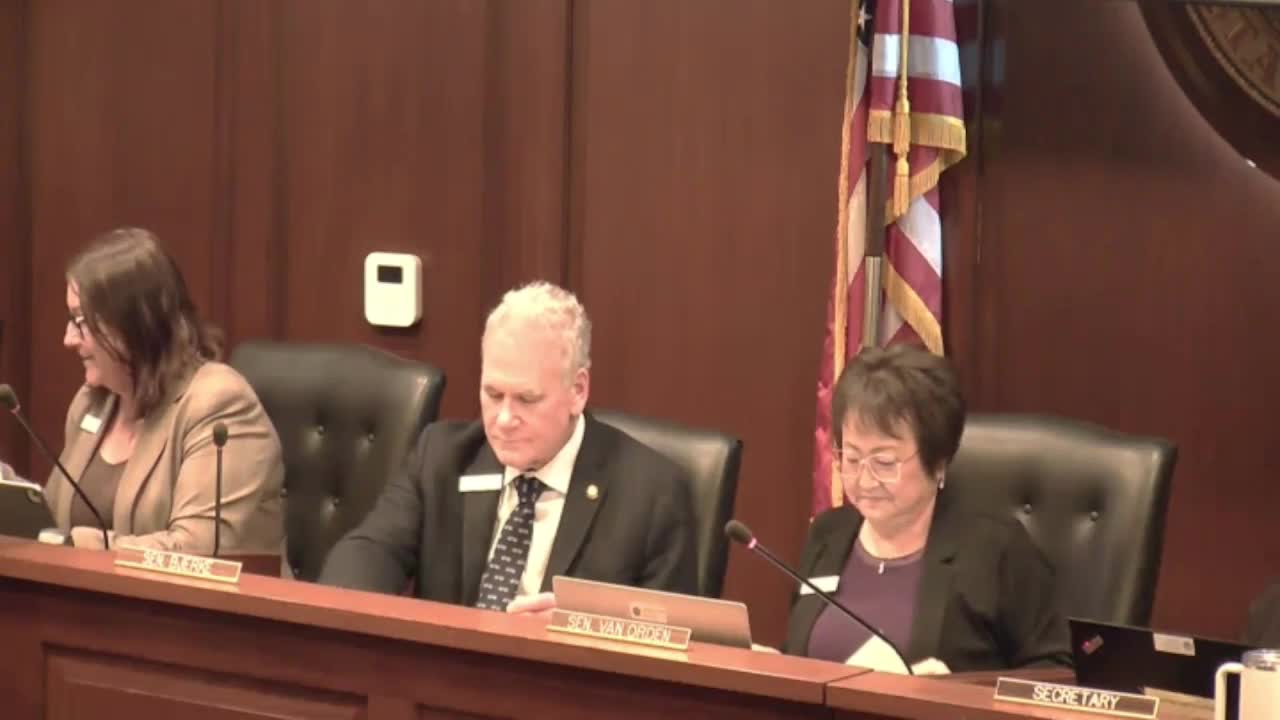
Senator Keiser moved to send House Bill 327 to the floor with a due-pass recommendation; Senator Blaylock seconded. The committee approved the motion by voice vote with no recorded nays. The bill now moves to the full Senate for consideration.