Get Full Government Meeting Transcripts, Videos, & Alerts Forever!
Get email alerts on the Appropriations Law topic
No spam. Unsubscribe anytime.
Legislative counsel outlines Idaho's 'power of the purse,' appropriation rules and constitutional limits
Summary
Legislative legal counsel reviewed constitutional and statutory authorities governing appropriations, item veto constraints, and the legal effect of conditions on appropriations.
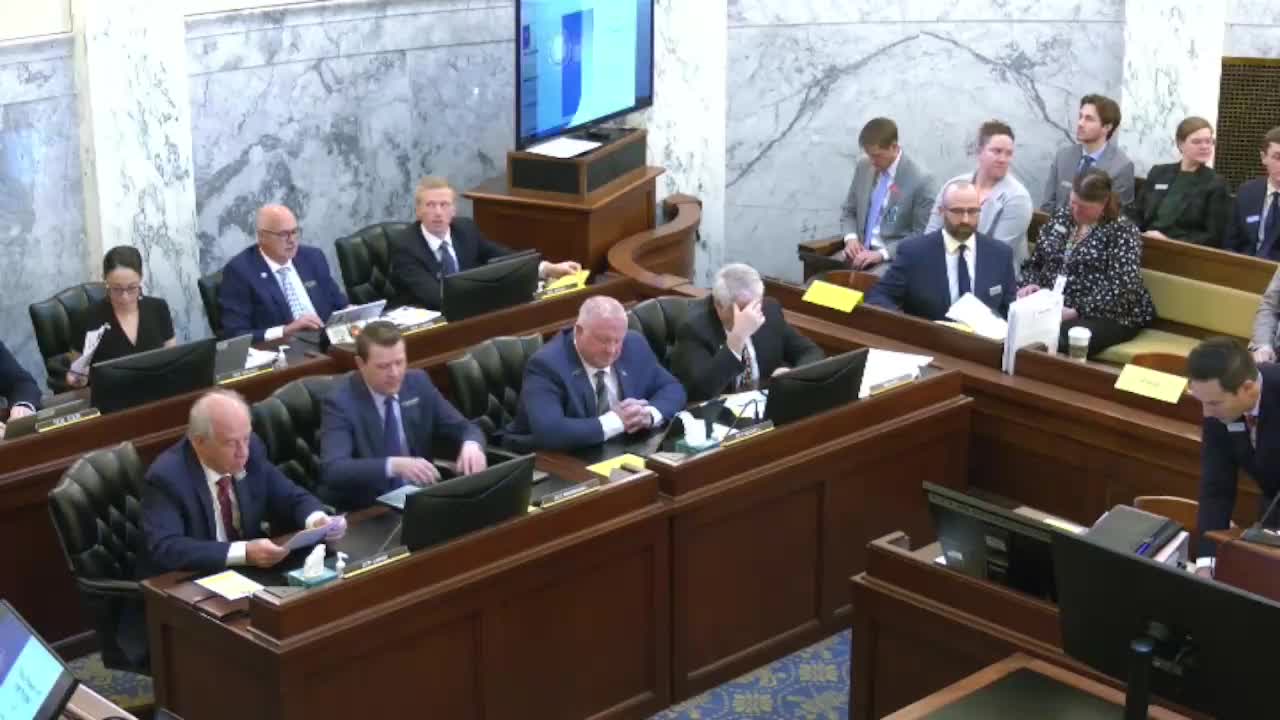
Elizabeth Bowen, legislative legal counsel at the Legislative Services Office, briefed the committee on the constitutional and statutory foundations of appropriation power and practical limits the legislature must respect when writing appropriation bills.
Bowen traced the legislature's spending authority to the state constitution and summarized key constraints: money can be withdrawn from the state treasury only "pursuant to an appropriation made by law" (Idaho Constitution, Article 7, Section 13). She told the committee the legislature's appropriation power is "plenary" within constitutional limits and quoted case law saying, in effect, "the legislature has absolute control over the finances of the state."
She reviewed several constitutional and statutory checks on appropriation drafting and execution: the balanced‑budget rule (Article 7, Section 11); item veto rules and their limits (Article 4, Section 11 — the governor may veto dollar amounts but not conditions attached to appropriations); the prohibition on sectarian appropriations (Article 9, Section 5); and bill‑drafting requirements such as unity of subject and the enacting clause.
Bowen explained how appropriation bills often include conditions, limitations and restrictions that direct how agencies may spend appropriated money and that such conditions are legally binding. She cited case law (Santa Rosa v. Andress, 1970s era decision referenced during the briefing) holding that a governor may not veto a condition attached to an appropriation; the court explained a condition is a statutory direction tied to the appropriation and must be observed.
Bowen also summarized other budget statutes and JFAC's statutory duties (67‑4‑35 et seq.), including the committee's authority to review budgets, conduct hearings, examine state records and, where necessary, issue subpoenas. She said appropriation bills are statute of equal standing to other laws and noted programs and agencies must follow account‑category rules: appropriations are grouped as personnel, operating, capital outlay and trustee/benefit payments and transfers among those categories generally require legislative action when material.
Why it matters: constitutional and statutory rules shape how the committee drafts appropriation language, the permissible scope of conditions, and the relationship between legislative intent and executive branch execution.
Follow up: Bowen stood for questions and explained that the committee's decisions on conditions, limitations and restrictions are legally enforceable and must be drafted to meet constitutional requirements; committee members raised how the statutes map to JFAC practice. No votes were held during the presentation.