Get Full Government Meeting Transcripts, Videos, & Alerts Forever!
Get email alerts on the Public School Budgeting topic
No spam. Unsubscribe anytime.
Idaho lawmakers review public school budget as attendance-based counts reduce funded support units
Summary
Legislative analysts and the state superintendent reviewed the 2026 public school support budget, explaining funding drivers, a drop in funded support units tied to Idaho's attendance counting rules, and how one‑time federal dollars and compensation changes have affected distributions.
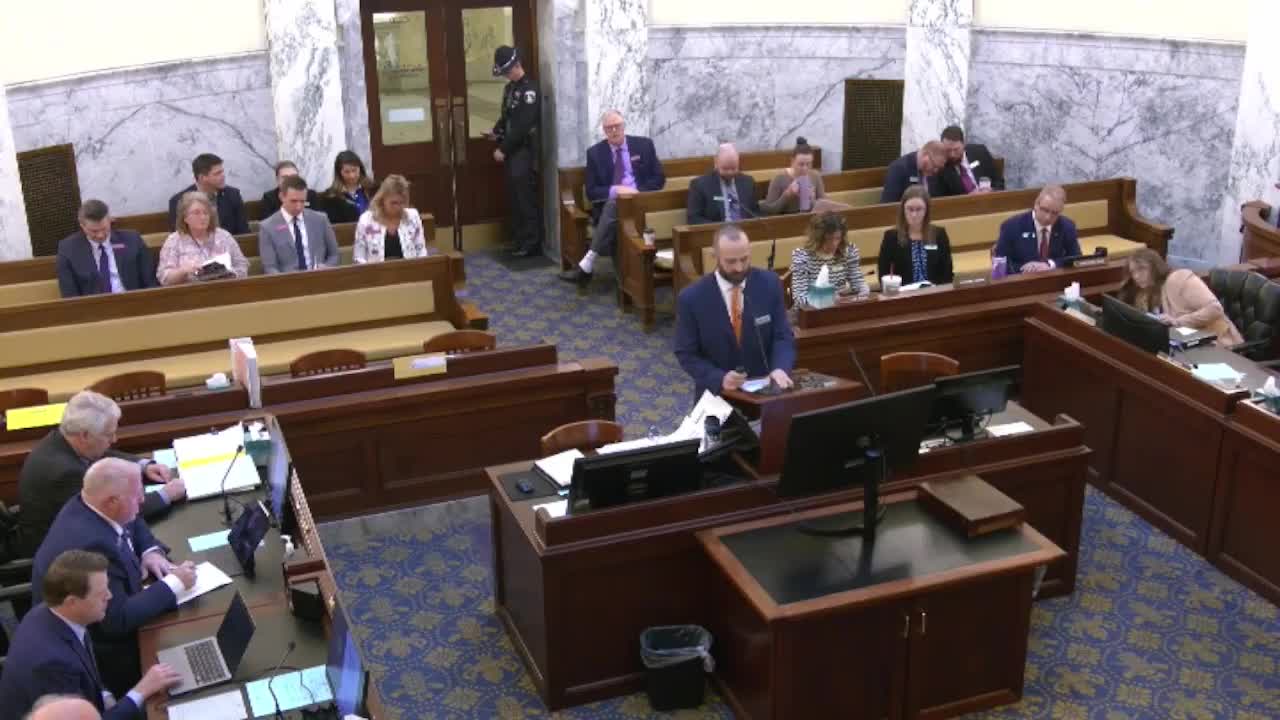
Jared Tetrault, deputy division manager for the Legislative Services Office Budget and Policy Analysis Division, told the Joint Finance‑Appropriations Committee on March 4 that the state’s public school support budget is driven by statutory formulas, salary and benefit apportionments and changing student counts. The governor’s recommended general‑fund baseline is roughly $2.7 billion, with about $277 million in dedicated funds and approximately $260.6 million in federal grants in the current budget cycle.
The update matters because Idaho distributes most K‑12 funding by “support units,” a statutory construct that converts student counts into staff‑funding equivalents. "This is how the majority of funds are distributed in the public school system," Tetrault said. He told the committee that recent changes in how the state counts students —back to attendance rather than enrollment—have reduced funded support units by roughly 200, producing line‑item decreases in several divisions even where per‑teacher dollars rose because of placement on the career ladder.
Why it matters: Idaho law requires distributions to follow formulas in Title 33 and the state Constitution’s mandate to maintain a uniform public‑school system. Changes in attendance rates —including a post‑COVID drop in average daily attendance relative to enrollment— directly affect how many support units the state funds and thus how general‑fund dollars flow to districts and charters.
Key figures and mechanics: Tetrault summarized the four principal fund sources (general, dedicated, endowment and federal) and the program boxes on the committee’s “big sheet.” He said the average value per support unit is about $147,000 and showed examples where a 200‑unit reduction produced a roughly $15.7 million decrease for teachers counterbalanced by $17.3 million for teacher career‑ladder movement, yielding a modest net change. He also explained the Public Education Stabilization Fund (PSIF), which reconciles appropriations and distributions by allowing withdrawals when appropriations fall short and deposits when appropriations exceed distributions.
Committee members pressed on several topics during the presentation. Senator Ward Engleking asked why fewer support units were funded despite similar enrollment; Tetrault replied that Idaho law requires funding on average daily attendance and that post‑COVID attendance percentages remain below pre‑pandemic levels. Senators and representatives also asked about school health‑insurance funding, local levy shares, and the composition and uses of the House Bill 292 (school district facilities) fund.
Budget context and one‑time federal dollars: Tetrault and Superintendent Debbie Critchfield (State Superintendent of Public Instruction) told the panel that removal of COVID‑era ARPA/ESSER one‑time funds and changes in support‑unit counts explain much recent year‑to‑year volatility. Critchfield said districts used a variety of approaches with ESSER funds and that the U.S. Department of Education flagged potential extensions the state did not request. Committee members were told that some districts used one‑time federal money for personnel; the department sent guidance urging districts to plan for the funds’ end.
What was not decided: The hearing was informational; no formal committee motions or votes were recorded on the public school support appropriation during this session. Several statutory changes or appropriations (for a weighted student funding formula, transportation formula, and a special needs student fund) were described as pending separate legislation and subject to actions in their germane committees.
Looking ahead: Staff promised follow‑up detail on items requested by members, including a district‑by‑district breakout of facility fund distributions and more precise counts of employees covered by state health‑insurance allocations. The committee reserved policy action for later hearings and bill votes.