Get Full Government Meeting Transcripts, Videos, & Alerts Forever!
Get email alerts on the Crna Scope Liability topic
No spam. Unsubscribe anytime.
Committee advances bill to codify CRNA scope and liability protections
Summary
The Senate Health and Welfare Committee recommended sending House Bill 289 to the floor after testimony from certified registered nurse anesthetists that the bill would reaffirm autonomous CRNA practice, clarify scope of practice in statute and reduce perceived liability barriers for surgeons and facilities in rural Idaho.
The Senate Health and Welfare Committee voted to send House Bill 289 to the Senate floor with a "do pass" recommendation after testimony from certified registered nurse anesthetists (CRNAs) and program leaders who said the bill would codify CRNAs’ independent practice and clarify liability protections for collaborating physicians and facilities.
Senator Carl Bjerke (Legislative District 5) presented the bill as a clarification of scope-of-practice responsibilities and liability protections for CRNAs. He said CRNAs deliver anesthesia in every setting and are often the sole anesthesia providers in rural counties. The measure would put into statute the autonomous role CRNAs currently exercise in Idaho and would delineate roles to reduce extraneous liability for surgeons and facilities when a CRNA provides anesthesia.
Maria Conan, identified in testimony as president of the Idaho Association of Nurse Anesthesiology and a practicing CRNA, said CRNAs are held to the same professional standards as other anesthesia providers, are required to have critical care experience before anesthesia education, and must become board certified after graduation. Conan told the committee that codifying the current practice model and liability delineation helps keep insurance costs down, reduces potential anti-competitive barriers and improves access to care across the state.
Shad Westover, a CRNA and the initial program director for Idaho State University's upcoming doctor of nurse anesthesia practice program, said rigorous training and clinical prerequisites prepare CRNAs for a full scope of practice and that rural hospitals rely on CRNAs to provide care at lower cost while maintaining quality.
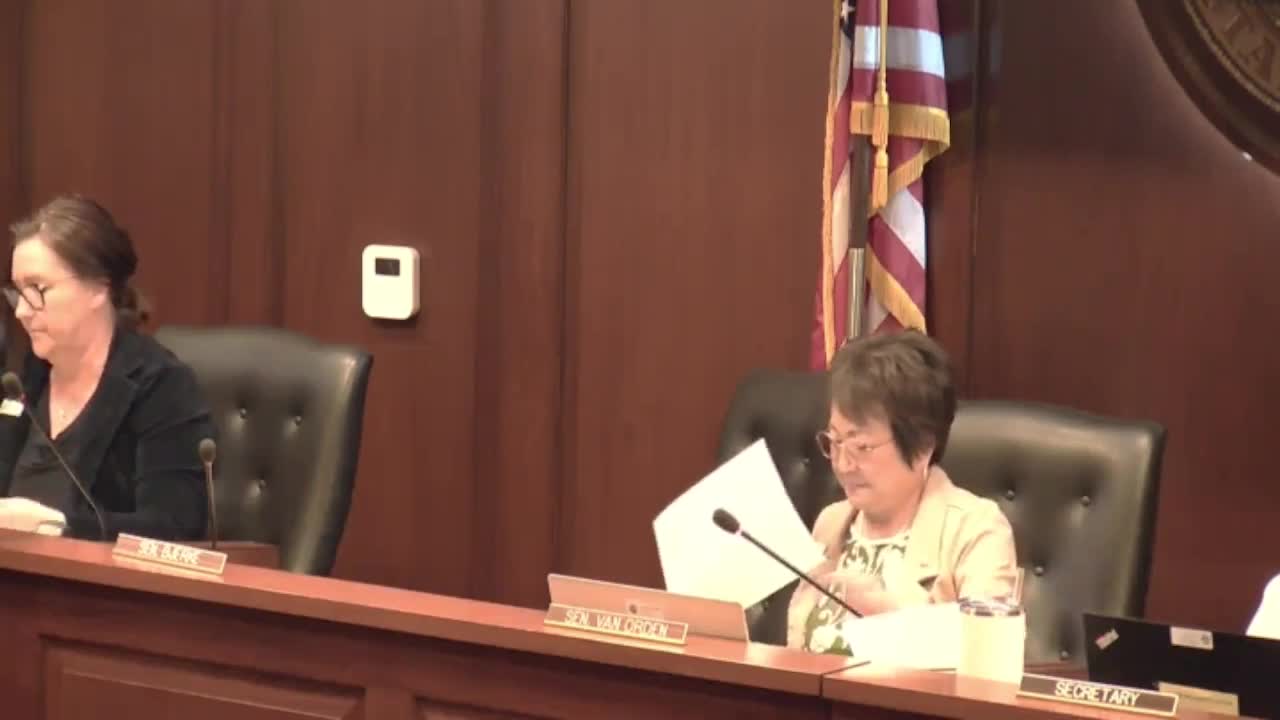
Committee members had no substantive opposition in the hearing. Senator Harris moved to send House Bill 289 to the floor with a due-pass recommendation; the motion was seconded, and the committee recorded an affirmative voice vote.
Votes at a glance House Bill 289 — Motion to send to the Senate floor with a due-pass recommendation (moved by Senator Harris; seconded by Senator Blaylock). Committee voice vote: motion approved.