Get Full Government Meeting Transcripts, Videos, & Alerts Forever!
Get email alerts on the Education Funding topic
No spam. Unsubscribe anytime.
House education chair urges continued investment, warns rural schools face greatest risk
Summary
Rep. Doug Pickett told JFAC that Idaho has made large gains in K-12 funding and teacher pay but warned rural districts remain at risk and outlined specific unmet facility and special-education funding gaps.
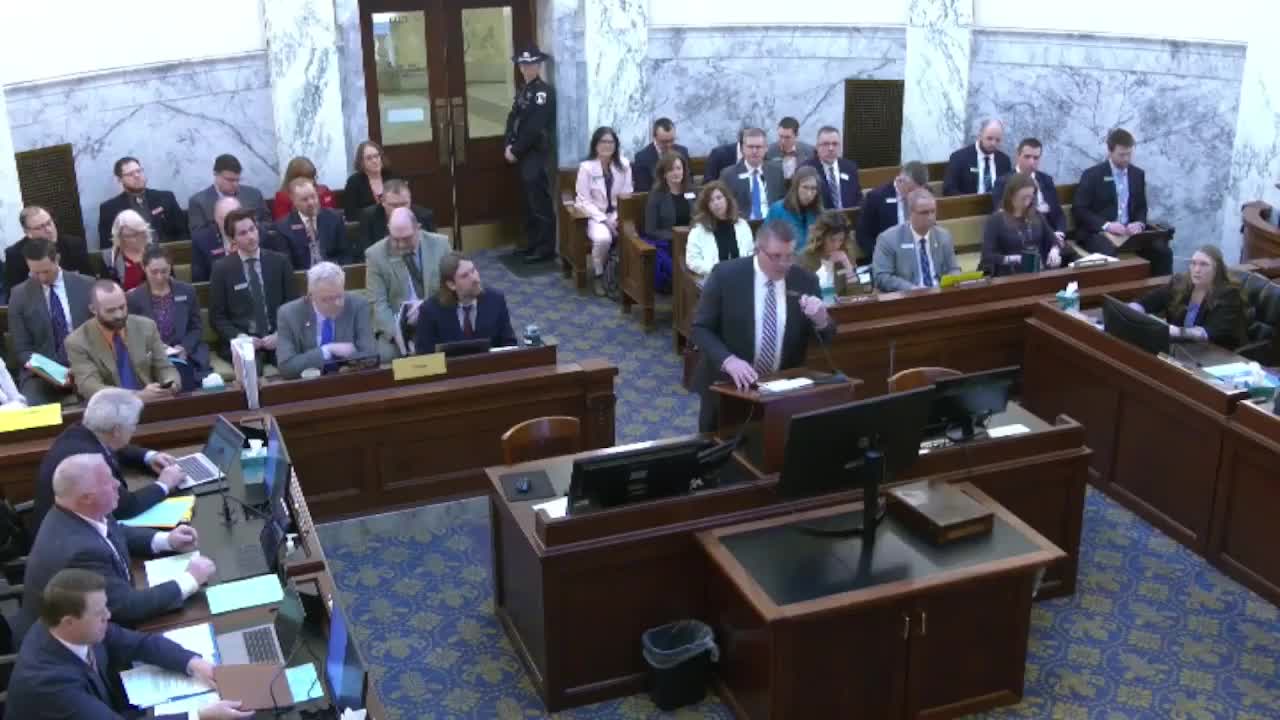
Rep. Doug Pickett, House Education chairman, told the Joint Finance-Appropriations Committee on March 7 that Idaho has made substantial progress increasing K–12 funding but that rural school districts remain especially vulnerable without continued targeted support.
"Over the past 10 years, the public education K‑12 budget has doubled from 1,400,000,000.0 to 2,800,000,000.0," Pickett said. "Idaho's average K‑12 teacher pay has increased to less to nearly $63,000 this school year, representing a 42% increase over the past decade." He thanked the committee for recent salary increases and for allowing districts to enroll teachers in the state health insurance plan.
Pickett said funding discussions should balance classical academics with career and technical education (CTE). "We must be proactive and respond to in‑demand careers in educating our kids without them losing the opportunity to have a classical education," he said, noting large demand for CTE at the postsecondary level and competition with the private sector for qualified instructors.
He emphasized the role of small rural schools in Idaho communities and warned against moving to purely per‑student funding without weighting for rural costs. "If you and I agree that rural public schools should remain part of the culture and identity of Idaho, then we accept the truth of the matter. That rural school students deserve higher levels of per student funding for critical things, like special education, transportation, facilities, teacher recruitment and retention," Pickett said.
Pickett referenced several statewide shortfalls discussed by stakeholders: an estimated $3,000,000,000 facilities funding gap, an $83,000,000 gap for special‑needs services, roughly $5,000,000 to retrain teachers in phonics for early literacy, and $35,000,000 for outcome‑based funding. He also noted that the Office of Performance Evaluations would present a K‑12 characteristics and funding report to the Joint Legislative Oversight Committee later the same day.
Pickett closed by urging that any federal education funding flow to its intended purposes: "It would be the desire of my committee members to see that those funds continue to go toward their intended purposes, and that they continue to pass through, rather than being repurposed or redirected to other needs," he said.
The remarks were delivered as part of a broader JFAC agenda that included budget presentations and votes on community colleges and other agencies. No formal committee action on K‑12 policy or statewide funding formulas was taken at this meeting; Pickett’s comments were an opening statement and request for continued attention to rural and CTE needs.
Looking ahead, Pickett and committee members said they expect the State Board of Education and JFAC workgroups to take up outcome‑based funding design and distribution mechanics in coming months, and he specifically noted continuing work to ensure previously appropriated rural funds reach those communities in need.