Get Full Government Meeting Transcripts, Videos, & Alerts Forever!
Get email alerts on the Career Technical Education Budget topic
No spam. Unsubscribe anytime.
Idaho lawmakers question CTE capacity, faculty and $10 million governor proposal
Summary
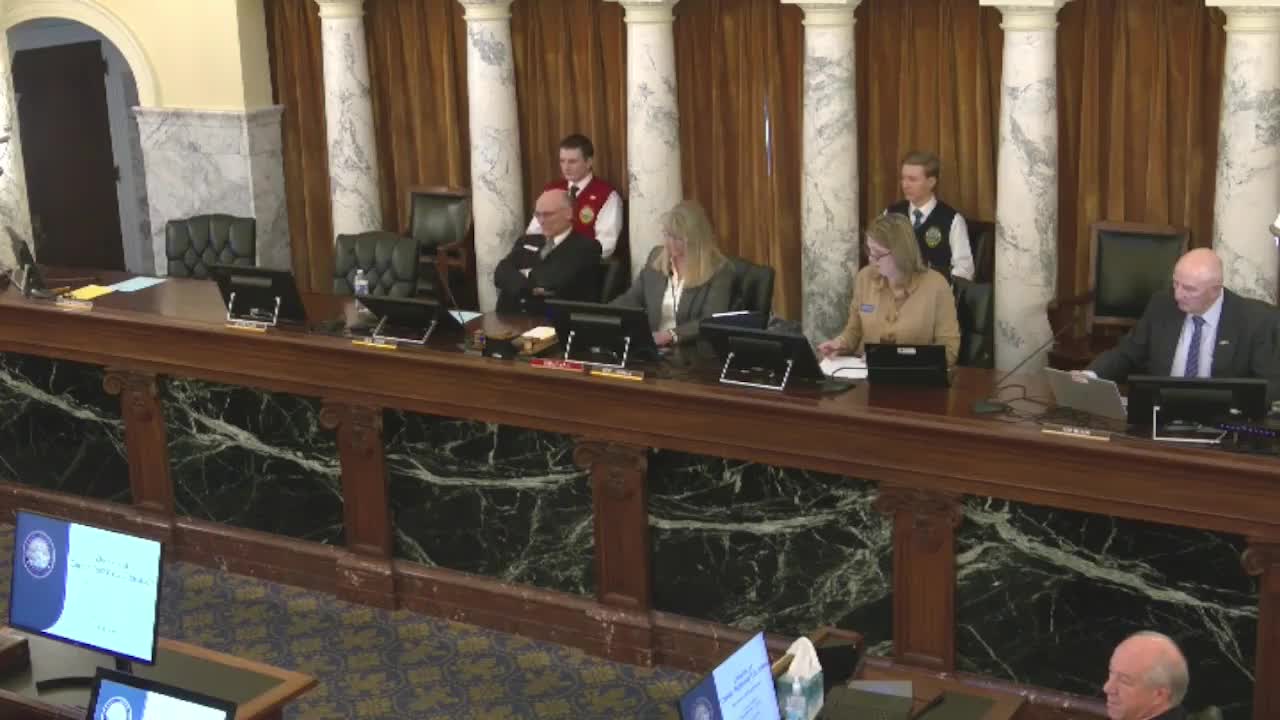
The Joint Finance-Appropriations Committee reviewed the Division of Career Technical Education's (CTE) FY2026 budget request and discussed program waitlists, faculty shortages, facility constraints and a $10 million governor-recommended ongoing appropriation intended to expand capacity in high-demand CTE programs.
Kevin Campbell, a budget and policy analyst with the Legislative Services Office, presented an overview of the Division of Career Technical Education's base budget and FY2026 requests, telling the Joint Finance-Appropriations Committee that “CTE plays a central role in Idaho's ongoing workforce development efforts.”
The presentation and subsequent questioning focused on rising demand for CTE programs, bottlenecks created by limited faculty and training facilities, the structure of several dedicated funds and the governor's $10 million ongoing recommendation to grow capacity in high-demand programs such as welding, nursing and mechatronics.
Campbell said CTE is a statewide system that covers secondary programs (grades 7–12), postsecondary programs at Idaho's six technical colleges and related adult-education work. He identified three funds CTE relies on: the Displaced Homemaker Fund (supported by a $20 fee on divorces), the Hazardous Materials and Waste Enforcement Fund (supported by hazardous-materials trip and annual permits) and the Motorcycle Safety Fund (supported by driver's license and motorcycle registration and program fees). Campbell also noted that “CTE typically spends close to 100% of its appropriations” and that personnel and trustee/benefit payments together make up the majority of expenditures.
Joshua Whitworth, executive director for the State Board and interim administrator for the CTE division, told the committee federal grant funding that supports some line items “is available,” but cautioned the committee that the timing and conditions for drawing down federal funds require diligence. Whitworth described strong, ongoing demand for CTE programs across secondary and postsecondary systems and confirmed the division can provide lawmakers with a list of “oversubscribed programs.”
Lawmakers pressed on what is driving the waitlists and how the $10 million would be spent. Representative Miller and others asked whether constraints are primarily facilities, faculty or both. Whitworth said the division views the issue as a three-legged stool: demand (students and industry), faculty and facilities. ‘‘We see it actually on both,’’ he said, adding there are statutory requirements relating faculty counts to student seats that amplify constraints as enrollment increases.
On the $10 million proposal, Whitworth described it as a grant-style approach intended to expand capacity in high-demand programs and to require industry participation. ‘‘The grant would require some engagement by industry to participate in that,’’ he said, explaining the division’s intent is that grants target programs where businesses commit to matching or partnering, with reporting back to the division on outcomes. Committee members asked for more detail on distribution, ongoing costs and oversight. Whitworth and other CTE staff said the division has experience running similar grants and that distribution would be demand-driven rather than an equal allotment to each institution.
Representative Price asked about a proposed business–industry engagement manager to help local school districts tie business partners to programs; Whitworth said current efforts are informal in some districts and the requested position would embed support for rural districts that cannot afford such roles.
Committee members also asked about specific funds. Senator Bierke raised concern about a negative balance in the Hazardous Materials and Waste Enforcement Fund; Whitworth said staff would verify reporting and follow up. Representative Tanner provided fee details during questioning, noting the hazmat trip fee and the small annual permit fee and urging staff to review cash reporting. Whitworth agreed to examine motorcycle safety program balances and consider recommendations on aligning expenditure with fees.
Multiple senators and representatives discussed program-specific demand. Senator Galloway and Whitworth noted high statewide demand for welders tied to manufacturing and potential nuclear projects; Whitworth said the state would expand seats at existing technical colleges rather than start new programs. Senator Ward-Engelking and others pressed on difficulty recruiting faculty, with Whitworth acknowledging educators in high-demand trades often face salary tradeoffs to enter teaching.
Committee members requested follow-up details: an itemized breakdown of personnel expenditures (how much is held centrally versus dispersed to technical colleges), a list of oversubscribed programs, clarification on fund balances, and a plan detailing how the $10 million would be allocated and monitored.
The CTE presentation also listed several recent appropriations and requests: ongoing appropriations for new instructional staff, coordinator roles, firefighter training equipment and a $5 million ongoing general-fund appropriation for readiness in middle and high schools; one-time appropriations have included $10 million for secondary CTE programs and $5 million for equipment and postsecondary investments. For FY2026 CTE requested $664,000 ongoing for additional instructors and $125,400 for the business–industry engagement manager, among other items.
The committee did not take final action on any CTE appropriations at the hearing. Whitworth and CTE staff closed by emphasizing the division’s role in meeting industry demand and the need for continued investment to reduce waitlists and expand capacity.
Looking forward, committee members asked the division to return with more detailed spending plans, verification of fund balances and lists of oversubscribed programs and expected outcomes if additional state funds are approved.