Get Full Government Meeting Transcripts, Videos, & Alerts Forever!
Get email alerts on the Women's Sports Fairness topic
No spam. Unsubscribe anytime.
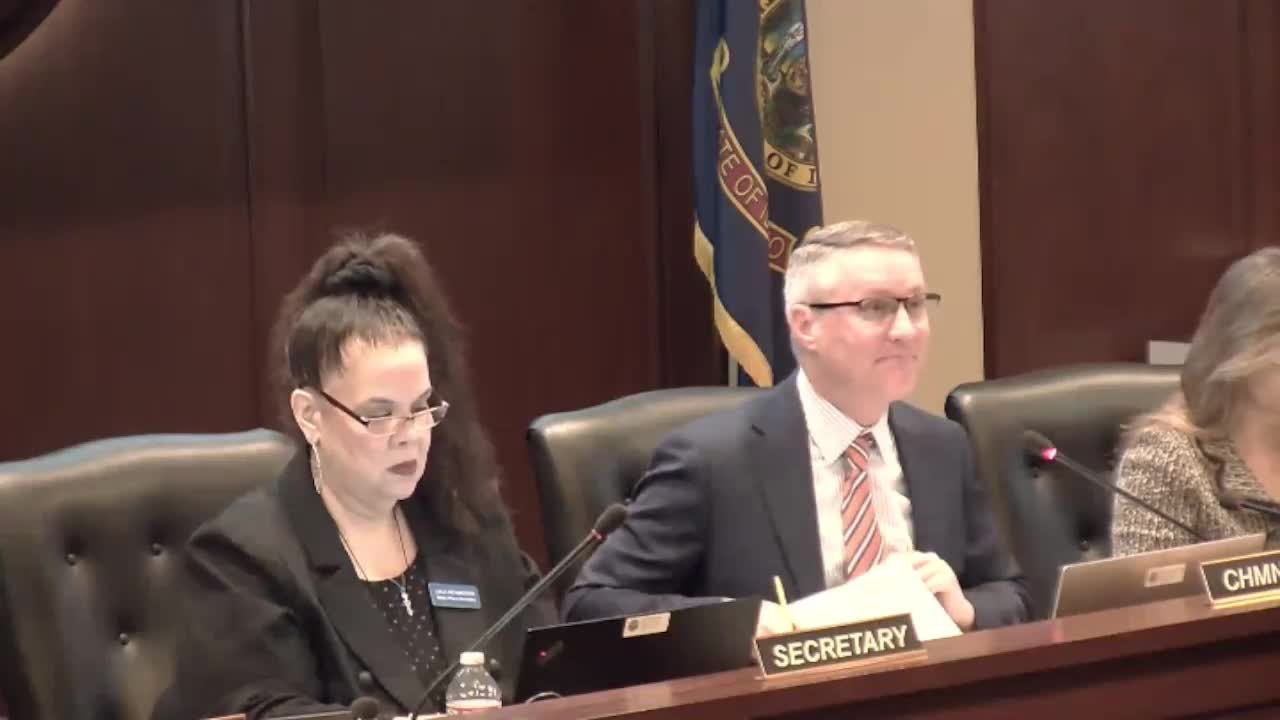
State panel backs resolution lauding Boise State volleyball’s boycott, sends HCR2 to the floor
Summary
The Idaho House State Affairs Committee voted Jan. 9 to send House Concurrent Resolution 2, commending Boise State's women's volleyball team for forfeiting matches over a biological male competitor, to the House floor with a "do pass" recommendation.
The Idaho House State Affairs Committee voted Jan. 9 to send House Concurrent Resolution 2 to the House floor with a “do pass” recommendation. The resolution, sponsored by Rep. Barbara Ehart, commends the Boise State University women’s volleyball team for forfeiting multiple matches after encountering a biological male competitor and urges the Mountain West Conference and the NCAA to revise their policies.
“This is truly to commend our Boise State women's volleyball team for taking such a courageous stance,” Rep. Barbara Ehart said, describing the team’s decisions to forfeit multiple matches — including a key Mountain West tournament match — as an act of integrity and concern for safety.
Testimony before the committee featured athletes and advocates who described both personal experiences and broader concerns. Riley Gaines, who identified herself as an ambassador for Independent Women’s Voice and a former University of Kentucky swimmer, recounted competing against a male athlete at the 2022 NCAA championships and said she and other female athletes were not asked for their consent to shared locker rooms. “We were never asked for our consent. We did not give our consent to this exposure and to simultaneously be exploited,” Gaines said.
Marshie Smith, a former NCAA captain, said she helped organize athlete and legal support for women who protested and in some cases filed lawsuits; Edward Clark of the Idaho Family Policy Center told the committee that allowing biological males to compete in women's sports is “both unfair and unsafe,” and referenced a report he said found more than 900 medals awarded to biological males (claim cited as testimony).
The committee also heard opposing testimony. Nixon Matthews, speaking for himself, said the issue affects very few athletes and cited remarks that fewer than 10 transgender NCAA athletes compete among roughly 510,000 student‑athletes, arguing that governing bodies closest to the sport should set standards. Rep. Representative Green, who voted no on the committee motion, said she valued the testimonies from women but opposed the resolution because it risks further marginalizing a group that already feels excluded. “This does perpetrate a message that is still hurtful to a community who feels marginalized,” Green said.
Committee members debated how disputes over league and NCAA policy should be handled. Rep. Keeley, who also voted no, said she supported Boise State’s leadership and the athletes but opposed the resolution because it demands revocation of existing rules “without any replacement or process to redefine those rules,” and because Title IX principles require care to protect gender equity while addressing competing concerns.
The committee approved the motion to send HCR2 to the floor by voice vote; the transcript records two members asking to be recorded as voting no: Representative Green and Representative Achilles. The resolution will appear on the House floor for further action.
All direct quotes above are attributed to speakers in the committee hearing transcript.