Get Full Government Meeting Transcripts, Videos, & Alerts Forever!
Get email alerts on the Broadband Deployment topic
No spam. Unsubscribe anytime.
Commerce briefs JFAC on broadband rollout: BEAD prequalification and $120M capital projects under way
Summary
The Idaho Department of Commerce told JFAC it has obligated most state and ARPA broadband funds, is preparing for BEAD application rounds this year and is requesting staff and reappropriations to manage distribution and oversight.
The Idaho Department of Commerce told the Joint Finance-Appropriations Committee that the state is advancing multiple broadband funding streams and preparing to accept project funding applications later this year under the federal BEAD program.
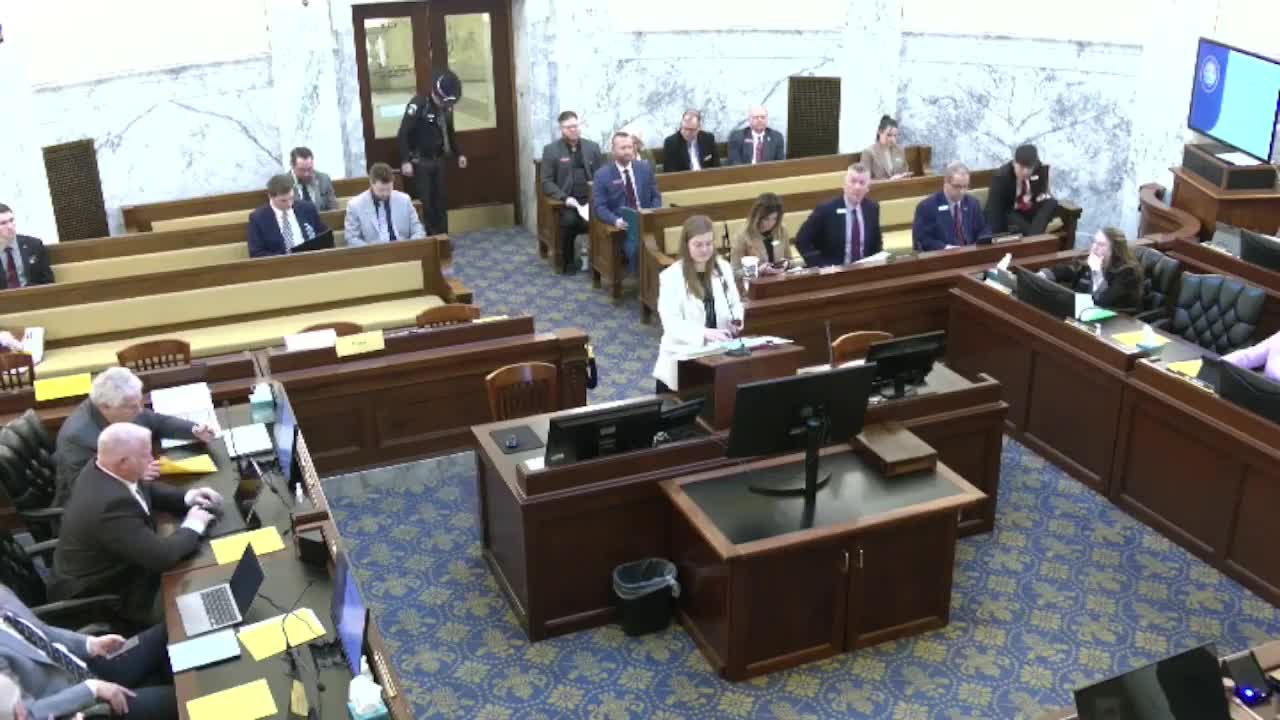
Brooke Dupree, budget and policy analyst with the Legislative Services Office, summarized Commerce's FY2026 request and funding history, and Director Tom Keeley and Ramon Jabe Sanchez, the department's broadband manager, answered committee questions on deployment timelines, technology priorities and collaboration with private Internet service providers.
Dupree said the department now has 48 authorized FTEs (42 in the commerce program and 6 in the broadband office) and that a separate broadband office was created last legislative session to improve transparency and oversight of broadband expenditures. The department's funding sources include a $35 million state broadband fund (an earlier general fund transfer), $120 million from ARPA capital-project allocations directed to broadband projects, and an expected $580 million in federal BEAD (Broadband Equity, Access, and Deployment) funds administered under IIJA rules. Dupree told the committee much of the ARPA capital-project money has been obligated to contracts covering 18 projects that will collectively connect about 35,000 homes and businesses.
Ramon Sanchez explained BEAD timing: the office opened a prequalification phase for eligible applicants and Internet service providers (ISPs) in the first quarter of the calendar year and intends to open the formal funding-application phase in quarter two. Sanchez said the state has prioritized fiber deployments where feasible, followed by licensed fixed wireless; alternative technologies such as low-Earth-orbit satellites (for example, Starlink and other LEO services) are considered where terrestrial options are cost prohibitive. "We are just about to hit the two-year mark" in preparation for BEAD, Sanchez said, and the department expects to receive project applications and evaluate them over the summer for federal submission in the fall.
Director Keeley joined the briefing and framed broadband within a broader economic-development agenda that includes workforce, housing and childcare. Keeley said Commerce is working with partners such as the Idaho Advanced Energy Commission, INL, Visit Idaho and local economic-development organizations to position the state for growth in sectors including AI, data centers and advanced manufacturing; he said broadband and cybersecurity are critical infrastructure for those efforts.
Committee members raised technology and program questions. Senator Wintrow asked whether all broadband funds had been committed; Sanchez responded that of the $35 million Idaho Broadband Fund about $26.5 million is already obligated and the remaining balance will be allocated by the Idaho Broadband Advisory Board. On the BEAD program, Sanchez said prequalification is intended to "identify who will be eligible for these funds," then applicants and local governments will submit project proposals in the application window.
On the technology question, Sanchez emphasized a technology-agnostic approach within BEAD's federal priorities: "The federal guidance prioritizes fiber then licensed fixed wireless; if those options are cost prohibitive, we look at alternative technologies," he said, and added that states have used low-Earth-orbit satellite solutions for a portion of hard-to-reach locations (Nevada, for example, is using LEO for about 10% of its unserved locations, he said).
The Commerce budget presentation also included a reappropriation request and a transfer to the broadband office to shift one FTE and $137,200 to manage distribution and oversight of broadband funds; those moves were presented as part of the governor's recommendations.
No formal committee votes occurred during the briefing. Commerce staff said they would continue to work with the broadband advisory board, ISPs, local governments and federal partners as BEAD moves into the application and evaluation phase.