Get Full Government Meeting Transcripts, Videos, & Alerts Forever!
Get email alerts on the Pension System Budget topic
No spam. Unsubscribe anytime.
PERSI reports $22 billion in assets, 87% funded; requests software funding and hardware upgrades
Summary
The Public Employee Retirement System of Idaho (PERSI) presented its FY2026 budget requests to JFAC, including year four of a pension software upgrade and IT hardware replacement. Director Mike Hampton told the committee the system ended the fiscal year with roughly $22 billion in assets and an actuarial funded ratio of about 87%.
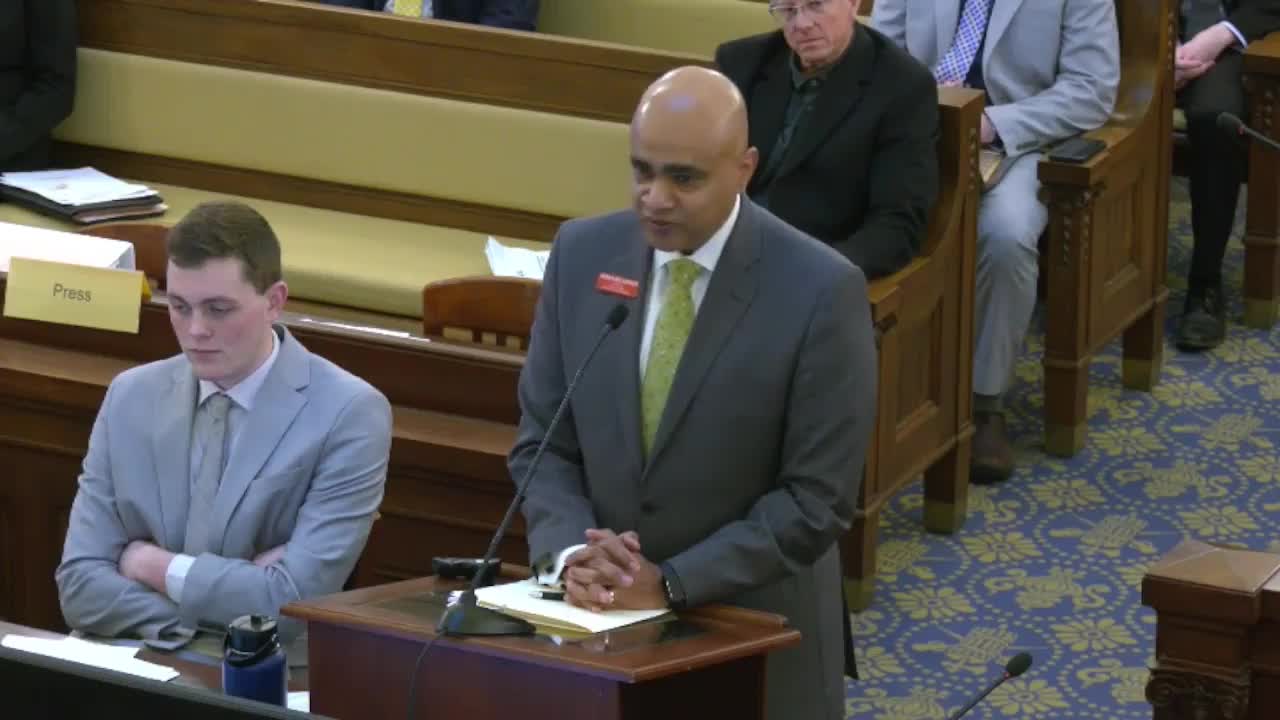
PERSI Director Mike Hampton and Legislative Services analyst Frances Lippitt briefed the Joint Finance-Appropriations Committee on the public employee retirement system's FY2026 budget requests and the system's recent financial performance.
PERSI requested ongoing and one-time appropriations related to its pension-software upgrade, member services and IT hardware. The governor recommended most of the agency's requests, excluding an inflationary ongoing increase and office furniture, the analyst said.
The budget overview given by Frances Lippitt, budget and policy analyst with the Legislative Services Office, described PERSI as providing a defined-benefit plan and administering a defined-contribution 401(k)-style plan and an unused sick-leave fund. Lippitt said PERSI has authorization for 81 full-time staff across Boise, Pocatello and Coeur d'Alene and typically operates with about an 89% fill rate. PERSI averaged $11.4 million in appropriated expenditures in FY2024, with personnel costs accounting for roughly 56.6% of that amount and operating expenditures accounting for about 41.9%.
On the funding side, Lippitt told the committee PERSI expended continuous appropriations of about $245.9 million in pension payments in FY2024. She noted a five-year software upgrade plan: the legislature previously approved a $3 million one-time appropriation that will continue for five fiscal years, totaling $12 million for the pension software upgrade.
Director Mike Hampton summarized financial performance and actuarial measures. He said the fund had "about a 9% return" in the most recent year and ended the fiscal year with assets a little over $22 billion and about 185,000 members. On funded status, Hampton said the system was approximately 87% funded as of June 30; he explained the funded ratio is the percentage of current assets compared with actuarial liabilities and said PERSI's current amortization period is about 10.7 years, well under the statutory 25-year threshold that would require more dramatic adjustments.
PERSI's FY2026 requests include: $3,000,000 on a one-time basis for year four of the pension software upgrade, roughly $628,500 for IT hardware recommended by OITS, and $7,000 for office furniture. Ongoing requests included travel funding for board members (about $25,000) and a 5% general inflation request; the governor's recommendation excluded the inflationary and furniture items but recommended the IT hardware and software continuation funding.
Committee discussion included the system's cost-of-living adjustment (COLA) mechanics. Hampton said Idaho's COLA is defined in statute as a post-retirement allowance adjustment tied to CPI-U: an automatic 1% occurs each year provided CPI-U exceeds 1%. He said the PERSI board recommended the automatic 1% plus a 0.3% retroactive adjustment back to 2020, yielding a 1.3% adjustment for the year if the legislature approves the recommendation. Hampton said the board weighs sustainability and funded status when making such recommendations.
Representatives and senators asked about administrative versus investment costs. Hampton clarified that investment-management fees are charged out of continuously appropriated investment funds and do not flow through the annual operating appropriation. Operating appropriations include personnel, software and other administration costs.
On the broader policy question of defined benefit versus defined contribution plans, Hampton said few systems have moved entirely to a defined contribution approach and noted public pensions remain a competitive tool for recruiting and retaining mid-career public employees. He said hybrid approaches have been used in some places and that PERSI periodically reviews demographic and structural assumptions.
There was no committee vote during the hearing; PERSI staff stood for questions and the committee will consider the requests during the budget process.