Get Full Government Meeting Transcripts, Videos, & Alerts Forever!
Get email alerts on the State Liquor Division Budget topic
No spam. Unsubscribe anytime.
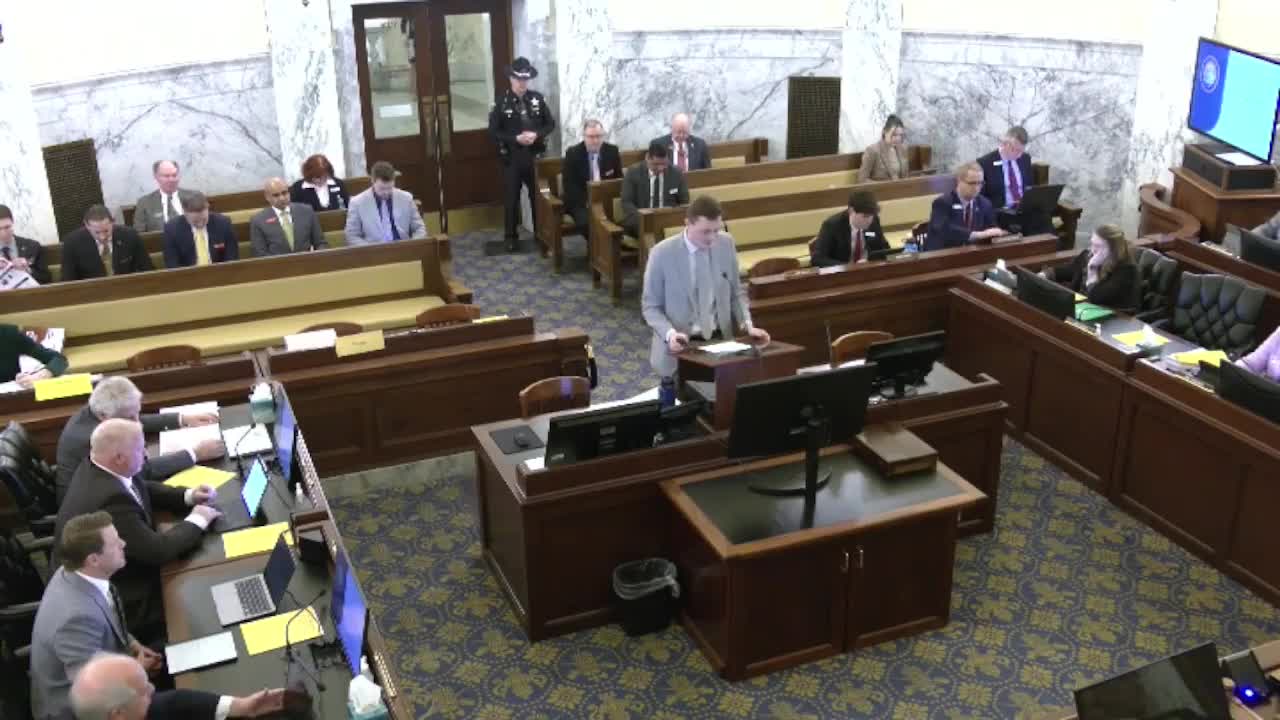
Idaho State Liquor Division asks JFAC for store, IT and pay funding as reserves decline
Summary
The Idaho State Liquor Division told the Joint Finance-Appropriations Committee that it is requesting ongoing and one-time funding for store upgrades, security and modest pay increases for temporary retail staff as its dedicated fund balance has fallen from roughly $38 million in FY2022 to $14 million in FY2024.
The Idaho State Liquor Division told the Joint Finance-Appropriations Committee on the morning of the department's budget hearing that it is requesting a mix of ongoing and one-time funding for store upgrades, security and modest pay increases for temporary retail staff.
The request, presented by Kellen McGurkin, budget and policy analyst with the Legislative Services Office, and answered by Director Andrew Arulanandam, included a FY2026 ongoing request of $131,400 for small pay increases for temporary retail staff and the operational cost of shrink-wrap pallets, plus several one-time requests for store replacements, IT security, and network modernization.
The matter matters because the Liquor Division's net distributions help fund magistrate courts, cities, counties and the general fund; the agency's dedicated fund balance has declined from about $38 million in FY2022 to $14 million in FY2024, the analyst told the committee.
McGurkin summarized the statutory framework and distribution flow for the committee. Under Idaho Code Title 23, Chapter 2, the division manages importation and distribution of beverage alcohol and allocates available funds each fiscal year. McGurkin said FY2024 distributions totaled about $118.3 million; a 2% surcharge on all liquor sales sends roughly $6.7 million to the court services fund, and approximately half of available funds are distributed to cities, counties and magistrate courts (about $56.3 million in FY2024). Of the other half, a fixed portion (about $5.8 million) is distributed to specified funds, then 1.5% of the remaining second half goes to the Peace Officer Standards and Training Fund, with any remaining balances transferred to the general fund, McGurkin said.
The committee heard operational details: the division's appropriated full-time position cap is 257.25 FTEs, with retail operations accounting for the majority of positions and the agency reporting a 93% filled rate across appropriated FTEs. The agency additionally employs roughly 185 part-time store clerks and works with 106 contract liquor stores; those temporary clerks and contract-store staff are not counted in the agency's appropriated FTE total, analysts said.
On personnel and pay, Director Andrew Arulanandam described efforts to lower turnover among temporary store clerks. Arulanandam said turnover before recent increases was about 140% annually and has fallen to roughly 84% after prior pay actions. The division asked for an ongoing $57,400 to raise the temp hourly rate from $15.00 to $15.45, noting temporary staff are state employees not covered by regular CEC adjustments. "There are attorneys across the country who scour these websites and use it as a means to sue agencies and entities that aren't ADA compliant," Arulanandam told the committee in explaining a separate $100,000 one-time website-accessibility upgrade request intended to bring the agency site into compliance with web content accessibility guidelines and reduce legal risk.
Tony Grama, chief deputy and CFO of the Liquor Division, told the committee temporary store clerks are state employees and that the only mechanism for adjusting their pay is a line-item enhancement: "They're not subject to the CEC increases. The only way for them to get any sort of cost of living adjustment is for us to request a line item enhancement this way."
Major one-time requests include: - $1.2 million for replacement items for retail stores (shelving, lighting, flooring, signage) and warehouse equipment; analysts said this replaced items purchased early in the pandemic surge in direct-to-consumer sales that carried higher margins but have since normalized. - $980,300 for retail store improvements and motorized equipment/vehicle replacements (about $775,000 for store improvements and $205,000 for motorized equipment and vehicles). - $235,000 for IT and security replacement items recommended by the Office of Information Technology Services (OITS), including battery backups, server replacements and security systems for stores. - $200,000 for 70 network security firewalls and 70 managed switches to complete a network modernization effort that moves stores from DSL/T1 to a cellular solution using previously purchased Cradlepoint routers; analysts said the setup is projected to save roughly $100,000 in hardware costs upfront and about $10,000 per month versus a hard-wired solution.
Analysts and the director also described structural budget factors: the division reported total FY2024 sales of about $319.1 million, with approximately 63% of sales revenue used for operating costs and the remaining 36% (about $116.6 million) reported as net income. McGurkin explained the FY2024 total distribution of $118.3 million is roughly $1.6 million higher than the reported net income due to inventory and asset-accounting adjustments the division makes before distributions.
Committee members questioned the scope and cost of certain items. Senator Cook asked whether $100,000 is reasonable to fix website accessibility issues; Arulanandam said the division consulted an accessibility expert who provided a list of items that must be corrected and noted the agency's desire to reduce legal exposure from litigants who target noncompliant public websites. Senator Ward Engelking and others pressed about whether incremental pay increases for temporary clerks would reduce turnover; Arulanandam said incremental increases have reduced turnover but that pay alone may not solve all retention problems.
No formal committee action or vote on the Liquor Division's FY2026 requests took place at the hearing; the director and staff stood for questions and the committee will consider the requests in upcoming budget deliberations.