Get Full Government Meeting Transcripts, Videos, & Alerts Forever!
Get email alerts on the Energy And Minerals topic
No spam. Unsubscribe anytime.
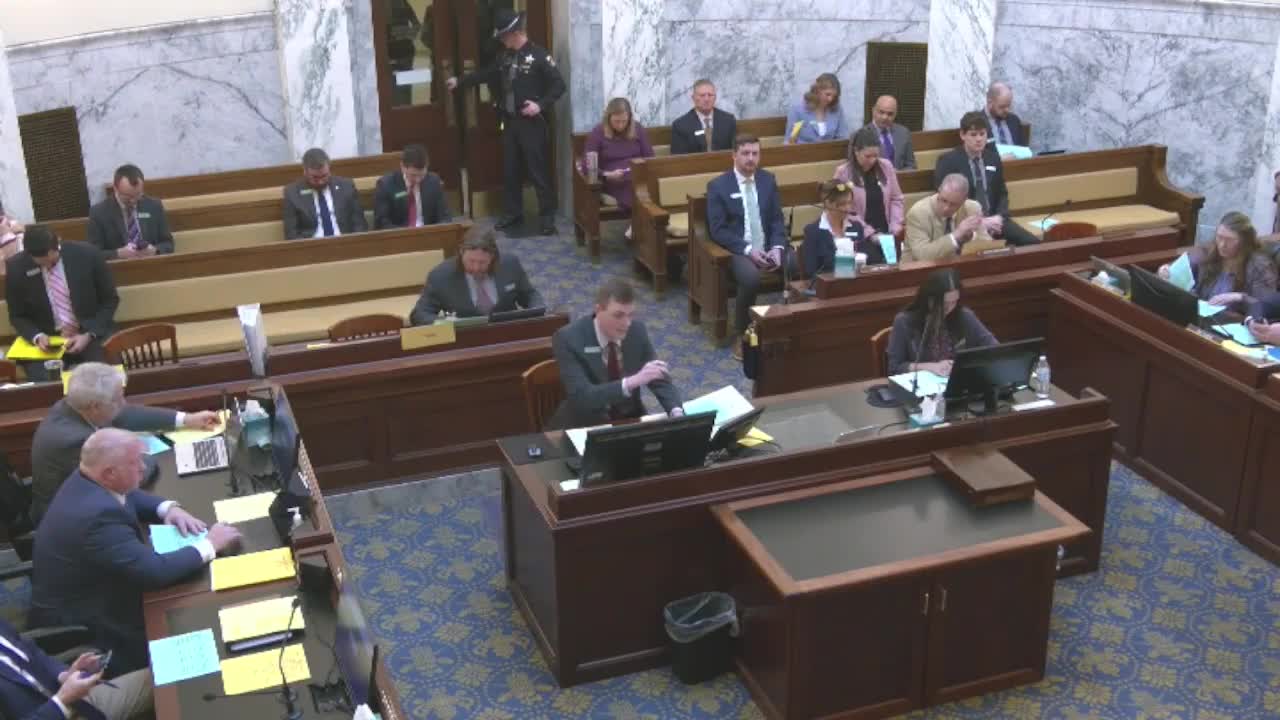
JFAC splits on home energy rebates and Speed Council; rebate funding fails in committee after multiple motions
Summary
The Office of Energy and Mineral Resources sought federal funding to run the Home Energy Rebates program and general‑fund support to create a governor’s Speed Council; JFAC debated multiple substitute motions across several attempts and ultimately failed to pass a full package in committee.
The Joint Finance-Appropriations Committee considered a three-part FY2026 request from the Office of Energy and Mineral Resources (OEMR): (1) a fund shift to align personnel costs among dedicated accounts, (2) federal funding to administer the federal Home Energy Rebate program, and (3) a governor’s initiative to create a Speed Council that would streamline permitting for large infrastructure projects. Committee members debated and reworked several motions over the course of the hearing; multiple motions to fund the governor’s Speed Council passed or failed at different tallies, and an initial motion that included significant federal rebate funding failed to gain the necessary majority in committee.
Kellen McGurkin, budget and policy analyst, outlined OEMR’s request for an ongoing federal appropriation to administer the Home Energy Rebates program, noting the state’s share under the Inflation Reduction Act and that no state match is required. The OEMR request sought approximately $24.5 million in federal funds for administration and direct household rebates; of that total, $20 million was identified for trustee/benefit payments as direct rebates to Idaho households, $4 million for third-party implementer operational costs, and funds for limited-service personnel to manage eligibility and program operations.
The governor’s Speed Council proposal, described by Callie Younger, the new OEMR administrator, would create an interagency council to streamline permitting and to develop a public project-tracking dashboard. Younger said the council would focus primarily on critical minerals permitting and permitting efficiency rather than on wind or solar projects.
Committee action included several motions and revotes over the course of the hearing. An initial combined motion that included two FTP for the rebates program and the governor’s Speed Council (three FTP total) was moved and seconded but failed to secure a majority after members changed votes; the clerk announced that the motion initially failed to gain a majority in both chambers. Members then proposed and revised additional motions — including smaller one-time general-fund motions to fund only the Speed Council — and attempted to find a configuration that could pass both chambers. Ultimately, committee members recorded motion results indicating that motions including the full rebate appropriation and the governor’s full requested funding did not pass both chambers together during the session’s attempts; at least one pared-down Speed Council motion (one-time general-fund support of $330,000 and 1 FTP) passed in committee on a later motion but failed to gain a House majority when roll calls were announced, leaving the item to be reconsidered later.
Why it matters: the Home Energy Rebates program would use federal dollars to pay rebates to Idaho households for energy-efficiency improvements and appliance upgrades; accepting the federal funds would require the state to administer the program and select an implementer. The Speed Council proposal would assign OEMR a convening role across agencies to speed permitting for critical infrastructure projects.
Callie Younger, the OEMR administrator, told the committee she supported using the federal funds and described the Speed Council’s alignment with national-level initiatives to prioritize energy and critical-minerals permitting. Younger said the council’s primary focus would be critical minerals permitting and that the council would not be focused on fast-tracking wind or solar projects.
Committee members repeatedly cited procedural limits and floor outcomes in the Senate and House as they tried alternate motions; several motions were withdrawn and refiled during the hearing. The committee’s repeated motions and vote changes produced several different outcomes on the record; committee staff cautioned members against reoffering motions identical to those that previously failed on the floor.
The committee did not finalize a combined package for both the federal Home Energy Rebates appropriation and the governor’s Speed Council during the session excerpt recorded in the transcript.