Get Full Government Meeting Transcripts, Videos, & Alerts Forever!
Get email alerts on the Behavioral Health Contract Transition topic
No spam. Unsubscribe anytime.
Committee approves rule changes as Idaho moves behavioral health services to contractor; advocates press for clarity on medical-necessity decisions
Summary
The Idaho Senate Health and Welfare Committee on Thursday approved rule changes reflecting that substance-use, adult and children's behavioral-health services will be delivered under contract with Magellan rather than directly by the Department of Health and Welfare.
The Idaho Senate Health and Welfare Committee on Thursday approved multiple rule dockets that remove regulatory language describing the Department of Health and Welfare (DHW) as a direct provider of behavioral-health services and instead reflect that services are provided under contract with Magellan, effective July 1, 2024.
Committee members and department officials said the rule changes do not remove the DHW's statutory obligation to ensure behavioral-health services are available; they instead repeal text that talks to the department acting as the direct service provider. Jared Larson, Legislative and Regulatory Affairs Chief for DHW, told the committee the state prepared for the transition over two years and that the rule changes align administrative text with how services are now delivered under contract.
Why it matters: The changes rewrite how state rules describe who provides substance use disorder (SUD) services, adult mental-health services and children's mental-health services. Supporters said the amendments will clarify contractual roles and may ease workforce constraints by recognizing substantially similar external credentials.
Larson and Juliette Sharon, DHW deputy director overseeing behavioral health and Medicaid, described three related dockets as principally housekeeping to avoid conflicts between existing rules and the Magellan contract. The department also proposed allowing additional certifying bodies for SUD workforce reciprocity so providers certified by comparable national organizations can practice in Idaho. Larson said the state found the alternative certifiers substantially similar to the existing credentialing standard and that adding them should increase workforce supply.
Public testimony and concerns: Peyton Darst, representing the Idaho Behavioral Health Association, testified in support of adding credential reciprocity to expand workforce capacity amid shortages. “This allows us to keep working on that workforce issue,” Darst said, adding reciprocity would not reduce quality of care.
A parent advocate, Britney Shipley, spoke against one provision in the children's mental-health docket that adds or clarifies “medical necessity” language in rule. Shipley said the rule revision lacks clarity on who determines medical necessity and how those determinations would interact with judicial orders for children involved in juvenile justice or child-welfare proceedings. She urged that determinations be made by clinicians with expertise in Idaho’s children's mental-health system and that rules respect court orders used to secure services for families who have exhausted other options.
Juliette Sharon responded that the medical-necessity language reflects current practice for Medicaid and state-funded services administered under the Magellan contract and is applied by clinicians, often those with experience treating children, such as child psychiatrists. Sharon said the language is intended to ensure payment for services that are clinically appropriate while seeking the right level of care for the child.
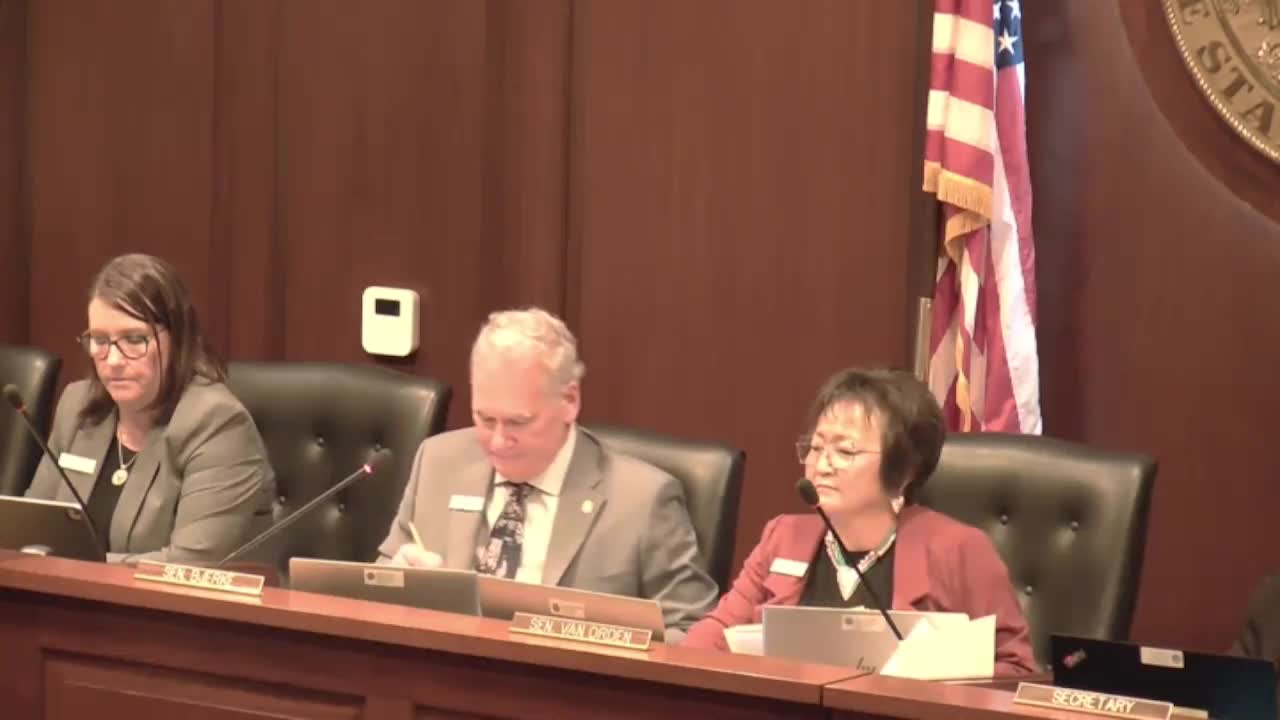
Committee action: For each docket concerning substance-use disorder services, adult mental health services and children's mental health services the committee voted to approve the rule dockets by voice vote. Senators making the motions and seconds were recorded on the floor as indicated in the committee transcript; the dockets carried.
What remains: Committee members asked the department to maintain clear escalation and complaint paths to Magellan and DHW when families or providers encounter disputes about coverage or clinical determinations. DHW said those channels exist and that the department and contractor will respond to issues as they arise.
Details and references: Committee discussion referenced Idaho Code Title 39, Chapter 3 (behavioral-health statutory provisions) and the Magellan contract effective 07/01/2024. The department identified workforce shortage and credential reciprocity as drivers of the rule changes.