Get Full Government Meeting Transcripts, Videos, & Alerts Forever!
Get email alerts on the Wildfire Suppression State Action Loggers topic
No spam. Unsubscribe anytime.
Idaho committee backs bill to let state mobilize loggers, pursue federal cost recovery for early wildfire suppression
Summary
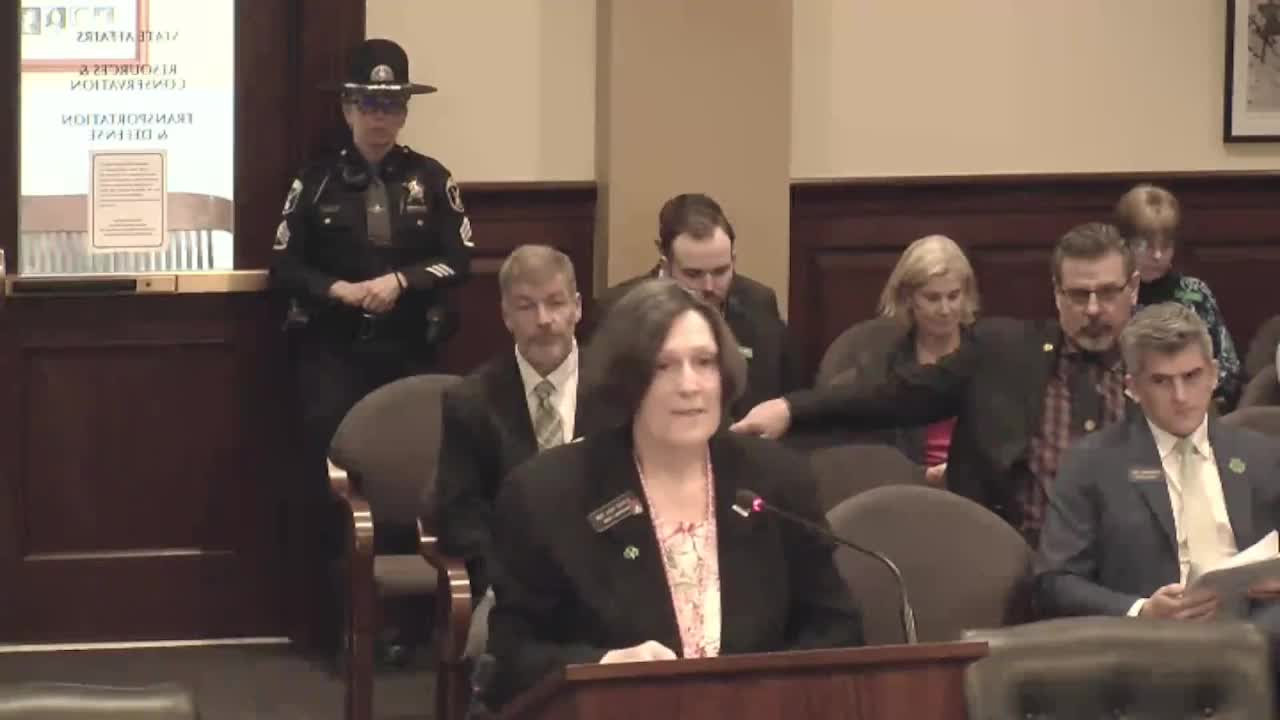
House Bill 389, which would authorize the governor to order Idaho state resources to suppress small wildfires on federal land and direct the attorney general to seek recovery of suppression costs from the federal government, was moved out of the House Resources and Conservation Committee on a voice vote after supporters described recent catastrophic wildfire seasons in Idaho.
House Bill 389, which would authorize the governor to order Idaho state resources to suppress small wildfires on federal land and direct the attorney general to seek recovery of suppression costs from the federal government, was moved out of the House Resources and Conservation Committee on a voice vote after supporters described recent catastrophic wildfire seasons in Idaho.
Proponent Representative Judy Boyle, sponsor of the bill, told the committee HB 389 arose from an interim federalism committee review of last year’s fire season and said the measure is intended to let the state act early to prevent small fires from growing. “If it affects the health, safety, and lives of our citizens, then it's within our power to do something,” Boyle said, referencing the state’s “police powers” cited in committee handouts.
Why it matters: supporters said the state’s earlier intervention could prevent the large, costly fires that have damaged watersheds, livestock and homes across Idaho. Several witnesses described last summer’s Wapiti, Lava and Paddock fires and argued that faster local action could have kept those fires small.
Loggers and ranchers told the committee loggers can be an available, trained workforce for initial attack. Mark Mahon, co-owner of Mahon Logging and president of the Associated Logging Contractors, said the timber industry has pursued training to qualify for local fire-response arrangements and has personal experience with near-loss of equipment during last year’s Lava Fire. “The loggers do not want to sit down on a fire and spend the rest of our summer there. We want to suppress these fires and go back to logging,” Mahon said. He described loggers’ ability to clear trees and create dirt lines as a useful tool for early suppression.
Other witnesses included geological engineer and Stanley resident Dar Moon and Dexton Lake of the Idaho Farm Bureau, both of whom described smoke, wildfire growth and livestock losses in the last season. Pachi Larcy, speaking for the Idaho Cattle Association, said the association “stands firmly in support of House Bill 389.”
Key provisions and implementation details noted in testimony: the bill would allow the governor to declare an emergency and order state resources — including Idaho Department of Lands personnel and, under the measure’s framework, state-dispatched contractors — to act before a fire becomes catastrophic. Representative Boyle said the bill also “direct[s] the Attorney General to initiate a civil action to try to recover those costs from the Federal Government.” Committee witnesses discussed loggers’ participation through local arrangements referenced in testimony as RFPAs, training under federal protocols (VIPER training referenced), and the presence of personal protective equipment among local crews.
Questions raised: members pressed on practical logistics and liability. Representative Tanner and others asked who would pay loggers and how costs would be recouped; Boyle pointed to the AG’s litigation authority in the bill as the recovery mechanism. Representative Church asked about loss-of-life liability if volunteers or contractors are placed in harm’s way; Boyle said if the governor uses state resources, the operation would be directed by the Idaho Department of Lands and carry the same liability profile as other state-directed suppression. Committee members also asked whether the state’s existing deficiency warrant balance would support immediate suppression costs; discussion referenced a combined balance on the order of tens of millions (committee speakers cited figures around $40 million and suggested a total available could reach roughly $54 million after planned additions), but available funding for specific incidents would depend on appropriations and emergency actions.
Motion and outcome: Representative Raybould moved to send House Bill 389 to the floor with a do-pass recommendation; the committee approved the motion by voice vote and the bill was advanced to the House floor.
What’s next: the bill will be considered by the full House. Testimony and committee discussion focused on early suppression by state-directed resources and potential litigation to recover costs from the federal government; details about program administration, contracting, and exact funding levels were discussed but not finalized in committee.