Get Full Government Meeting Transcripts, Videos, & Alerts Forever!
Get email alerts on the Vocational Rehabilitation Audit And Supplementals topic
No spam. Unsubscribe anytime.
State audit finds Idaho vocational rehabilitation lacked controls; agency seeks $2.7M match for $10M federal reallocation and uses contractor to remediate
Summary
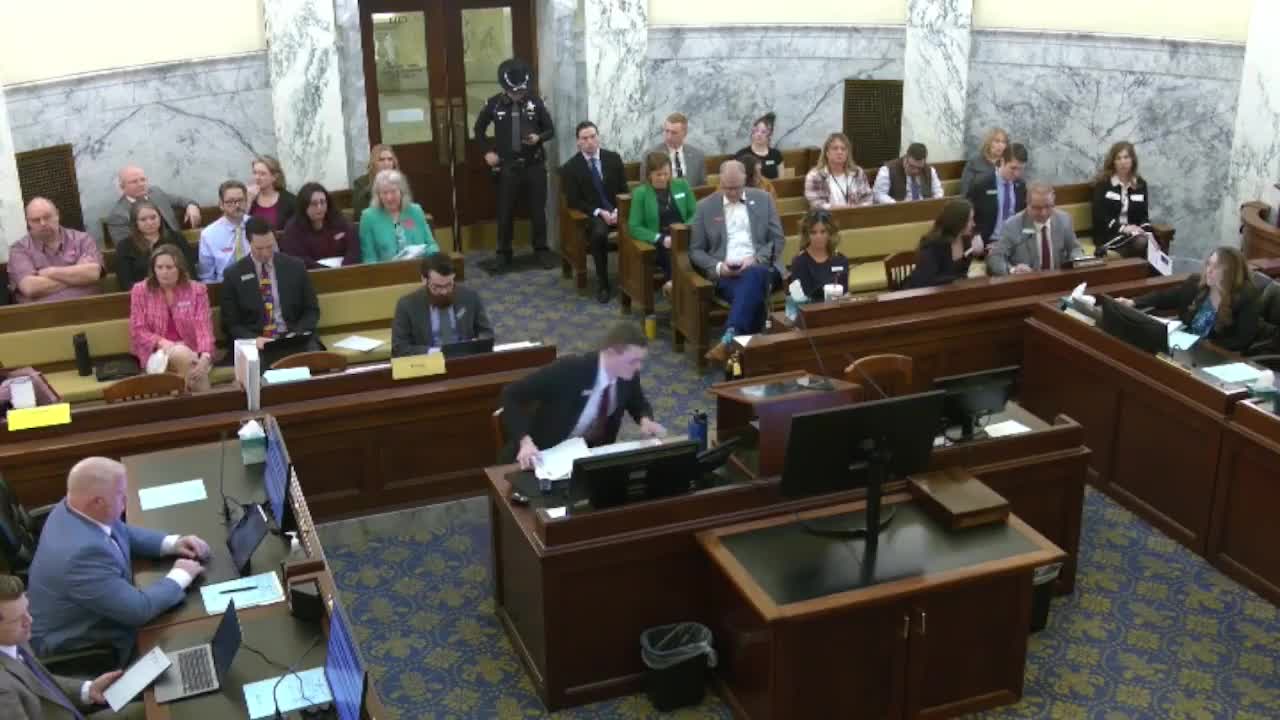
Legislative auditors reported to the Joint Finance-Appropriations Committee on Feb. 24 that Idaho’s Division of Vocational Rehabilitation lacked adequate internal controls for FY2024 federal grants, prompting federal high‑risk designation and remediation work.
Legislative auditors reported to the Joint Finance-Appropriations Committee on Feb. 24 that Idaho’s Division of Vocational Rehabilitation did not maintain adequate internal controls over federal grant expenditures for fiscal year 2024, producing a designation as a “high‑risk grantee” and triggering federal oversight and remediation requirements.
April Renfro, audit manager with the Legislative Services Office audits division, told the committee her team’s accountability review found the division “did not establish procedures and control activities to ensure compliance with appropriation laws applicable to fiscal year 2024.” The report identified weaknesses in financial management, failures to properly account for and report obligations and expenditures, and inaccurate and unsupported federal financial reporting.
Why it matters: The federal Rehabilitation Services Administration (RSA) designated Idaho a high‑risk grantee and reallocated additional federal funds to the state late in 2024. RSA attached conditions to the award and required a corrective action plan; auditors and agency staff said additional technical remediation was needed to respond to federal questions and bring reporting into compliance.
What happened: The division received a $10 million noncognizable adjustment (a late federal reallocation) recognized by the governor to avoid defaulting on payments and payroll. That federal funding requires a state match (the budget analyst and agency cited a state‑share percentage near 21.3%), and the agency requested a $2.7 million one‑time supplemental from the general fund as the state match for FY2025. Separately, the division estimated about $1.7 million of previously claimed Pre‑Employment Transition Services (Pre‑ETS) expenses may be disallowed by federal partners; auditors said those are services that have already been rendered and are at risk of being unallowable on federal reimbursement.
Auditors’ findings and federal actions: Renfro said RSA designated the division as high risk on May 3, 2024, and required a corrective action plan. RSA’s fiscal monitoring review found multiple compliance problems, including improper period‑of‑performance billing and insufficient supporting documentation for invoices. Auditors recommended the division implement procedures to monitor commitments in individual plans for employment (IPEs), to align billing to the correct federal grant periods and to work with the legislature on longer‑term fiscal issues.
Contracts and remediation work: The division engaged a third‑party consultant to help with corrective action; the initial professional services contract signed in August 2024 was $499,999. In November 2024 the agency amended that contract, increasing it by about $1.9 million and extending the scope and period; the total contractual commitment across the initial contract and amendment approaches $2.5 million when previously agreed costs and travel are included. Renfro noted the amendment was approved as a one‑time exemption from competitive procurement by the state purchasing division and that roughly $900,000 had been paid to the contractor as of the audit report. Auditors flagged that the corrective action plan submitted to RSA was initially too general and that hiring an expensive contractor risks straining an already over‑committed budget; the contractor’s work will also require state match for federal billing where applicable.
Scale and program impacts: Director Judy Taylor told the committee the division had more than 2,700 active clients and 1,950 qualified applicants on a wait list; she said the division faced a risk of defaulting on obligations if additional federal funding had not been recognized. Taylor said much of the problem stemmed from case‑management and finance systems that did not communicate, producing period‑of‑performance errors; she said the contractor team includes specialists who could reprogram systems, implement reporting and help restate prior reporting so that new federal draw requests have the documentation RSA requires.
Audit and forensic work: Auditors said a forensic and fiscal audit will examine past reporting and that the federal response could include recoupment or other remedies; the auditors and Director Taylor said the final federal determination and the amount at risk remain uncertain. Auditors added that the contractor engagement and other corrective costs will themselves ultimately be charged to federal grants in many cases and thus require state match as part of reporting.
Committee questions focused on how the $2.7 million supplemental was calculated, the scope and cost of the remediation contract, whether the contractor work produced demonstrable returns, and the likely scale of questioned costs from prior years. Auditors said some data points (for example, an error/disallowance rate of roughly 20% on certain reviews and higher failure‑rates for some Pre‑ETS reimbursement requests) provided partial information but that the complete federal determination would take more time.
Ending: The committee was advised that oversight will continue, a forensic audit and the single‑audit process may identify questioned costs, and further hearings may be needed before final appropriations are set.