Get Full Government Meeting Transcripts, Videos, & Alerts Forever!
Get email alerts on the Higher Education topic
No spam. Unsubscribe anytime.
University of Idaho outlines budget recovery, INL partnership and status of Phoenix deal; SBOE DEI changes lead to office reorganizations
Summary
University of Idaho President C. Scott Green told the Joint Finance‑Appropriations Committee on Jan. 27 that the university’s financial position has improved since budget cuts earlier in the decade but that restricted liabilities and accounting changes affect reserve ratios. He described ongoing INL research partnerships, a pending University of
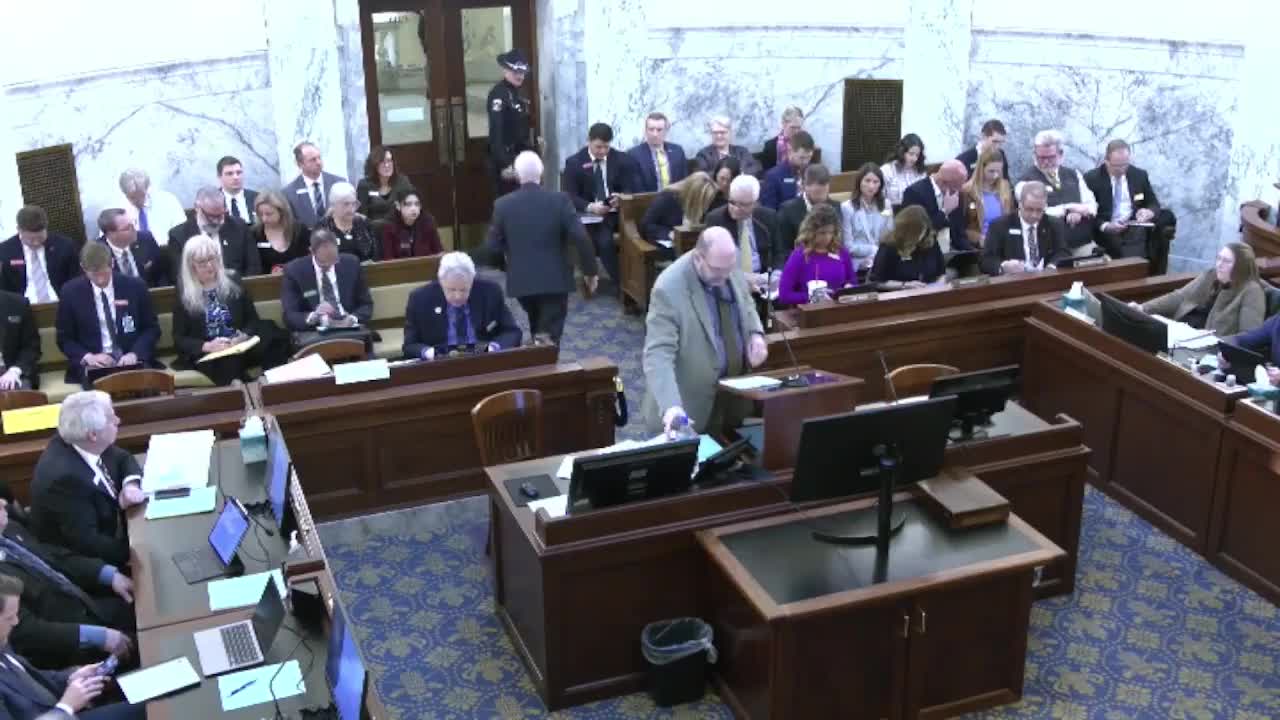
University of Idaho President C. Scott Green told the Joint Finance‑Appropriations Committee on Jan. 27 that the university’s financial position has stabilized after deep budget adjustments early in the decade, but the university continues to manage restricted liabilities, federal research pass‑throughs and program reorganizations prompted by a State Board of Education policy change.
Why it matters: The University of Idaho is the state’s land‑grant research university; its operating budget, federal research awards and facility requests affect statewide workforce development, energy and water research, and medical education capacity.
Budget overview and reserves: Budget analyst Kevin Campbell told the committee the University of Idaho has an enrollment of about 12,286 students, supported by approximately 1,352 full‑time equivalent positions, and a FY2025 base budget cited at about $196.3 million. Campbell and Green reviewed past reductions, including a $26 million base reduction taken in FY2021 to align expenses with revenues. Green said the university has improved its financial position and “maintains sufficient cash reserves to support its short‑term and long‑term obligations,” but that accounting for retiree benefit liabilities (OPEB) produced an effect on unrestricted reserve ratios. Green told the committee the university’s total net position is positive and cited a $319 million total net position figure, but said unrestricted net position remained constrained by those legacy liabilities.
Operational capacity enhancements and EWA: Campbell listed past enhancements and reductions: the university received a governor’s catch‑all initiative (described as an operational capacity enhancement) and in FY2025 received $2.1 million in operational capacity enhancement plus endowment adjustments and an enrollment workload adjustment increase of about $301,000. For FY2026 the university requested roughly $996,300 in operational capacity enhancement (targeted to CEC) and $900,000 in endowment adjustments.
University of Phoenix affiliation talks: Green described a negotiated exclusivity‑limited agreement with the sellers of the University of Phoenix that extended a decision deadline to June 10. He said the university received a $5 million payment on signing that was used to offset transaction expenses, and the agreement includes a break‑up fee of up to $20 million to reimburse the University of Idaho if the sellers pursue another buyer or the public markets. Green emphasized any affiliation would require state board and legislative review and approval before moving forward.
DEI offices and reorganization after SBOE action: In response to a State Board of Education resolution on diversity/equity/inclusion (DEI) offices, Green said the university shut down its Office of Equity and Diversity, Office of Multicultural Affairs, the Black/African American Cultural Center, the LGBTQA office and the Women’s Center; the university dissolved or reassigned those positions, and the chief diversity officer role was eliminated and reclassified so the individual will serve as executive director of tribal relations. Green said the university is reorganizing services under the Dean of Students and retaining programs such as a Vandal Success program and a first‑generation student support unit, and he described those programs as available to all students.
Federal grants and subrecipient pass‑throughs: Committee members asked about federal grants that the university lists on its financial reports and about substantial pass‑throughs to subrecipients; Green said the university administers large research awards and sometimes serves as lead institution, making subawards to partner universities and entities. He agreed to provide committee members with more detail about subrecipient lists and said the university’s compliance office oversees distributions.
INL partnership, energy and water research: Green described a formal agreement with Idaho National Laboratory (INL) to strengthen collaboration on nuclear materials and fuel cycling, integrated energy systems, power engineering and secure cyber‑physical systems. He cited specific projects — for example, 3‑D printed parts for molten salt reactors and work on hydrogen supply chains and cyber‑resilient power systems — and noted the university’s role as a statewide research hub that collaborates on water research through the Idaho Water Resources Research Institute and hires such as Kendra Kaiser to lead water priorities.
WAMI/medical education: Green said the university remains committed to training physicians in Idaho and is discussing a possible expanded partnership with the University of Utah School of Medicine as a potential way to expand capacity; any change would require State Board of Education approval. Green also summarized that the university continues to run its WWAMI partnership (University of Washington School of Medicine partnership) and their MD program remains central to Idaho’s physician workforce pipeline.
Financial follow‑ups: Legislators asked about specific ratios and the Board of Education’s December 2024 report showing reserve benchmarks. Green explained that a prior accounting change tied to retiree medical benefits required a $33 million adjustment to unrestricted reserves; those funds are now reflected as restricted assets tied to OPEB. He said the university will continue working to reach board benchmarks and welcomed follow‑up questions; the committee postponed further systemwide colleges/university questions to a later date to allow more time.
Sources: Testimony and slides from Kevin Campbell (Budget and Policy Analyst, Legislative Services Office) and President C. Scott Green (University of Idaho) and named university staff at the Joint Finance‑Appropriations Committee hearing on Jan. 27.