Get Full Government Meeting Transcripts, Videos, & Alerts Forever!
Get email alerts on the Behavioral Health topic
No spam. Unsubscribe anytime.
JFAC advances Idaho behavioral-health appropriations and psychiatric-hospital forecast adjustments
Summary
The committee approved federal and state funding adjustments to support Idaho Behavioral Health Plan implementation, civil-commitment expenditures and state hospital forecast shifts, and adopted language on federal-funding restrictions and transfer authority.
The Joint Finance-Appropriations Committee voted on a package of behavioral-health and psychiatric-hospital items including federal grant appropriations for Idaho Behavioral Health Plan (IBHP) implementation, one-time general-fund support for civil-commitment costs, and several forecast-driven fund shifts for state hospitals.
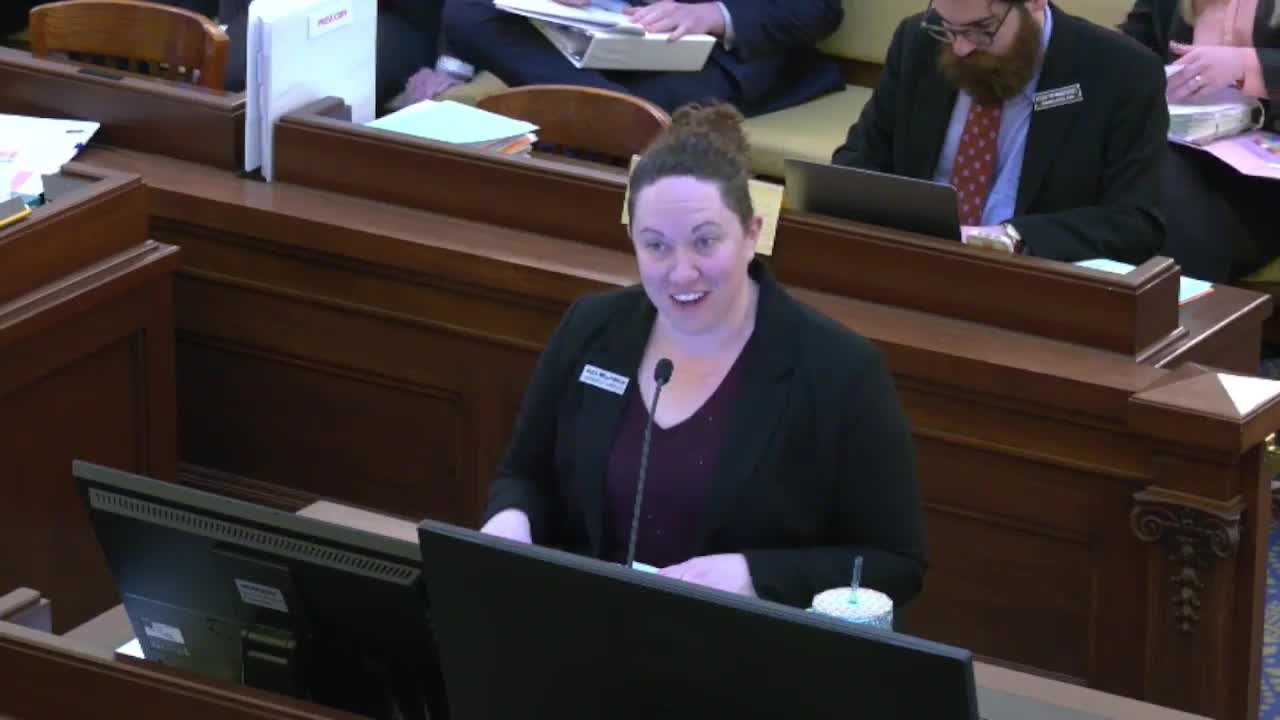
Alex Williamson, a Legislative Services Office analyst, presented the sequence of requests and told the committee unused federal grant appropriations tied to delayed IBHP implementation had expired and needed re-appropriation. The committee approved a $6,743,800 federal appropriation for IBHP contract implementation (FY2025). Williamson also described multiple FY2026 requests and transfer-exemption language that would let Mental Health Services and the psychiatric hospitalization division transfer trustee/benefit payments and personnel costs between classes under Idaho Code 67-3511 as the division implements IBHP and responds to managed-care changes.
On psychiatric hospitalization, the committee approved a $2,663,500 one-time general-fund addition for community hospitalization civil-commitment expenditures and enacted forecast-driven fund shifts for State Hospital West and State Hospital South that move certain expenses between federal, dedicated and general funds. The committee also approved a related FY2026 maintenance package that contained minor general-fund adjustments and fund shifts to net to zero for the division.
Committee members debated the longer-term structure of foster care and ombudsman roles, mental-health service silos between child and adult budgets, and whether programs such as LIHEAP should live in Health and Welfare or another agency; those remarks were part of earlier committee visits by House and Senate welfare committee members.
Language adopted by unanimous consent directs reporting and clarifies transfer authority in the event federal funding is changed or rescinded. Several votes were recorded by roll call; most motions passed with recorded majorities. Committee chairs asked agencies to report back on implementation details, including how funds for direct-care workforce rate increases flow to worker pay.
Ending: The committee provided due-pass recommendations for the behavioral-health and psychiatric-hospital measures it approved and asked Health and Welfare staff for follow-up reporting on workforce impacts and fund-shift implementation.