Get Full Government Meeting Transcripts, Videos, & Alerts Forever!
Get email alerts on the Higher Education topic
No spam. Unsubscribe anytime.
Lewis‑Clark State College asks JFAC for operational funds as enrollment rebounds, highlights LAUNCH and prison‑education gains
Summary
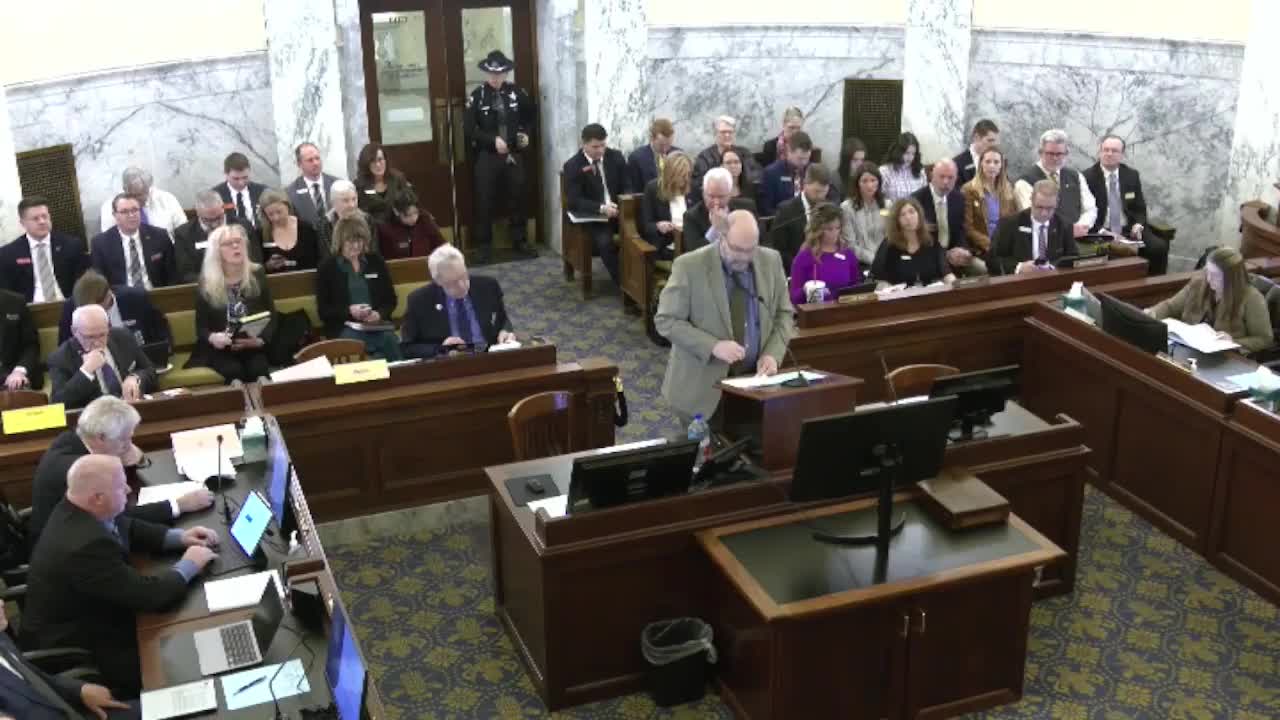
Lewis‑Clark State College President Cynthia Pemberton told the Joint Finance‑Appropriations Committee on Jan. 27 that enrollment is rising, LAUNCH awards have boosted career‑technical programs and the college needs additional operational capacity enhancement funding to address a persistent faculty and staff salary gap and campus operating costs.
Lewis‑Clark State College President Cynthia Pemberton told the Joint Finance‑Appropriations Committee on Jan. 27 that enrollment is rising, LAUNCH grant awards have boosted career‑technical programs and the college needs additional operational funding to address a persistent salary gap and campus operating costs.
The presentation by Budget and Policy Analyst Kevin Campbell (Legislative Services Office) set the college’s FY2025 base appropriation at $41,700,000 and noted that tuition and fee revenue is reappropriated across fiscal years; Campbell said Lewis‑Clark reported about $23,700,000 in tuition and fees in FY2024 that were reappropriated into FY2025. Campbell also explained the Normal School Endowment/Income Fund distributions referenced in statute and described the Enrollment Workload Adjustment (EWA) as a three‑year weighted credit‑hour formula that can increase or reduce an institution’s appropriation.
Why it matters: Pemberton told the committee LC State serves a high proportion of Pell‑eligible, first‑generation students and functions as “North Idaho’s health care education leader.” Committee members pressed for details about enrollment trends, budget drivers and how one‑time and ongoing enhancements are being used.
Enrollment, salary gap and EWA: Pemberton said LC State’s headcount was 3,881 and that the college is recovering from pandemic declines. She told JFAC the college’s career‑technical enrollment rose about 19% in fall 2024 and a further roughly 10% this spring, and that the institution is seeing overall increases (she described a 2.4% increase in fall and a 9% increase this spring elsewhere in testimony). Pemberton and Campbell described the EWA outcome for FY2026 as a reduction of $102,500 for LC State.
Pemberton also highlighted a persistent compensation gap. She said LC State faculty and staff lag peers: “at LC State, based upon most recent data … an LC State instructor, on average, makes $9,000 less per year than the new average of K‑12,” and an assistant professor makes about $3,777 less per year than K‑12 comparators, according to figures she offered the committee. Pemberton said the college has requested $287,000 in operational capacity enhancement for use toward competitive employee compensation (CEC) and that closing the gap to a middle‑median would require about $1.2 million.
LAUNCH and workforce programs: Pemberton credited the LAUNCH scholarship program with measurable student results at LC State. She told the committee about 240 individual students who received LAUNCH funds last fall, with a disproportionate share in career‑technical programs such as auto, CNC machining, diesel, HVAC and welding. She said 10 of 11 industrial programs enrolled LAUNCH recipients and that LAUNCH supported workforce training outcomes — citing that 36 of 54 fourth‑year electrical apprenticeship students completed their program with LAUNCH support.
Prison education and other program priorities: Pemberton said LC State is the first Idaho institution to complete transition from the Department of Education’s experimental prison education program to full program approval, and that the college now serves “nearly 200 incarcerated individuals” at sites in Orofino, Pocatello and Boise. She described nursing and allied‑health program expansion, including new graduate nursing capacity, and said those program changes will likely affect future EWA weighting.
How enhancements were used: Pemberton described FY2024 operational capacity enhancement funds as covering occupancy costs and custodial staffing for the Schweitzer Career Technical Engineering Building, IT upgrades, and marketing/promotion used to stabilize and grow enrollment. She said reserves had been used temporarily to cover shortfalls until enhancement funding filled gaps.
Committee follow‑ups and context: Committee members asked for the salary compendium being compiled by Legislative Services Office comparing the eight institutions and K‑12. Campbell and Pemberton offered to provide LC State‑specific salary and enrollment materials to the committee by email. Several committee members pressed for clarity on the EWA mechanics; Pemberton and Campbell described it as a weighted credit‑hour formula that is net‑zero across the system’s weighted allocation bucket but can produce institution‑level increases or decreases depending on relative credit‑hour production and weightings.
Closing: Pemberton closed by reiterating LC State’s mission as a small, teaching‑focused public four‑year college that “connect[s] learning to earning,” asked for continued legislative support for salary competitiveness and said operational capacity enhancement funding would be used to make progress on the compensation gap and to maintain new facility operations.
Sources: Testimony and slides from Kevin Campbell (Budget and Policy Analyst, Legislative Services Office), President Cynthia Pemberton (Lewis‑Clark State College), and Julie Cray (vice president for finance and administration, Lewis‑Clark State College) at the Joint Finance‑Appropriations Committee hearing on Jan. 27.