Get Full Government Meeting Transcripts, Videos, & Alerts Forever!
Get email alerts on the Public Health Budget topic
No spam. Unsubscribe anytime.
Lawmakers review Public Health Services budget; requests include program restorations, data modernization and rural physician incentives
Summary
The Joint Finance Committee reviewed the Department of Health and Welfare’s Division of Public Health Services budget, hearing requests to restore multiple ongoing programs, fund ARPA-linked one‑time projects including data modernization, and make rural physician loan‑repayment funding ongoing.
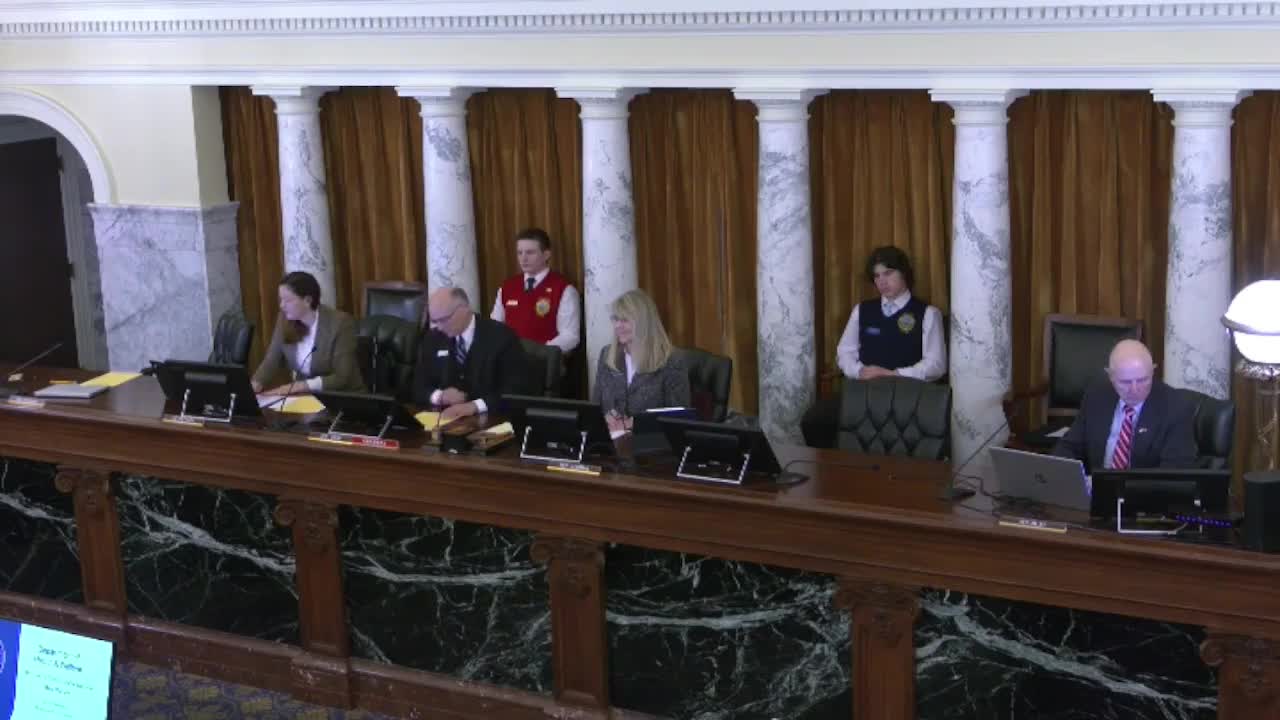
The Joint Finance-Appropriations Committee on Monday heard a detailed presentation of the Department of Health and Welfare’s Division of Public Health Services budget, including requests to restore previously reduced programs, fund data modernization and sustain a rural physician incentive program.
Keith Bybee, division manager for budget policy analysis, briefed the committee on the division’s organization and budget trends, pointing to a sharp reconciliation of prior one‑time federal pandemic funds and the division’s current base appropriations. Bybee said the division had 256.52 full‑time equivalent positions established and four vacancies as of Aug. 31, 2024, and that trustee and benefit payments account for roughly half of the division’s budget.
The budget matters because the Division of Public Health Services manages immunizations, communicable‑disease prevention, vital records, laboratory services, suicide prevention and multiple grant programs that are distributed through local public health districts and community providers.
Director Alex Adams said the department treated the fiscal review as a form of zero‑based budgeting. “I would characterize it as a healthy exercise,” Adams said. “We got about $10,000,000 out of the budget or a 6% reduction year over year.” He said the division’s FY2025 appropriation was about $164,020,000 and the governor’s FY2026 recommendation was roughly $154,000,000, reflecting program shifts and one‑time funding changes.
Committee members and agency staff walked through two sets of requests: one‑time (largely federal/ARPA carryover) enhancements and ongoing restorations.
One‑time requests highlighted on the agenda include: public health infrastructure workforce grants to support local public health districts; a vital statistics data modernization project funded via CDC data modernization grants to automate birth and death registration and improve data exchanges; WIC system modernization to improve participation and recruitment; and a fourth year of a communicable‑disease prevention grant that would fund 4.4 limited‑service positions (request: $2,041,800 one time, federal funds). The agency’s total one‑time request shown on the slide package was $8,752,500 and the governor recommended all of it.
Ongoing restoration requests presented by Bybee and agency staff include a slate of programs previously moved from ongoing status to one time. Among the amounts explained on the record: - Suicide prevention: $1,807,700 ongoing from the general fund and $195,000 federal. - Drug overdose prevention: restore $2,820,200 and 4 FTE. - Refugee health screening: restore $991,000 ongoing and 1.5 FTE. - Alzheimer’s and dementia‑related program: $275,200 ongoing. - Fit and Fall Proof (community exercise program): $140,000 ongoing. - Reinstatement of federal block‑grant funding (repurposed to other block‑grant areas): $190,000 ongoing. - Diabetes/health equity work: $1,063,700 ongoing. - HIV prevention activities: $957,300 ongoing. - Oral health workforce support for dental health professional shortage areas: $379,600 ongoing. - Integrated hepatitis surveillance and prevention: $599,200 ongoing. - Women, Infants and Children (WIC) supplemental nutrition program: $6,944,600 ongoing. - Temporary Assistance for Needy Families (TANF) wrap: $400,000 ongoing.
Fiscal detail presented to the committee included that personnel costs represented about 18.6% of the division’s spending (about $27 million) and operating expenditures were shown at about $46 million. Bybee said much of the FY2021 appropriation increase reflected CARES Act and ARPA funds that led to a large variance in expenditures in earlier years; the FY2025 numbers were described as a “true up” toward appropriated levels.
Committee members also asked about data‑modernization efforts previously funded with ARPA and about measurable results before approving additional funds. Director Adams said the department would supply a brief written update on past IT and data modernization work, and staff committed to circulate a three‑page summary of system upgrades and planned uses of funds for committee review.
Members questioned several program placements and whether some functions should be administered by other state agencies. Adams and Division Administrator Elke Shaw Tullock said the department’s focus is on prevention and public health functions such as vital records, laboratory testing and communicable‑disease surveillance, and they offered to work with legislators on transfers where appropriate.
The committee took no formal vote during the hearing; presenters took questions and agreed to supply committee staff with additional documentation and performance measures for specific lines, including the immunization request and the department’s data‑modernization progress.
Looking ahead, staff flagged a recent technical correction for a cancer data registry that JFAC approved on Jan. 17 and reminded members that more granular follow‑up on program outcomes and grant performance would be provided to the committee outside the hearing.
For now, the department asked lawmakers to consider restoring multiple ongoing public health programs to baseline funding and to support one‑time investments intended to modernize data systems and shore up workforce and local public health infrastructure.