Get Full Government Meeting Transcripts, Videos, & Alerts Forever!
Get email alerts on the Higher Education Community College Capacity topic
No spam. Unsubscribe anytime.
College of Southern Idaho requests $475,700 enrollment adjustment, warns of capacity strain after 20% fall enrollment spike
Summary
College of Southern Idaho officials told the Joint Finance-Appropriations Committee that enrollment surged 20% in fall 2024 and the college is seeking a $475,700 enrollment workload adjustment and support for capacity-building to handle waiting lists and larger classes.
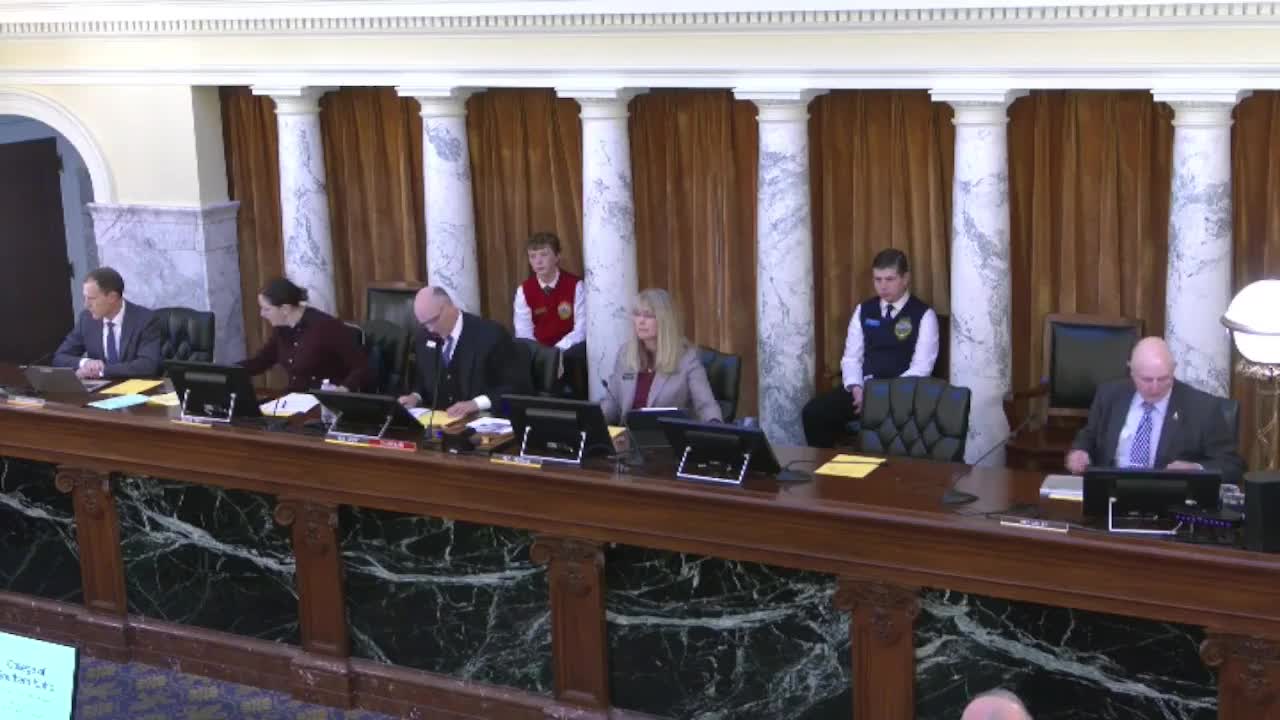
The College of Southern Idaho asked the Joint Finance-Appropriations Committee on Monday for a $475,700 enrollment workload adjustment and for continued support to hire faculty and expand learning spaces after a 20% increase in new students in fall 2024.
The request came during a presentation by Kevin Campbell, a budget and policy analyst with the Legislative Services Office, and remarks from Dr. Aldine Fisher, president of the College of Southern Idaho. Campbell told the committee that CSI’s FY 2026 request and related budget materials appear in the legislative budget book and noted that Idaho community college appropriations are made to trustees as a single “trustee and benefits” line rather than by object category. He noted CSI’s 2024 single appropriation was $18,600,000 and that the college’s five-year average base-budget growth was about 6.4%.
The college is asking specifically for the enrollment workload adjustment (EWA) of $475,700 in FY 2026 and said the request is intended largely to fund additional instruction capacity. “CSI’s 2026 request is for the enrollment workload adjustment in the amount of $475,700,” Campbell said.
Why it matters: CSI reported rapid growth in its first-year class separate from dual-credit enrollment and warned the committee that without additional capacity the college may not be able to sustain the expanded student body. That has implications for staffing, classroom space and program-specific clinical placements that affect workforce pipelines such as nursing and radiologic technology.
Details and context: President Fisher told the committee CSI enrolled 579 Idaho Launch recipients in fall 2024 and that overall the college saw a 20% enrollment growth that term outside of dual-credit. Fisher said CSI has added roughly 3,800 students since fall 2021 and that the surge is stressing instructional capacity.
Fisher described several program bottlenecks: a radiologic technology program that admits 15 students annually but currently has a waiting list of 84; nursing programs constrained by clinical placement and instructor availability; and heavy demand for welding cohorts being run morning through evening across Twin Falls, Burley and Jerome to meet employer demand. She said the college would use a requested five general-education instructors to reduce class sizes and clear wait lists if the EWA and other capacity proposals are funded.
On faculty pay, Fisher said CSI lags regional community-college peers by about 12% and said an estimated $400,000 in ongoing funding would move faculty pay closer to regional community-college averages. “If we compare the College of Southern Idaho with the mean for pay for faculty and staff within the region … we’re about 12% off,” Fisher said.
Governor’s capacity initiative and other funding: Fisher recommended committee support for the governor’s proposed capacity-building investments and the governor’s one-time $15 million infrastructure proposal for learning spaces, which the college said it would use for specialized instructional facilities needed for CTE trades and health programs.
What was not decided: This hearing was informational; the committee did not take any formal action or vote on CSI’s request during this session.
Ending: Fisher closed by highlighting student-support programs that the college says have improved retention, including a Bridge-to-Success program that scaled from 40 to 500 students. She reiterated CSI’s request for help with faculty compensation and capital support as the college prepares to mark its 60th anniversary.