Get Full Government Meeting Transcripts, Videos, & Alerts Forever!
Get email alerts on the Property Taxation Homeowner Exemption topic
No spam. Unsubscribe anytime.
Committee advances bill requiring Idaho license for homeowner-exemption tracking
Summary
The Senate Local Government and Taxation Committee voted to send House Bill 316 to the floor with a do-pass recommendation after testimony that the bill clarifies counties should use Idaho driver’s license numbers to track homeowner exemptions, with an exception for active-duty military and a 90-day window for new residents.
The Senate Local Government and Taxation Committee voted March 6 to send House Bill 316 to the Senate floor with a do-pass recommendation after sponsor Representative Jeff Ehlers and a county-association witness described the measure as a technical clarification to help counties track homeowner exemptions.
Representative Jeff Ehlers, R.-Meridian, said the bill follows last year’s House Bill 449 and “specifies it needs to be an Idaho license.” He told the committee the clarification was needed because some counties had interpreted the prior language to allow out‑of‑state identification, which he said prevents reliable tracking in state databases and can allow a person to claim homeowner exemptions on multiple properties. Ehlers said the bill also preserves an existing military exception and gives new in‑state buyers 90 days after closing to obtain an Idaho driver’s license and submit it for the exemption.
Sarah Westbrook, representing the Idaho Association of Counties, said assessors had similar questions after last year’s change and that the association supports the cleanup. “We are in support of this bill and we appreciate Representative Veil helping us to just make sure there’s clarification,” Westbrook said.
Committee members asked several practical questions about enforcement and penalties. During debate a committee member read aloud a state penalty provision for improperly taken exemptions, describing a monetary repayment equal to recovered property tax and potential misdemeanor charges for repeat offenses within seven years.
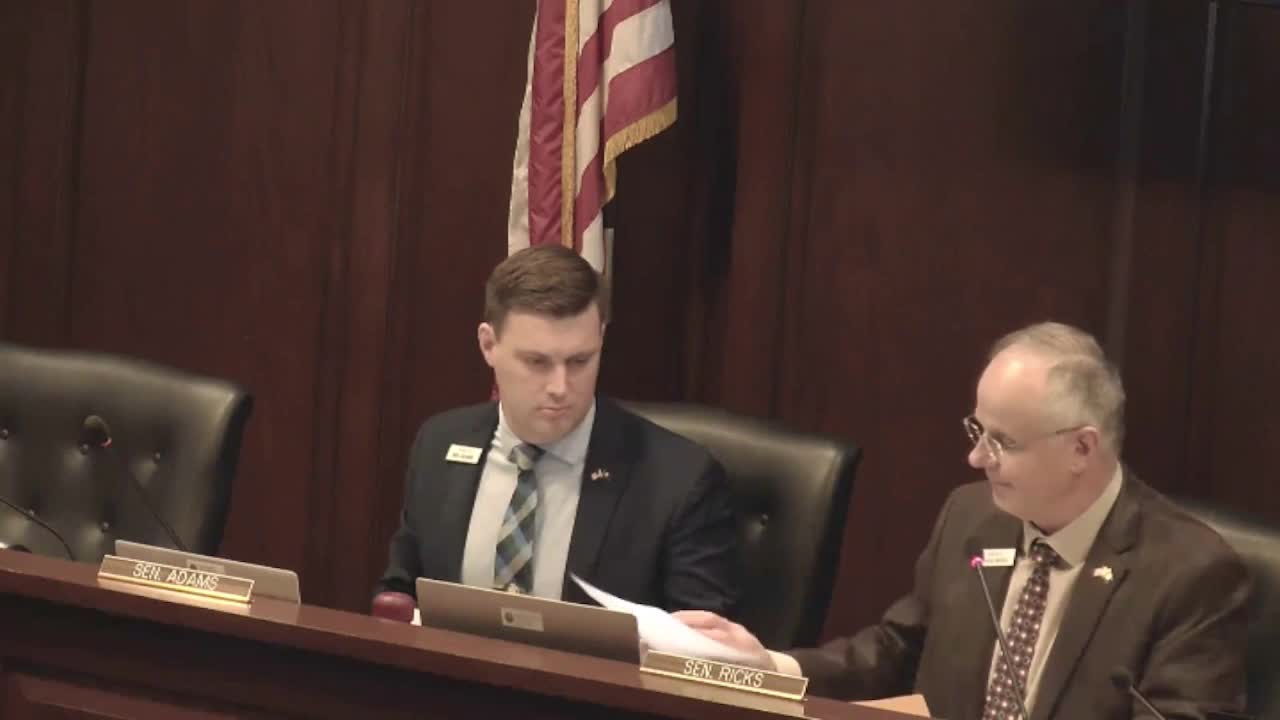
Senator Toews moved to send House Bill 316 to the floor with a do-pass recommendation; Senator Adams seconded. The committee adopted the motion by voice vote — “Aye” — and the measure was advanced. Chairman Ricks noted that, when there is no designated Senate sponsor, the senator who makes the motion often agrees to carry the bill on the floor; Senator Adams accepted that role in this case.
The bill’s changes are limited to identification requirements and the timing for new residents; the committee did not adopt substantive changes to eligibility or benefit amounts during the hearing.
Votes at a glance: The committee recorded a motion by Senator Toews, second by Senator Adams, and advanced House Bill 316 by voice vote.