Get Full Government Meeting Transcripts, Videos, & Alerts Forever!
Get email alerts on the Committee Process topic
No spam. Unsubscribe anytime.
JFAC outlines hearing schedule, work groups and new LSO impact-review team
Summary
Committee co-chairs and analysts reviewed the JFAC hearing calendar, explained how work groups will operate, and introduced new Legislative Services Office staff including an impact-review team and research fellows to support performance-oriented budgeting.
Co-chairs and analysts outlined the committee's hearing schedule, week-by-week work-group plan, and staff assignments for the 2025 session, and Legislative Services Office leaders introduced new analysts and a newly formed impact-review team to support evidence-based and performance-oriented budgeting.
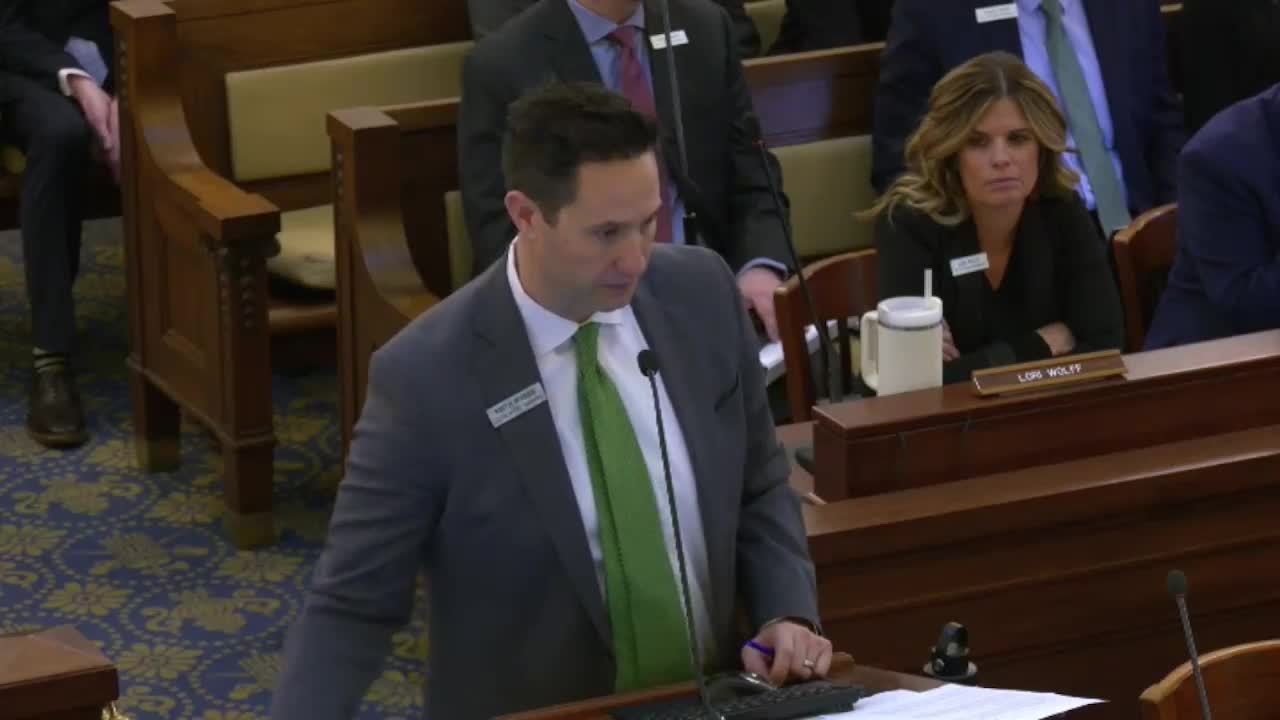
Calendar and process: Keith Bybee walked the committee through a week-by-week hearing schedule that begins with orientation and front-end reports, moves into agency presentations and work-group meetings, and targets completion of JFAC business in roughly 10 weeks (projected mid-March). The committee will meet roughly 8:00–9:30 a.m. daily; work groups begin at about 9:30 a.m. to review the details of budgets assigned to members.
Work groups and assignments: Bybee and co-chairs told members that the committee will "divide and conquer"—work groups will handle detailed review of agency maintenance budgets, replacement items and enhancements so the full committee can set program maintenance and later set enhancements and priority budgets. Members were advised to contact their assigned analysts early and schedule time to work with them.
LSO staff and new resources: Paul Headley, deputy chief of the Legislative Services Office, introduced an LSO impact-review team created to help answer research questions, produce short briefs, and do deeper evaluation when needed. Headley described five added staff resources including analysts with law, PhD and IT/GIS skills and two research fellows on loan from the McClure Center at Boise State University (noted as the Idaho Science Technology Policy Fellowship participants). Roles include domain assignments for education, health and human services, natural resources, transportation, public safety and elected-official budgets.
Why it matters: Members were told the committee's workload is heavy and the new impact-review and analyst resources are intended to support performance budgeting, evidence reviews and implementation risk assessments. Headley said a recurring theme for the team will be to ask for evidence of program effectiveness—has a program worked in Idaho or other jurisdictions, and what evaluation supports the proposal?
Follow-up directions: staff offered to provide members with contact information for their assigned analysts and the committee asked LSO to share examples of prior GEAR fund usage and performance-measure materials. Co-chairs reminded members that replacement-item hearings will be held on Jan. 15 to review agency requests for capital replacement and IT/security items that agencies consider maintenance items but have previously required separate review.