Get Full Government Meeting Transcripts, Videos, & Alerts Forever!
Get email alerts on the Medicaid Budget topic
No spam. Unsubscribe anytime.
Idaho lawmakers hear broad Medicaid budget increases, hospital-assessment and behavioral-health implementation costs
Summary
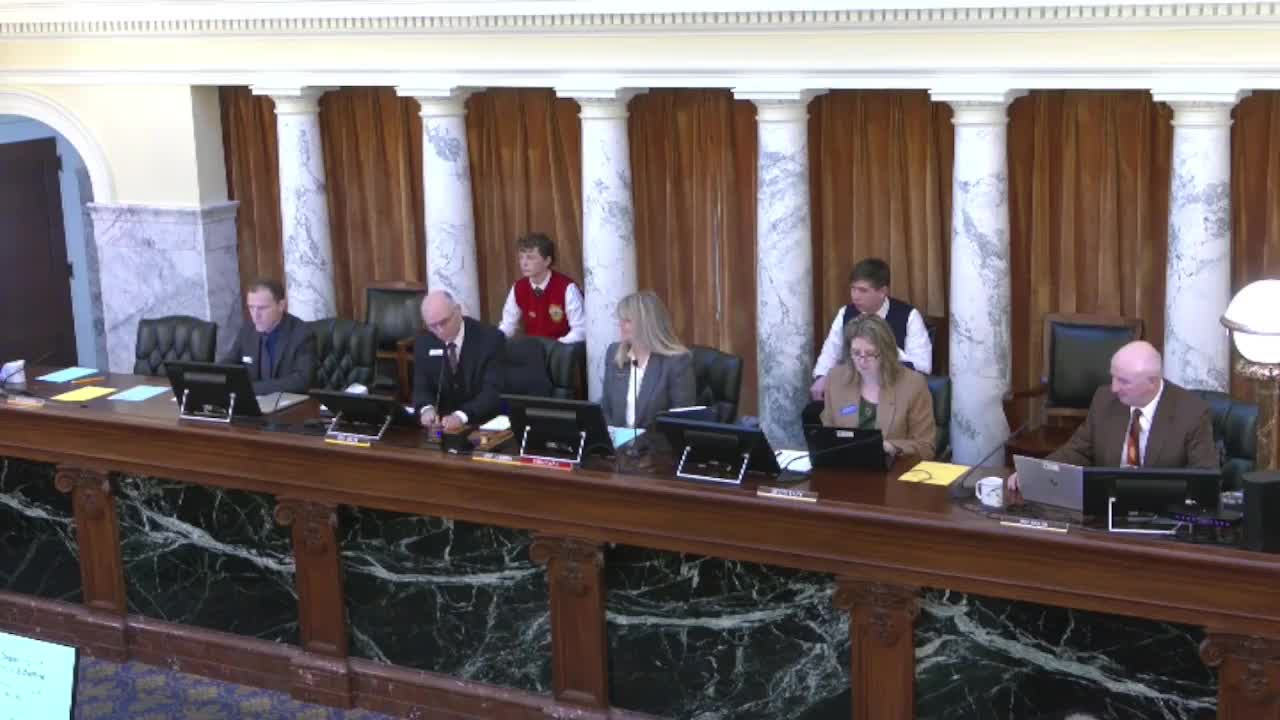
A Division of Medicaid budget presentation at the Joint Finance-Appropriations Committee on Feb. 26 detailed large supplemental and ongoing requests tied to caseload growth, provider‑rate changes and technical adjustments to how Idaho draws federal matching dollars.
A Division of Medicaid budget presentation at the Joint Finance-Appropriations Committee on Feb. 26 detailed large supplemental and ongoing requests tied to caseload growth, provider-rate changes and technical adjustments to how Idaho draws federal matching dollars.
Alex Williamson, budget and policy analyst with Legislative Services, told the committee the division administered five Medicaid benefit plans and that Medicaid appropriations and payments have grown substantially: the department appropriated about $4.56 billion for fiscal 2024 and expended roughly $4.27 billion.
The presentation outlined five fiscal‑2025 supplemental requests and a slate of fiscal‑2026 enhancements the department and analysts say are largely driven by expected utilization and several one-time and ongoing implementation costs. The supplemental items include money for federally required reviews, system configuration tied to the Idaho Behavioral Health Plan (IBHP), a capitation-rate change for managed‑care plans, and a request to process a larger hospital assessment tied to upper payment limit (UPL) calculations.
Why it matters
Medicaid is an entitlement program jointly funded by the state and federal government; higher caseloads, provider rate changes and how the state calculates reimbursements can shift large sums from federal to state dollars. Committee members pressed department officials on why costs exceeded earlier forecasts, what parts of the spending are ongoing, and how the state can improve forecasting and vendor performance.
Key budget items and department explanations
• External quality review (EQR): Williamson said Idaho must complete an annual EQR of its managed care organizations. After failed procurements and a market shift, the department requested roughly $1.35 million (noted as a one‑time then corrected to ongoing in budget materials) to onboard a vendor and complete required reviews for behavioral health, dental and Medicare‑Medicaid dual plans.
• IBHP system configuration and capitation: The department requested one‑time funds to complete information‑technology work to onboard a new IBHP vendor and to implement capitation‑rate increases. Williamson described a $695,500 one‑time request for system configuration and an additional $108.8 million one time (federal funds) for capitation-rate increases allocated across plans: approximately $33.0 million to expansion, $1.9 million to coordinated, $14.8 million to enhanced and $58.0 million to basic plan categories.
• Hospital assessment and UPL changes: The department requested $190 million (fiscal 2025 supplemental request and a mirrored ongoing request for fiscal 2026). Of that total, Williamson said $77 million would be from the dedicated hospital assessment fund and $113 million from federal funds. The request ties to Senate Bill 1350 (2022) and changes in how the UPL is calculated; hospitals’ assessments and the state's subsequent access to federal matching dollars produced larger than forecasted assessments hitting the state’s books.
• MMIS procurement: The state is mid‑procurement on a new Medicaid Management Information System (MMIS). Williamson said Idaho is in year 3 of a five‑year MMIS effort, with a requested state portion of about $11.7 million (already in an MMIS dedicated fund) and a federal portion of about $105 million.
• Population forecast adjustments and FMAP shift: Williamson and department officials described a population forecast adjustment request of roughly $367 million that includes a projected shift of about $45 million from federal funds to the state general fund because of changes to Idaho’s annual FMAP (federal medical assistance percentage) calculations and caseload, pricing and utilization assumptions.
Department stance and implementation priorities
Alex Adams, director of the Department of Health and Welfare, told the committee he submitted a ‘‘maintenance’’ budget and did not request benefit expansions or provider‑rate increases beyond what is required. "I submitted as close to a maintenance budget as I could submit," Adams said, adding that the increases largely reflect statutory entitlements, caseload growth and costs the department cannot control under federal and state law.
Behavioral‑health managed care rollout and vendor performance
Juliette Sharon, deputy director overseeing Medicaid programs, described the IBHP contract as larger in scope than prior agreements because services historically paid fee‑for‑service or delivered by the Division of Behavioral Health were brought into the managed plan. Sharon said system changes were needed at go‑live (July 1) and that the department has continued configuration work to align utilization, enrollment and reporting.
On provider payments, Sharon said the IBHP contractor, Magellan, had early problems but has taken corrective steps: "Magellan addressed those very, very quickly in partnership with our team," she said, and the department has imposed more than $100,000 in liquidated damages and put Magellan on corrective action plans. Committee members raised concerns about providers reporting delayed payments and the department said it remained vigilant and would continue to monitor the contractor’s timeliness and payment denials, and that staff would follow up with individual legislators who reported provider complaints.
Direct‑care workforce and rate‑increase accountability
Committee members pressed the department about whether prior rate increases intended for home‑and‑community based services (HCBS) and other provider rate adjustments reached direct‑care workers. Juliette Sharon said the department conducted provider audits and a follow‑up cost survey; early audit work suggested only a small portion of prior increases flowed directly to direct‑care wages. Sharon said the department was evaluating whether it has authority to impose stronger guidelines to ensure funds reach direct care staff while weighing impacts on small providers.
Family Personal Care Services
Sharon said the department submitted an amendment to CMS to suspend the family personal care services option (a non‑required Medicaid benefit) so that trained family members will remain able to provide care but not necessarily to their own child or spouse; the department will monitor access following any change and brief the legislature on impacts.
Postpartum coverage and federal review
Adams said Idaho’s state plan amendment to extend postpartum coverage is fully operational and that about 2,800 women had used the expanded postpartum coverage. He also said the federal Centers for Medicare & Medicaid Services rejected a portion of the state's requested limitation that would align postpartum coverage eligibility with Idaho law related to out‑of‑state elective abortions; the department appealed the rejection and has a scheduled hearing on that appeal.
Forecasting, supplementals and budget mechanics
Adams and analysts emphasised forecasting uncertainty: Medicaid projections hinge on caseload, utilization and federal matching rules. Adams said the department will begin publishing baseline, pessimistic and optimistic forecasts and a monthly Medicaid transparency report so lawmakers can see month‑to‑month spending relative to forecasts. He warned that Medicaid budgets commonly require supplemental appropriations when expense forecasts prove low, and that insufficient appropriations can force the department to delay payments and carry obligations into subsequent years.
Committee follow‑up and requests
Legislators asked the department for follow‑up materials, including: a detailed breakdown of postpartum coverage services; additional data on provider payments and timeliness under IBHP; status and timeline for the MMIS procurement; progress on the KW litigation resource allocation tool and related contract work; and evidence that rate increases are reaching direct‑care staff. Williamson and department officials agreed to provide follow‑up materials and meet individually with members who reported provider payment problems.
What the transcript did not show
There were no formal committee votes or motions recorded on the supplemental or enhancement requests during the session recorded in the transcript. Several members urged policy changes and stronger cost‑containment mechanisms, but the department repeatedly noted that major changes to eligibility or required benefits would need legislative policy action rather than administrative changes.
Looking ahead
The department’s supplemental and enhancement requests will compete for appropriation as JFAC and the legislature consider fiscal‑2025 and fiscal‑2026 budgets. Committee members signaled appetite for more detailed follow‑up on provider payments, the KW settlement resource‑allocation work and evidence that previous rate increases have strengthened the direct‑care workforce. The department said it will continue to provide monthly transparency updates and produce the additional information requested by legislators.
Ending note
Department officials described many of the items as requirements or implementation costs necessary to maintain federal compliance and program operations; lawmakers questioned whether the governor’s office or the legislature should pursue additional policy levers to contain long‑term program growth.