Get Full Government Meeting Transcripts, Videos, & Alerts Forever!
Get email alerts on the Reading Screening Vision Tracking topic
No spam. Unsubscribe anytime.
Presenter links reading struggles to vision-tracking issues and proposes simple classroom screening and exercises
Summary
Mary Mahalka told the House Education Committee that vision-tracking problems can cause reading and attention difficulties. She demonstrated low-cost screening exercises she says can be taught to parents and volunteers; legislators asked technical and implementation questions and expressed interest in exploring classroom or volunteer-based pilot
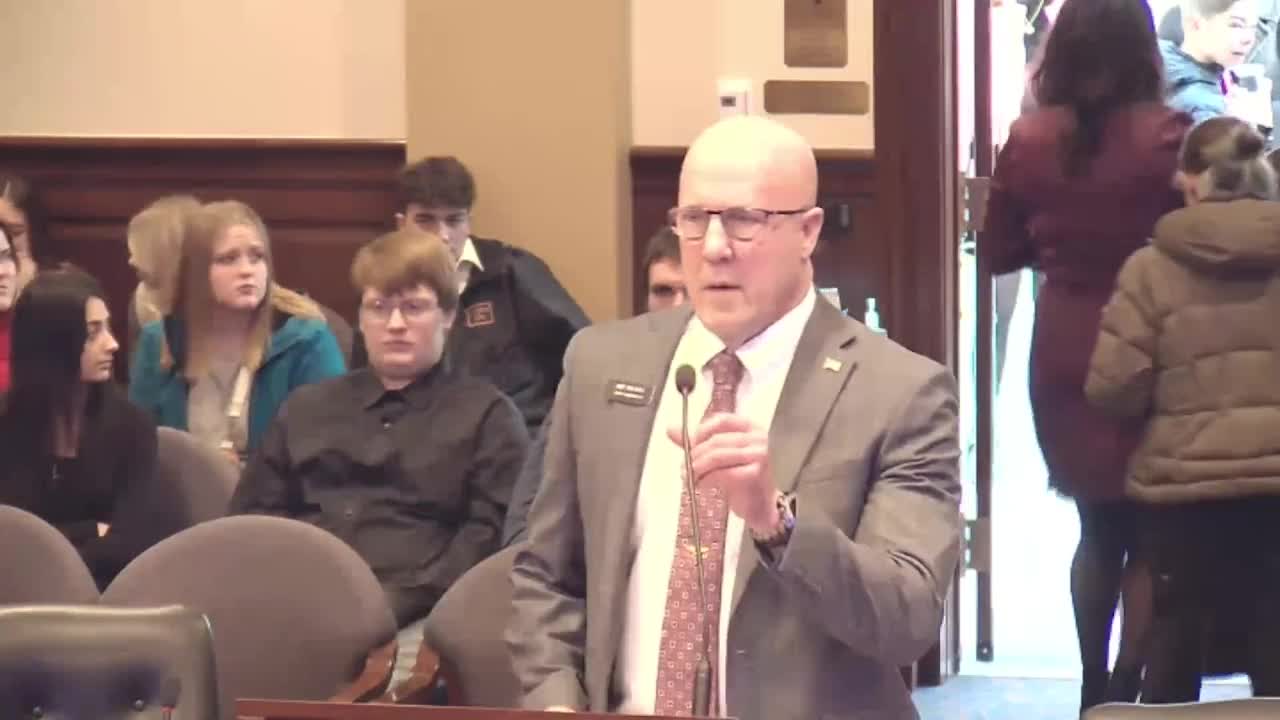
Mary Mahalka told the House Committee on Education that basic vision-tracking deficits — how the eyes work together and follow text — are an under-recognized cause of reading and attention problems in students and presented a low-cost screening-and-exercise approach she said can be used with children and adults.
Mahalka, a former teacher who said she lives in Star, told the committee that a recent U.S. education report showed declining fourth-grade reading proficiency and that “only 31 percent of fourth grade students performed at or above the proficiency level,” citing a National Center for Education report. She said that in her experience administering quick vision-tracking checks and short, daily exercises, many students labeled with dyslexia, ADD or ADHD show remediable oculomotor or binocular-vision problems.
“I have worked with individuals from age 4 to 94,” Mahalka said. “There is hope. With simple testing and daily practice, you can raise the level of classroom learning and behavior when students have their vision-tracking system working optimally.”
What she demonstrated and recommended
Mahalka demonstrated several simple screening steps she said take a minute or less — tasks such as tracking a pencil in a horizontal figure-eight pattern, near-point tracking, and an object-focused exercise she called an “X on the wall” to practice eye fixation while walking forwards and backwards. She described low-cost materials including a “Marsden ball” (a sight-tracking target), tongue depressors and a simple bead-and-string tool she said can be made from cardboard and yarn.
Mahalka said the exercises aim to improve binocular coordination, reduce distracting eye movements (saccades) and “cross the midline” so both brain hemispheres activate during reading tasks. She recommended a short, daily practice program with a calendar-style reward chart and told the committee she has used these methods in classrooms and privately with parents and volunteers.
Questions and context from committee members
Committee members asked how the approach intersects with phonics and classroom instruction: Representative Gerhardt asked whether the exercises tie to phonics instruction; Mahalka said the practices “tie together beautifully” and are meant to be used alongside standard reading instruction.
Representative Harris and others asked how the program would be delivered. Mahalka said she typically trains parents or volunteers to run the exercises one-on-one rather than performing them in a full classroom. She described the approach as low-cost and said it can be taught to parents to practice at home.
Mahalka cited several striking figures during her presentation, including a claim that testing of inmates at Folsom Prison and at a juvenile-detention facility in Pomona showed roughly 70 percent had vision-tracking difficulties; she said developmental optometrists had documented similar rates in some adult populations she has worked with. Committee members commented that the numbers merited follow-up and verification.
What the committee heard and next steps
Representative Ted Hill, who introduced Mahalka to the committee, said the approach had worked for his son and said he did not have a legislative vehicle in the hearing but hoped the committee and education stakeholders would explore practical ways to bring screening and low-cost interventions into schools, potentially with volunteer or pilot efforts.
No formal action or motion was taken on Mahalka’s presentation. Committee members expressed interest in learning more and asked for materials and contact information to explore possible pilot programs or volunteer training that would not require significant state funding.
Ending
Mahalka’s presentation concluded with committee members thanking her and asking staff to retain her materials; members emphasized interest in low-cost, pilotable approaches that could be tested in classrooms or after-school programs.