Get Full Government Meeting Transcripts, Videos, & Alerts Forever!
Get email alerts on the Hjm1 Obergefell Federalism topic
No spam. Unsubscribe anytime.
Idaho committee advances memorial asking U.S. Supreme Court to revisit Obergefell after hours of testimony
Summary
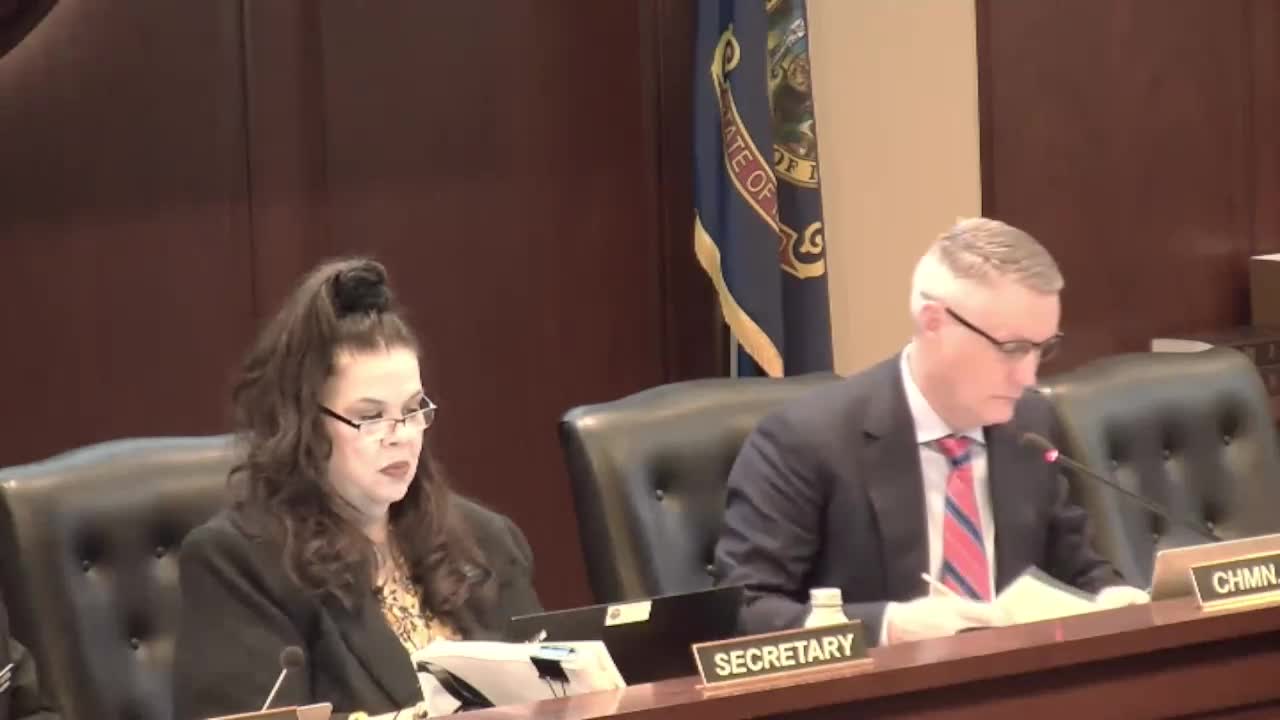
The Idaho House State Affairs Committee voted to send House Joint Memorial 1 — asking the U.S. Supreme Court to revisit Obergefell v. Hodges — to the House floor with a do-pass recommendation after extended debate and public testimony.
The Idaho House State Affairs Committee voted to send House Joint Memorial 1 — a memorial asking the U.S. Supreme Court to reconsider its 2015 ruling in Obergefell v. Hodges — to the House floor with a do-pass recommendation after extended debate and two hours of public testimony.
Representative Heather Scott (R-2), sponsor of the memorial, told the committee the measure seeks to “uphold federalism and a state's right to make our own decisions,” and asked the clerk to forward the memorial to the Supreme Court in hopes the justices will revisit Obergefell. Scott framed the issue as one of state authority under the Tenth Amendment and repeated that the memorial is aimed at restoring state decision-making rather than rewriting Idaho law directly.
Committee members and public witnesses debated legal and practical consequences. Representative Keeles asked about a legal opinion the committee received indicating the memorial would not bind the courts; Scott replied that the memorial is intended as a political statement that could prompt the Supreme Court to take a case. Representative Achilles and others warned that appeals to “states' rights” have historical uses to defend discriminatory laws and pressed the sponsor on whether overturning Obergefell would permit other states to expand or restrict marriage in ways that could create inconsistencies and harm.
Multiple witnesses described personal and practical impacts they said would follow an effective rollback of same-sex marriage recognition. Sue Latta, the lead plaintiff in Latta v. Otter, testified that she and her wife married in California and that Idaho’s nonrecognition denied them protections prior to the district and Ninth Circuit rulings that enabled same-sex marriage in Idaho in 2014. Latta said, “No one else was harmed by our marriage.”
Speakers opposing the memorial included clergy, medical professionals, advocates and parents who described family stability, mental health risks, and legal and financial burdens. Rev. Sarah Lawal, representing the Interfaith Equality Coalition, said the memorial would “diminish our collective humanity.” Pediatrician Vaughn Archibald told the committee he sees same-sex parents providing care and cautioned that reprioritizing the legislature’s time to pursue the memorial is a poor use of government resources. Several testifiers referenced the practical effects of losing marriage recognition: spousal Social Security benefits, VA benefits, tax filing, medical decision-making, survivorship and immigration pathways.
Supporters urged the committee to pass the memorial on federalism grounds. Edward Clark of the Idaho Family Policy Center invoked the “doctrine of the lesser magistrates” and urged states to resist what he called federal overreach. Attorney Catherine Hartley of the Pacific Justice Institute and Arthur Schaeffer of Mass Resistance also urged passage.
The committee considered a substitute motion from Representative Achilles to hold the memorial in committee; that substitute failed on a roll call that the clerk recorded as 2 in favor and 13 opposed. The original motion to send the memorial to the House floor with a do-pass recommendation then passed; the clerk recorded Representatives Achilles and Morley as voting no.
What the action does and does not do: the committee vote forwarded the memorial as a formal statement of the Idaho House to the federal judiciary; it does not, by itself, change Idaho statutes or nullify federal court precedent. Witnesses and members discussed legal complexity including Latta v. Otter (the Idaho federal-court litigation), the U.S. Constitution’s Fourteenth and Tenth Amendments, and the practical legal consequences for same-sex couples should federal protections be removed.
Next steps: House Joint Memorial 1 will be scheduled for debate on the House floor. If the memorial reaches the Supreme Court through subsequent litigation, the committee cannot predict how or whether the high court would respond.