Get Full Government Meeting Transcripts, Videos, & Alerts Forever!
Get email alerts on the Charter School Admissions topic
No spam. Unsubscribe anytime.
House committee backs bill giving charter-school admission preference to active-duty military families
Summary
The House Committee on Education voted to send House Bill 163 to the House floor with a due-pass recommendation after testimony and debate on whether charter schools should give admission preference to children of active-duty service members and certain activated Guard and Reserve personnel.
The House Committee on Education voted to send House Bill 163 to the House floor with a due-pass recommendation after testimony and debate on whether charter schools should give admission preference to children of active-duty service members and certain activated Guard and Reserve personnel.
Representative David Levitt, R-Legislative District 25, told the committee the bill would add “families with at least one parent or legal guardian on active duty or active guard and reserve duty as defined in Title 10 U.S. Code §101” to the existing charter-school admission preference tiers. Levitt said the change would not alter the charter-school lottery but would raise military-connected children’s placement priority to reduce academic and social disruptions caused by frequent moves.
The bill’s sponsor framed the proposal as a low-cost measure to support service members and their children. “Ensuring a stable school environment reduces this burden, making transition easier for the entire family,” Levitt said.
Why it matters: Supporters said military families relocate much more frequently than the civilian population — Levitt cited roughly 4,200 active-duty service members in Idaho and about 2,900 dependent children statewide — and that preference would give those students faster access to high-performing charter schools without changing overall lottery mechanics. Opponents warned the priority could displace local residents, siblings or other priority groups already on charter wait lists.
Testimony and stakeholder views
Charter-school leaders, military spouses and parents testified in favor of the bill. Steve Lambert, who identified himself as a 24-year Air Force veteran and charter-school leader in Caldwell, said frequent relocations — “on average, every two to three years” — make securing consistent, high-quality schooling difficult for military children.
Ashley Cotton, director of outreach for the education nonprofit Bloom and an active-duty military spouse, said she struggled to enroll her child in a desired school after a short station move and that several of Idaho’s high-performing charter schools have wait lists. “Idaho is home to some of the highest-performing nationally ranked charter schools,” she said, urging support for the bill.
Andrew Johnson, a charter-school administrator and 20-year veteran, said he wants military children in his schools and that they bring resilience and global perspective. Terry Ryan, CEO of Bloom and board chair of the Idaho Charter School Network, and Emily McClure of the Idaho Charter School Network described how charter schools currently administer lotteries and wait lists and said, in practice, priority students placed into higher tiers can be placed at the top of ongoing wait lists when vacancies occur.
Debate in committee
Committee members voiced both support and concern. Representative Ehart urged passage and said other states have implemented similar preferences without creating unmanageable problems. Representative Harris and Representative Vishniewski said they supported military families but worried the preference could displace local students already enrolled or siblings of enrolled students and stressed local impacts, particularly near large bases such as Mountain Home Air Force Base.
Representative Wisniewski asked several technical questions about how the preference interacts with existing lottery tiers and wait lists; Levitt and charter-network witnesses explained the statutory priority order that the bill would insert (founders first, then military families, then siblings, followed by transfer applicants, resident-area students and finally a random lottery). Witnesses described the operation as a mix of lottery phases and ongoing wait-list practice rather than a single continuous random draw.
Vote and next steps
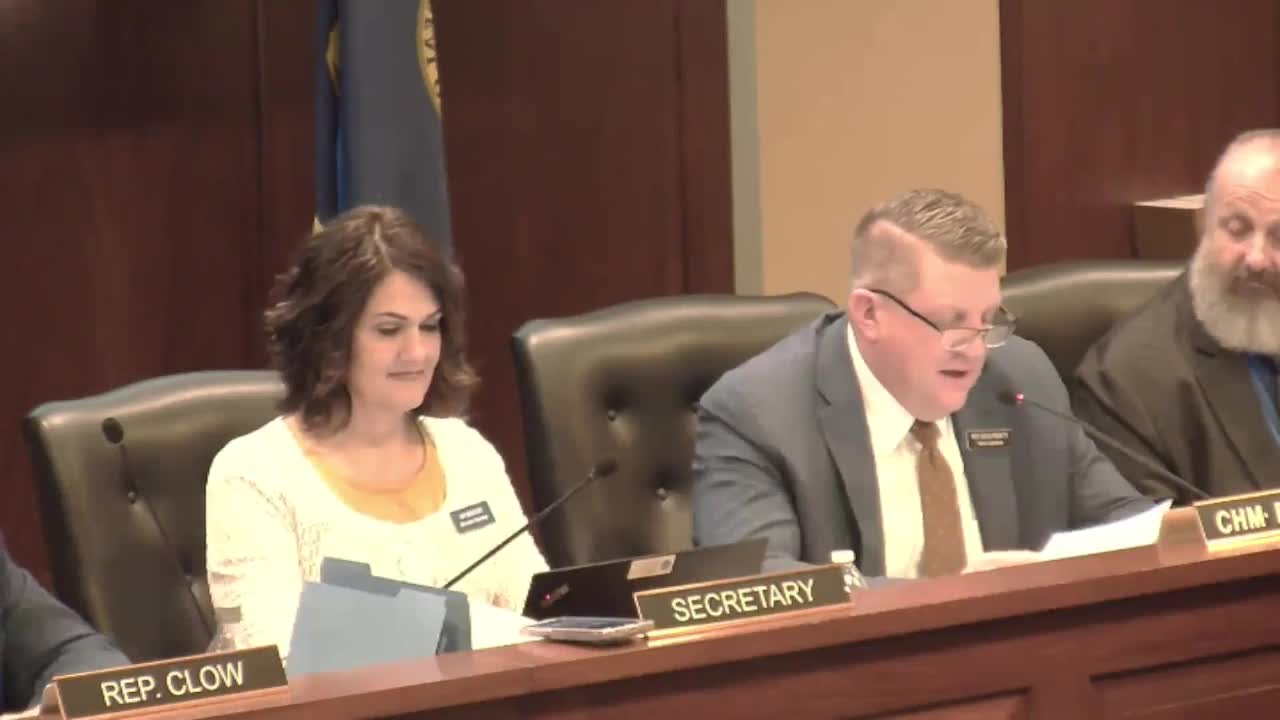
Representative Clow moved to send the bill to the floor with a due-pass recommendation. The committee took a roll-call vote. The motion passed 12–2; committee leadership announced the bill would go to the House floor with a due-pass recommendation.
What the bill would and would not do
- The bill, as presented, would add active-duty and Title 10-activated Guard/Reserve families to charter admission preference tiers. Levitt said it would not create new funding demands on the state and would not change the overall lottery mechanism; it would alter priority order only. - Supporters said the change is intended to provide educational stability for military-connected children who move frequently. Opponents said the law could reduce access for resident families and siblings in communities with limited charter capacity.
Ending
With a 12–2 committee vote, House Bill 163 moves to the House floor for further consideration. Committee members said they will continue to monitor implementation details and local impacts as the measure advances.