Get Full Government Meeting Transcripts, Videos, & Alerts Forever!
Get email alerts on the House Bill 53 topic
No spam. Unsubscribe anytime.
Senate Commerce gives due-pass recommendation to bill that tightens unemployment-insurance fraud penalties and creates identity-theft offense
Summary
House Bill 53, presented by Idaho Department of Labor Director Janie Revere, would redefine key fraud standards, increase disqualification periods for repeat offenders, create a misdemeanor threshold under $1,000 and establish a crime and restitution for UI identity theft; the committee voted to send the bill to the Senate floor with a due-pass.
Janie Revere, director of the Idaho Department of Labor, told the Senate Commerce Committee that House Bill 53 updates Idaho law governing unemployment insurance (UI) overpayments and fraud. "When we find someone has received benefits that they were not entitled to, an overpayment is created," Revere said, and the bill is intended to clarify definitions and align statutory penalties with the department's practice.
Revere said the bill makes four principal changes. First, it separates and codifies definitions of "knowingly" and "willfully," adopting a definition of "willful" based on an Idaho Supreme Court decision and current departmental practice. Second, it increases administrative disqualification periods so that repeated frauds carry proportionally longer disqualifications (for example, a second fraud would yield a two‑year disqualification, a third fraud three years, etc.), instead of the current one-year disqualification per finding.
Third, the bill creates a distinction between misdemeanor and felony fraud by treating fraud involving less than $1,000 as a misdemeanor, mirroring Idaho's theft statute threshold. Fourth, the bill establishes a specific crime for unemployment-insurance identity theft and allows restitution of up to $1,000 to victims; Revere said the U.S. Department of Labor has urged states to mitigate negative consequences for victims of UI identity fraud.
Revere told the committee the Department of Labor expects the change in disqualification to reduce benefits paid to repeat fraud offenders and estimated savings to the UI trust fund of $152,000 in the first year and about $112,000 in future years as previously denied claimants remain ineligible. She said the legislation has no impact on the state general fund.
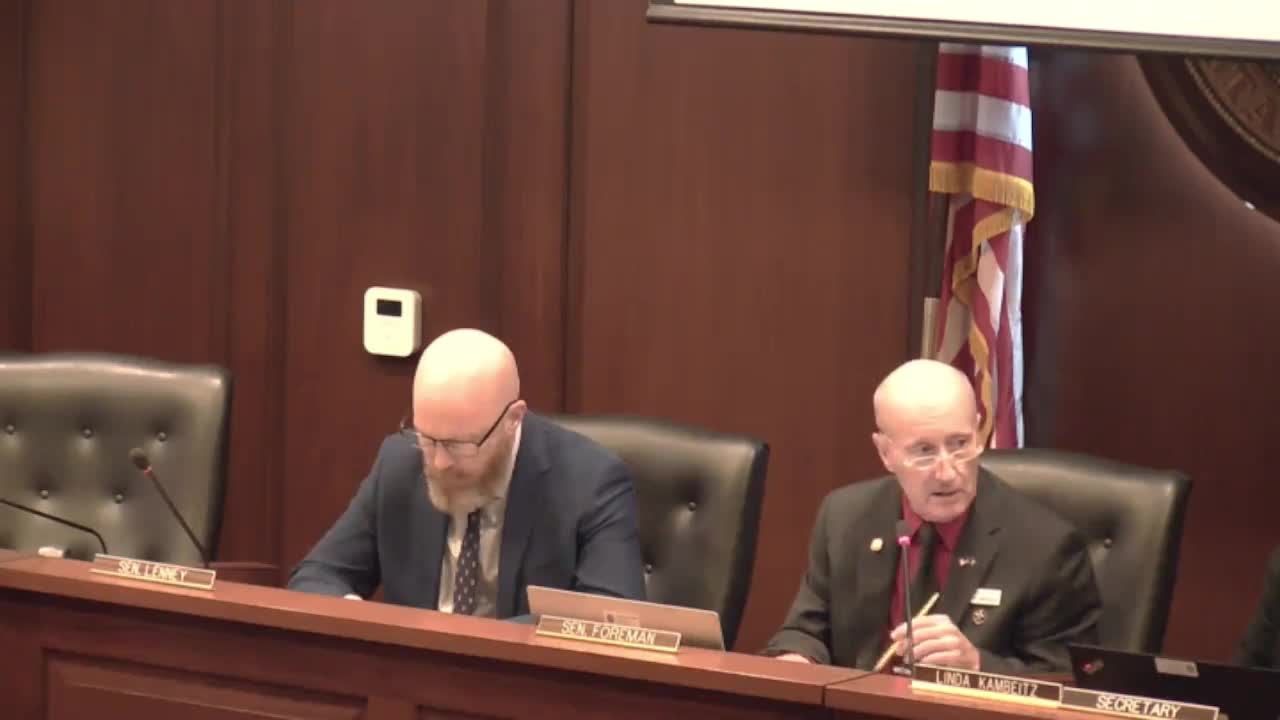
There were no public comments recorded for or against the bill. Senator Guthrie moved that House Bill 53 be sent to the Senate floor with a "do pass" recommendation; Senator Nichols seconded. The committee approved the motion by voice vote; no roll-call tally was recorded in the transcript.
The bill text as described would: codify definitions; expand disqualification periods for repeat fraud; set a misdemeanor threshold for fraud under $1,000; and create an identity-theft offense with restitution provisions. Revere said the changes reflect a post‑pandemic review of statutes and the department's desire for a "consistent and equitable approach to fraud."