Get Full Government Meeting Transcripts, Videos, & Alerts Forever!
Get email alerts on the Wildfire Budget Fire Suppression topic
No spam. Unsubscribe anytime.
Department of Lands outlines firefighting costs, Good Neighbor Authority gains and Timber Protective Association funding requests
Summary
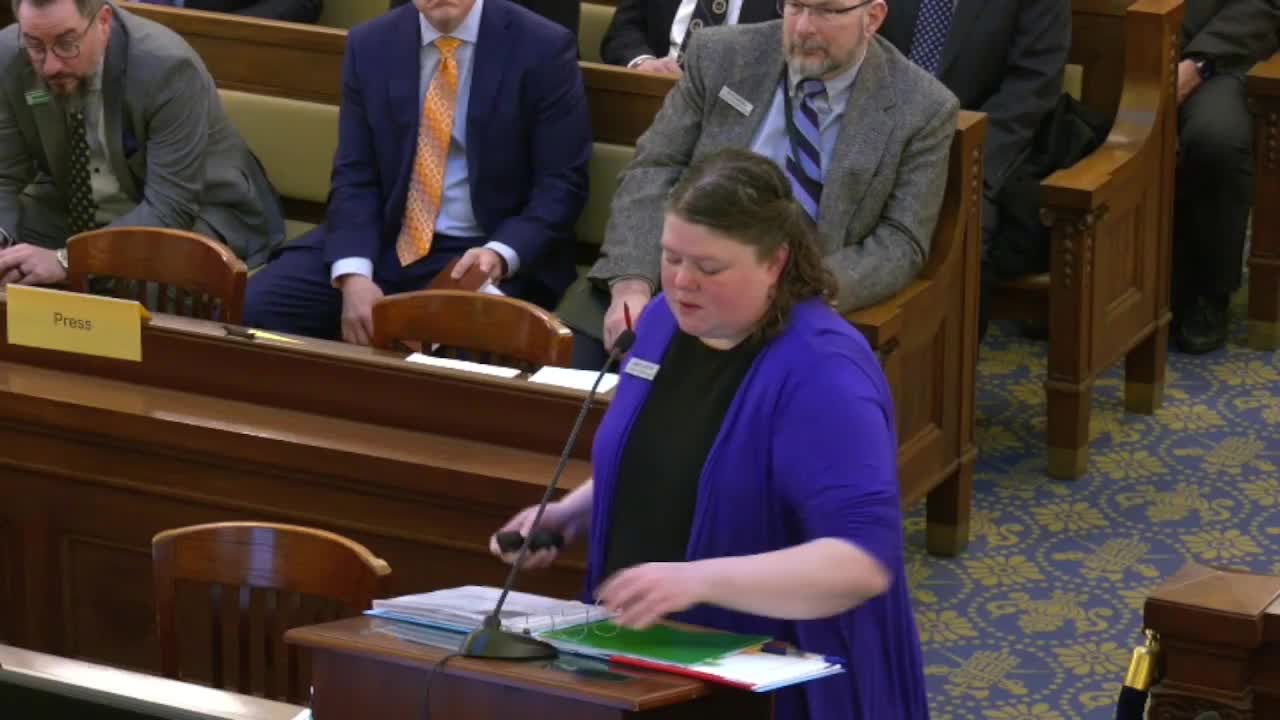
Department of Lands Director Dustin Miller told the Joint Finance-Appropriations Committee on Oct. 24 that wildfire costs, multi-year federal reimbursements and staffing needs continue to pressure the agency’s budget and that the Good Neighbor Authority program has become largely self‑sustaining on timber receipts.
Department of Lands Director Dustin Miller told the Joint Finance-Appropriations Committee on Oct. 24 that the agency faces continuing uncertainty from variable fire seasons, increased costs and multi-year reimbursement timelines with federal partners.
Janet Jessup, budget and policy analyst with Legislative Services, reviewed the Department of Lands’ budget structure and highlighted two budget features that lawmakers should note: a large number of dedicated funds that feed the agency and a continuously appropriated Fire Suppression Deficiency Warrant Fund the agency uses to cover suppression costs during active fire years.
“The legislature started pre-funding [the deficiency fund] in 2015,” Jessup said, explaining that the fund has received regular transfers so the agency can draw on the account when fires occur. Jessup also said the governor recommended transfers totaling $100 million across the current and next fiscal-year accounts: a $60 million supplemental transfer in the current year and a proposed $40 million transfer to the deficiency fund in the governor’s recommendation.
Director Miller told the committee the agency tracks suppression costs and outstanding invoices with federal partners and that some reimbursements can take multiple years. He said the agency’s current suppression balance—before invoices from partners and before proposed transfers—stood at about $35.8 million and, without additional funds the governor proposed, could drop to about $13 million in FY2026.
“If we do not receive the additional funds that’s being asked for by the governor in our budget, that fund could drop down to about 13,000,000 is what we’re projecting, 13,000,000 for FY '26,” Miller said.
Jessup and Miller also described recent growth in wildfire-related appropriations and one-time federal awards; some earlier federal remediation appropriations remain unspent while the agency awaits federal reimbursement timing.
Lawmakers questioned the department about staffing and program requests in the FY2026 budget. The agency requested several new full-time positions tied to fire-program modernization, including a fire emergency support program manager, a fire aviation section manager, and a statewide forest assessment program manager. Miller said those positions align with the governor’s wildfire roundtable recommendations and the agency’s plan to strengthen coordination, aviation capability and assessment work.
The hearing also covered the Timber Protective Associations (TPAs). Jessup explained the Clearwater Potlatch TPA (Orofino) and Southern Idaho TPA (McCall) are quasi-state organizations that receive funds via the Department of Lands to provide fire protection on private timberlands. TPAs are not state employees, so the department requested an equivalent of the 5% cost-of-living/COLA placeholder (CEC) as a separate line-item to give TPA employees parity with state firefighters. The governor’s recommendation increased the TPA CEC relative to the agency request, and the governor also proposed a $1 million firefighter bonus that would cover Department of Lands employees but not TPA employees. Jessup said the TPAs later requested an additional $250,000 so TPA firefighters could receive bonuses as well.
The committee discussed how TPA assessments work: Idaho code provisions cited in the hearing authorize assessments, liens and fines on private timberlands where TPAs provide protection; increased assessments mean larger TPA distributions. Jessup referenced the applicable code sections during her presentation.
Director Miller described the Good Neighbor Authority (GNA) program, which uses state contracting and management to increase active forest restoration on federal lands. Miller said GNA has generated timber receipts sufficient to cover its operating costs and that the program has executed sales covering roughly 24% of the Forest Service’s Idaho timber volume last year. He said revenues have supported personnel, contracts and restoration work, and that the department has agreements with six of Idaho’s seven national forests.
On abandoned mine lands, Miller said the state faces a large backlog—nearly 9,000 abandoned mine sites—and that the Abandoned Mine Land fund, which is fed by a portion of mine license tax receipts, has not kept pace with the need for closures, monitoring and remediation.
Committee members asked for data on historical suppression spending, reimbursement timing with federal partners, and the projected effect of the governor’s proposed transfers. Miller said the agency will provide supporting information and stressed that the electronic fire business system the committee previously funded is improving billing and reimbursement processing.
No formal committee votes were held in the hearing. Lawmakers indicated interest in the governor’s recommended transfers, the proposed personnel requests, and the parity request for TPA employees; several asked follow-up questions or requested additional data from the department.