Get Full Government Meeting Transcripts, Videos, & Alerts Forever!
Get email alerts on the Interchange Fees topic
No spam. Unsubscribe anytime.
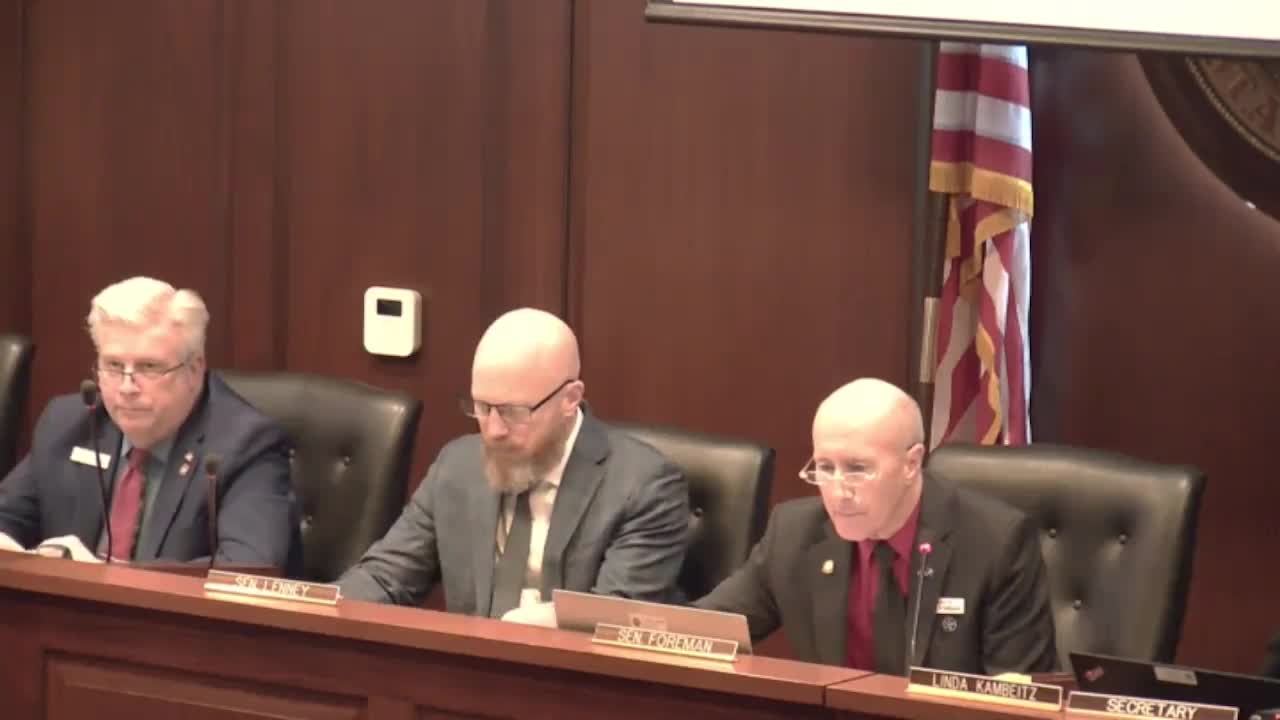
Senate committee debates bill to exclude sales tax and gratuities from interchange fees; no motion advanced
Summary
Senate Bill 1055, which would require interchange ("swipe") fees to be calculated on the purchase amount before sales tax and gratuities, drew hours of testimony from retailers, payment-industry groups and banks. The committee did not move the bill forward; the chair declared it failed for lack of a motion.
Senator Mark Harris presented Senate Bill 1055 to the Senate Commerce Committee, asking lawmakers to require that card‑processing interchange fees be calculated on the purchase amount before sales tax and gratuities are added.
Harris said interchange fees generally run 2 to 4 percent and argued that charging fees on sales tax — money retailers collect for the state and do not keep — is unfair to small businesses. He told the committee that, if enacted, the change would keep “over $36,500,000” in Idaho with local businesses rather than sending that money to out‑of‑state banks, a figure he said described last year’s cost to retailers.
Retail and small‑business advocates backed the proposal. Melinda Merrill of E. Gear and Merrill Public Policy, representing the Northwest Grocery Retail Association, told senators that retailers often operate on thin margins and that many grocery items carry a roughly 1 percent profit margin, meaning processors can earn more from swipe fees on some purchases than the retailer does. Pam Eaton, president and CEO of the Idaho Retailers Association and Idaho Lodging and Restaurant Association, said most modern point‑of‑sale systems already capture separate sales‑tax and gratuity fields (level‑2 data) and that merchants could opt out of any rebate mechanism if they chose.
Opponents argued the change would impose large technology, privacy and legal costs. Steve Rauschenberger of the Electronic Payment Coalition said the global payment network does not include a reliable audited field for sales tax and gratuities in the way proponents described and that creating a state‑level change would require hardware and software modifications across processors and could threaten privacy. "Taking a world class global system and adding a special field for 1 state, that would require us to redo both the hardware and the software of the system for very small savings," Rauschenberger said.
Zach Forster, representing Idaho credit unions, warned that processors might stop accepting transactions from Idaho‑chartered institutions if federal‑chartered institutions were treated differently, reducing payment options for members. Stacey Satterly of the Idaho Bankers Association said the proposal could force merchants and processors to report itemized purchase data and raised concerns about consumer privacy and conflicts with statutes that limit disclosure of certain purchase data (for example, purchases at firearm dealers).
Committee members questioned whether retailers could recoup interchange costs through price changes, whether level‑2 data are sufficiently universal and how federal law and litigation might affect enforcement. Several senators noted an ongoing lawsuit in Illinois over a similar law and asked whether federal preemption would limit any state action.
After extended discussion and testimony from industry and retail groups, the chair said he did not hear a motion to advance the bill. "The Chair not hearing a motion, the Chair declares that Senate Bill 10 55 fails for lack of a motion," the transcript records.
Because committee members voiced concern about legal preemption and the cost of state‑level system changes, the committee did not advance the bill. The hearing transcript records multiple stakeholders from both sides and several senators seeking additional technical and legal analysis.