Get Full Government Meeting Transcripts, Videos, & Alerts Forever!
Get email alerts on the Urban Agriculture topic
No spam. Unsubscribe anytime.
Senate agriculture committee backs printing of RS 31,970 to set minimum rules for residential chicken ownership
Summary
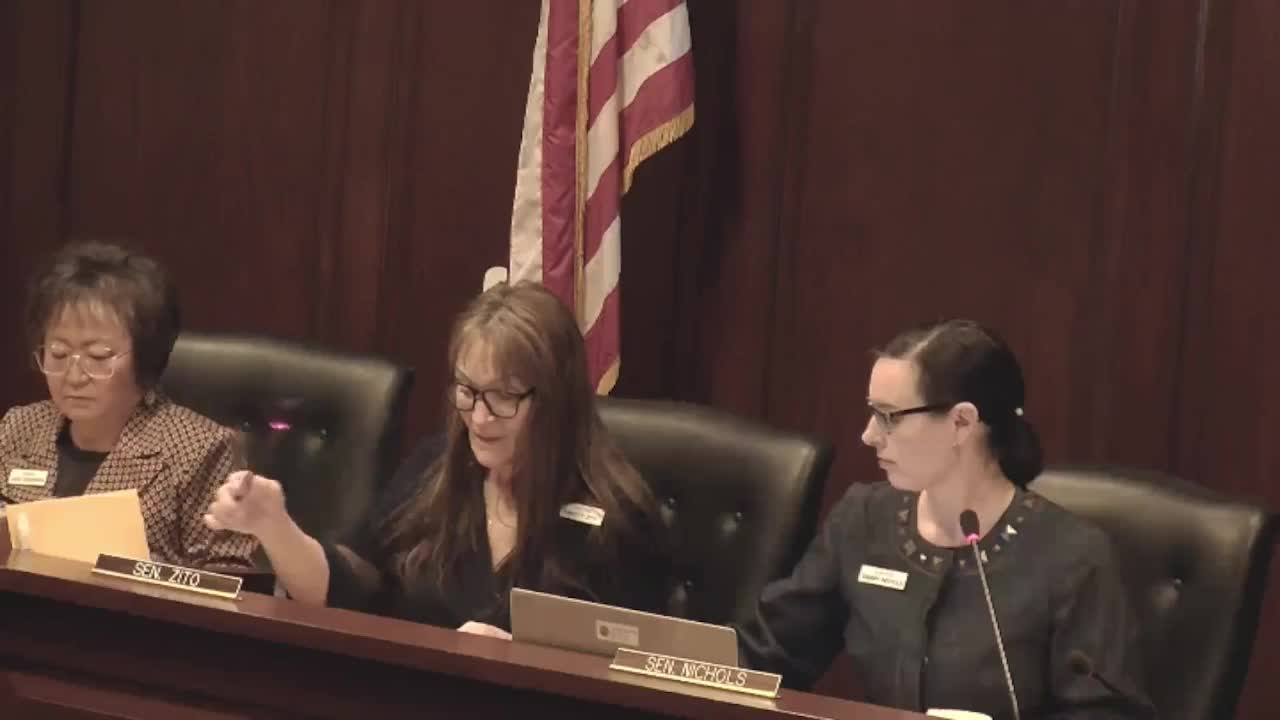
The Idaho Senate Agriculture Committee voted to send RS 31,970 to print after a presentation from Sen. Tammy Nichols proposing statewide minimum standards to allow small-scale chicken ownership in residential areas while preserving local control.
Senator Tammy Nichols, chair of the Senate Agriculture Committee, presented RS 31,970 for a print hearing, saying the draft sets minimum standards to support urban agriculture and residential chicken ownership.
"Basically, this legislation supports urban agriculture in Idaho by setting just clear minimum standards for residential chicken ownership," Nichols said. She told the committee the draft allows property owners to keep up to "4 chickens for 2 tenths of an acre" and excludes multifamily housing and land already zoned for agriculture.
The bill text, as Nichols described it, aims to preserve local control. She said cities, counties and homeowners associations would retain authority for stricter rules, including whether to allow roosters. "HOAs ... are able to decide if they want to have roosters," Nichols said.
Committee members asked for clarifications about related definitions. Senator Taylor asked what "small scale livestock" means in the code and pointed to a definition in the draft. Nichols replied that the term typically covers animals such as "rabbits, chickens" and other small animals and that the committee already has a definition in statute and rule that the draft updates.
After the presentation and brief questions, Senator Leahy moved to send RS 31,970 to print. The motion received a second (not recorded in the transcript) and passed on a voice vote. The committee did not record individual roll-call votes; the transcript shows only a voice "aye" and the chair stating "Motion carries." The motion documentation in the committee record is to send the resolution to print for a formal printed hearing.
Why it matters: Proponents framed the draft as a way to increase household food security and reduce ambiguity for residents who live in neighborhoods where local rules are unclear. Nichols noted rising grocery egg prices as a context for why residential egg production has public interest.
Next steps: Because the committee approved printing RS 31,970, the measure will be prepared for a formal public hearing on the printed resolution. The transcript does not specify a date for the printed hearing.