Get Full Government Meeting Transcripts, Videos, & Alerts Forever!
Get email alerts on the K 12 Funding Formula topic
No spam. Unsubscribe anytime.
Legislative analysts outline public school funding drivers, warn support-unit counts are down
Summary
Legislative analysts told the Joint Finance-Appropriations Committee that Idaho’s public school appropriation is driven by statutory formulas tied to support units, career-ladder funding and federal grants; attendance-based support-unit counts have fallen, reducing statutory distributions even as per-unit funding remains high.
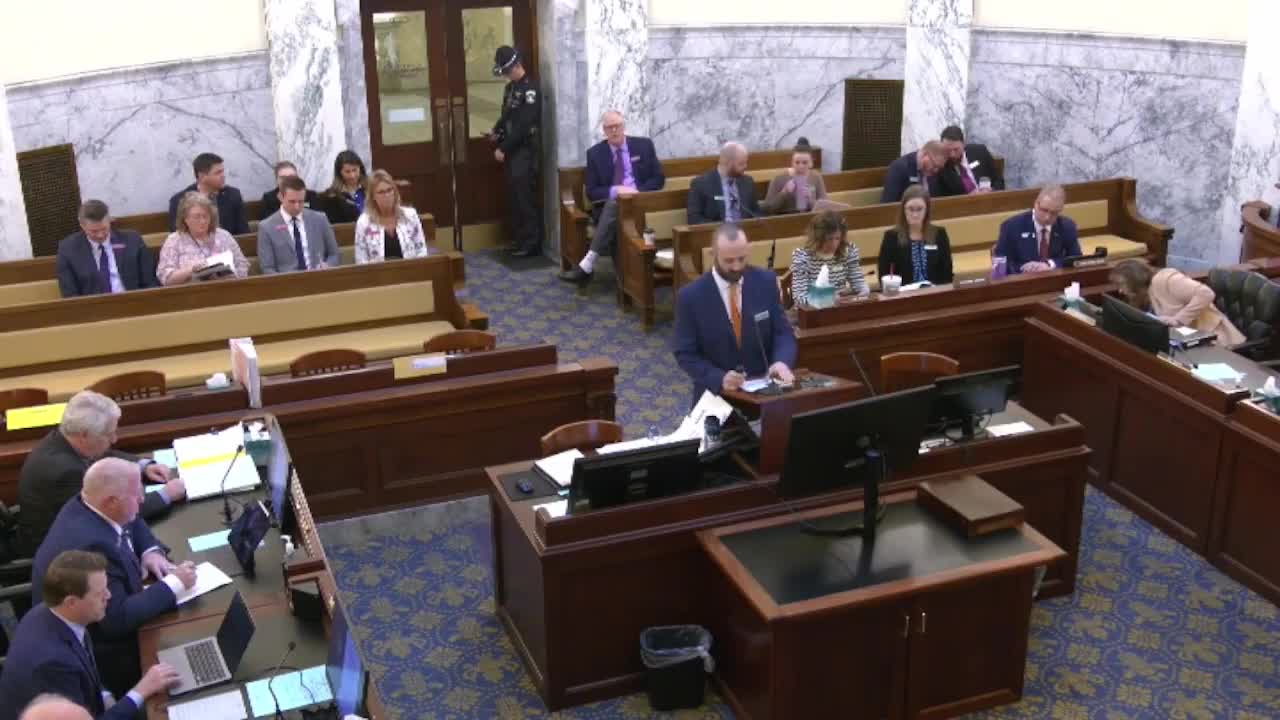
Jared Tetrault, deputy division manager with the Legislative Services Office Budget and Policy Analysis Division, told the Joint Finance‑Appropriations Committee on March 4 that the public school support appropriation is governed by Idaho Constitution Article IX, Section 1 and the statutes in Title 33. He said the program serves 115 local school districts and roughly 75 public charter schools, and that the appropriation is organized into divisions including teachers, student support, facilities and central services.
The state distributes most K‑12 funding through statutory support units; for each support unit the legislature funds 1.55 full‑time‑equivalent positions, Tetrault said. He also described salary‑based apportionment (career ladder), discretionary funds and the Public Education Stabilization Fund (PSIF), which is used to reconcile appropriations and distributions.
Why it matters: Those statutory formulas determine how much money flows to districts even when enrollment or enrollment patterns change. Tetrault told the committee that a shift back to attendance‑based counts after pandemic-era enrollment measures means Idaho is funding roughly 200 fewer support units in the coming year — a change driven by lower average daily attendance, not by a state decision to cut per‑pupil support.
Most of the appropriation is general fund. Tetrault presented high‑level totals showing general fund support in the neighborhood of $2.65 billion–$2.8 billion (depending on year and the governor’s recommendation), dedicated funds in the hundreds of millions, and roughly $251 million in federal funds for public schools in the cited budget documents. He also said roughly $99.9 million shown in the current year represented the last tranche of federal COVID/ARPA dollars within the public schools budget.
Committee members asked several clarifying questions. Senator Ward Engle King pressed Tetrault to explain why fewer support units appear despite similar total enrollment; Tetrault responded that Idaho law requires distribution be calculated using average daily attendance and that post‑COVID attendance percentages remain below pre‑COVID levels. Representative Price asked about the per‑support‑unit value; Tetrault said the average amount per support unit is about $147,000.
Tetrault and committee members also discussed components that commonly drive cost: career‑ladder movement (teachers advancing on the ladder), staff salaries and benefits, health insurance (funded per staff allowance rather than per FTE), transportation, discretionary funds and facilities funding created by recent bills such as House Bill 292.
Tetrault warned that maintenance increases and changes in how career‑ladder distributions are handled will shift what is recorded as “maintenance” in future budget displays, and he noted that some one‑time funds and ARPA/ESSER dollars have been removed from the base, which affects year‑over‑year comparisons.
The presentation included multiple statutory and program references (Idaho Constitution Article IX, Section 1; Idaho Code Title 33; Public Education Stabilization Fund; House Bill 292; House Bill 374). No formal committee votes were recorded during this presentation.
Looking ahead: Tetrault identified pending policy items that could change future appropriations, including proposed changes to the student funding formula, a transportation funding formula and a special needs student fund — each requiring legislation before they affect the committee’s appropriation decisions.