Get Full Government Meeting Transcripts, Videos, & Alerts Forever!
Get email alerts on the Virtual Charter School topic
No spam. Unsubscribe anytime.
Idaho Home Learning Academy presents statewide virtual-charter model, asks Legislature to ease charter cap
Summary
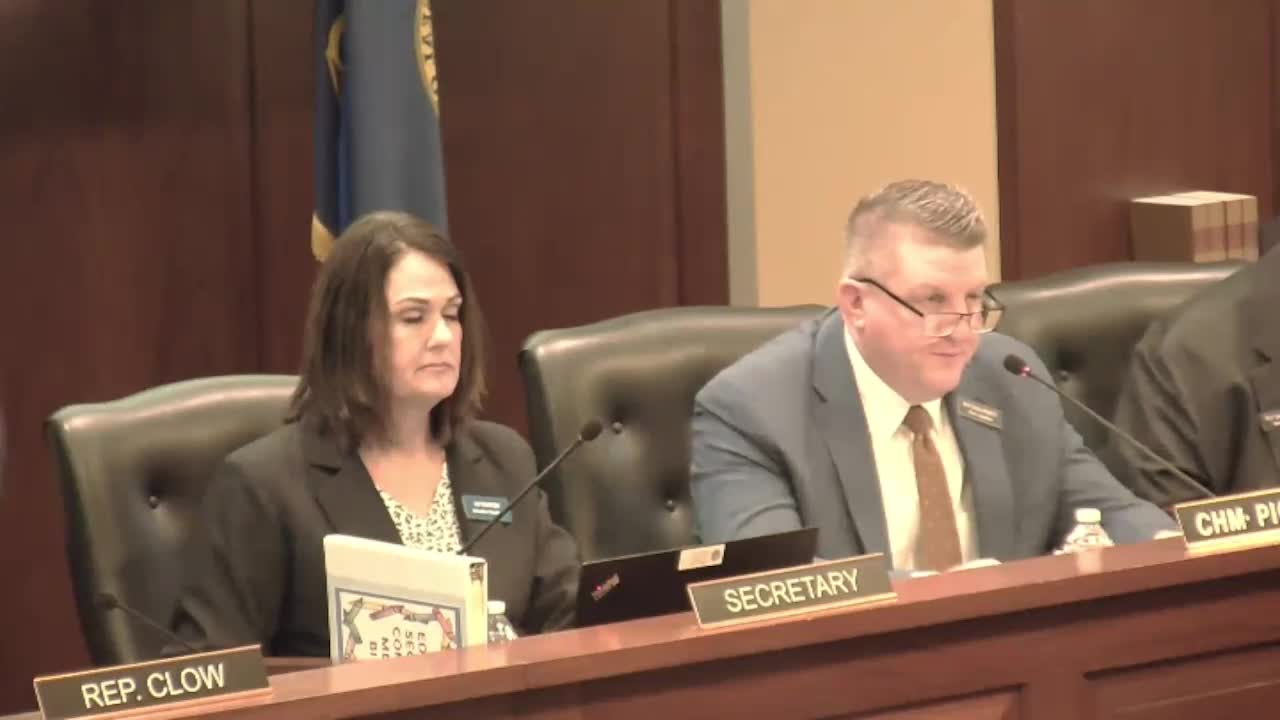
At a House Education Committee hearing, Idaho Home Learning Academy leaders described a statewide K–12 virtual charter model that serves nearly 8,000 Idaho students, described its $1,800-per-student education savings accounts and third‑party provider contracts, and asked lawmakers to raise or remove a statutory cap on charter units.
At a House Education Committee meeting, Terry Sorensen, executive director of Idaho Home Learning Academy, told lawmakers the program is a statewide virtual public charter school authorized by Oneida School District serving K–12 students with a mix of synchronous, asynchronous and in-person supports and an emphasis on parent choice.
Sorensen said Idaho Home Learning Academy provides parents and students “complete curriculum aligned to state standards” and that “parents are each provided an education savings account, or ESA, of $1,800 per student per year.” She described a model in which parents select supplemental resources, submit student artifacts to demonstrate mastery, and receive teacher feedback through routine check-ins and portfolio review.
The petition to legislators: Sorensen asked the committee to consider changing or removing a statutory cap that she said limits charter growth to 40 units (described in testimony as “statute 30 three‑fifty two‑seven”), arguing the numeric cap could force the program to turn away students. She said the program currently serves about 7,925 students and that a fixed numeric cap is inequitable, proposing instead a percentage‑based approach or complete removal of the cap.
Why it matters: Committee members pressed Sorensen on accountability, funding and special‑education compliance as the program scales. Sorensen and staff described multiple accountability measures — biweekly teacher check‑ins for K–8, weekly assignment submission for high school, state testing (IRI and ISAT), internal engagement surveys and monitoring with interventionists — and said the program requires all students to take state tests to remain in the program.
Program structure and partners: Sorensen said Idaho Home Learning Academy is authorized through Oneida School District and partners with three educational service providers (ESPs) — Harmony Education, Braintree Learning and HomeEd360 — selected through an RFP process because the providers offer different program emphases. Sorensen said Harmony focuses on asynchronous online curriculum (K–8), Braintree serves K–12 and emphasizes entrepreneurship and computer‑based electives, and HomeEd360 offers more face‑to‑face and social interaction options.
Funding and contracts: Sorensen and a school administrator described the funding flow as state per‑unit funding routed through Oneida School District. They said the district employs certified teachers and administrators, while the ESPs provide program services under contract. Sorensen said the ESP contracts are structured on the state’s per‑unit basis; she stated the ESP contract rates at roughly $62,000 per unit for K–8 and $52,500 per unit for high school (contracts are paid from the program’s state funding allocation and include ESA administration, curriculum, field trips and other services). School leaders estimated ESP expenditures on the order of tens of millions of dollars annually (school staff gave an estimate of about $20,000,000 in contracts to partners for the current configuration of students and services).
Special education and federal requirements: Sorensen identified special education and the Individuals with Disabilities Education Act (IDEA) as a major implementation challenge. She said the program serves “over 600” special education students, employs about 23 special‑education teachers and six special‑education administrators (figures given in testimony), and that the state’s interpretation of child‑find and related IDEA obligations has required additional oversight and corrective actions. Oneida School District Superintendent Abrams told the committee that the State Department’s special‑education office has applied requirements to Idaho Home Learning Academy in ways the district believes are not being applied consistently to other online providers.
Performance metrics and testing: Committee members raised proficiency scores. Sorensen acknowledged math as a persistent challenge and suggested that many students who enroll come from traditional homeschool settings where they were not previously taught to the state test; she pointed to higher relative performance in older grades, saying eleventh‑grade ELA is “about 68%” in her slide materials and that many high‑school outcomes are at or above state average.
Operational details: School staff said the program employs certified teachers (about 90 at the high‑school level and roughly 280 K–8 teachers were reported in testimony), and that Oneida School District technically employs staff to meet state funding rules while contracts with partner ESPs cover program services and ESA administration. Sorensen said parents may use ESA funds to buy curriculum, tutoring, technology and other materials that align to students’ course schedules, and that some students take classes through their local brick‑and‑mortar districts under memoranda of understanding.
No legislative action taken: The committee did not take any legislative action on the presentation. The only formal motion during the portion of the meeting captured in the transcript was an initial procedural motion to approve minutes from Jan. 21, 2025, which the committee approved.