Get Full Government Meeting Transcripts, Videos, & Alerts Forever!
Get email alerts on the Sales Tax Distribution topic
No spam. Unsubscribe anytime.
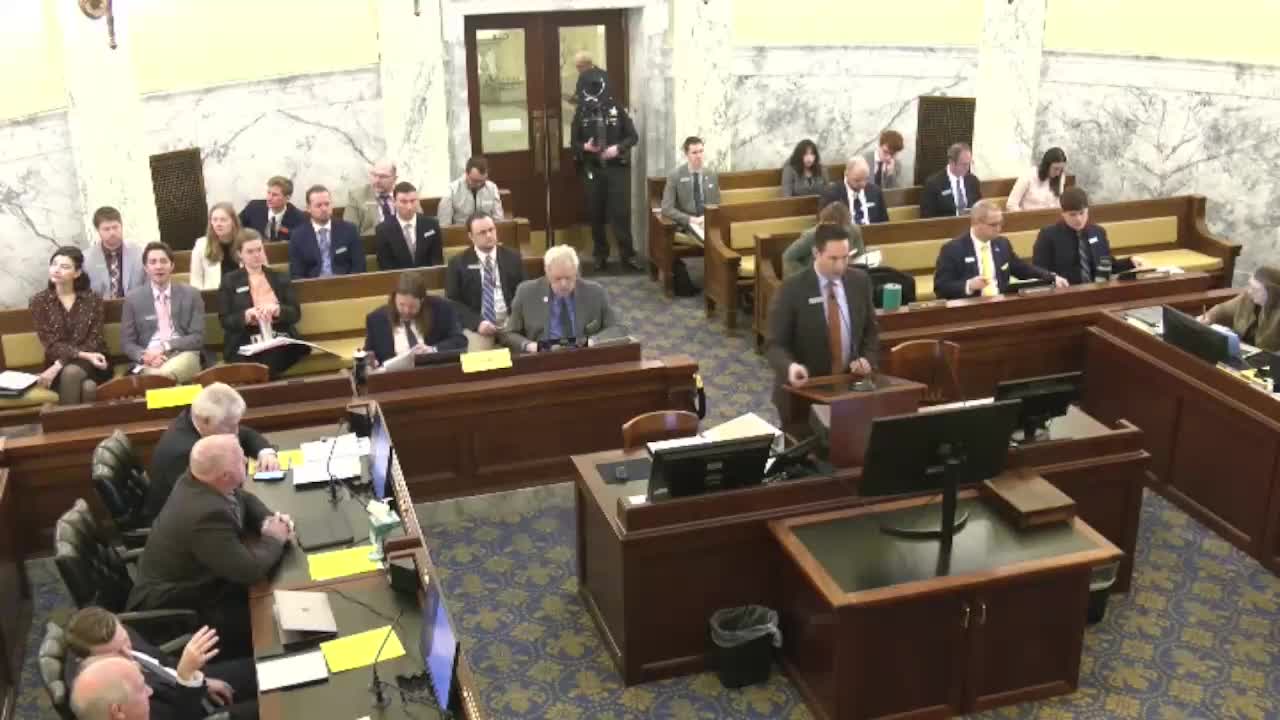
Staff briefs JFAC on sales tax distributions and potential Techum bond carve-out
Summary
Budget staff explained how sales tax collections are distributed under statute, how distributions to local governments and earmarked programs have reduced the general fund share, and how a proposed additional Techum bond carve-out could affect the general fund.
Budget staff walked JFAC members through the statutory distribution of sales tax revenue and how earmarks have reduced the share flowing to the state general fund.
Keith Bybee explained that gross sales tax collections are reduced by refunds and transfers (including the statutory transfer to the tax relief fund) before distributions. Net sales tax collections are then distributed by formula that includes an 11.5 percent revenue-sharing allocation to local governments, a 4.5 percent allocation tied to the Techum program (with $80 million currently earmarked for bonding) and other statutory earmarks such as school modernization and the tax relief fund.
Using the legislative budget book figures, Bybee said gross sales tax collections were about $3.1 billion in 2024 and are projected to grow to about $3.37 billion in fiscal 2025 and $3.50 billion in 2026. He said the general fund's share of sales tax receipts has shrunk over time; in the years before the Great Recession roughly 85 to 86 percent of sales tax flowed to the general fund, while the legislative budget book projects the general fund will receive roughly 65 percent in fiscal 2025 after statutory distributions and earmarks.
Members discussed a potential governor's proposal reported in the meeting to earmark additional sales-tax dollars for Techum projects. Bybee said an additional $50 million earmark for Techum could be implemented either by increasing the existing percentage allocation or by specifying a fixed dollar amount for bonds; the budgetary effect would differ depending on whether the $50 million is carved out of the current 4.5 percent allocation or added on top of it. If added on top of existing statutory allocations, the additional $50 million would reduce the dollars remaining for the general fund.
Representative Tanner asked for clarification on the circuit-breaker property-tax relief program; budget staff summarized it as a property-tax relief measure focused on lower-income taxpayers. Representative Petzke asked why Techum funding is a percentage rather than a fixed-dollar code provision; Bybee explained the language evolved to keep distributions proportional and to provide spillover to local units when revenues exceed bond needs.
Why it matters: Sales tax is Idaho's largest relatively stable revenue source; statutory earmarks and transfers reduce the amount available for general-fund appropriations and will affect JFAC's flexibility in downturns.
What happens next: The committee will continue to track sales tax distributions and any legislative proposals that would change statutory allocations as it sets the budget for fiscal 2026.