Get Full Government Meeting Transcripts, Videos, & Alerts Forever!
Get email alerts on the Digital Equity topic
No spam. Unsubscribe anytime.
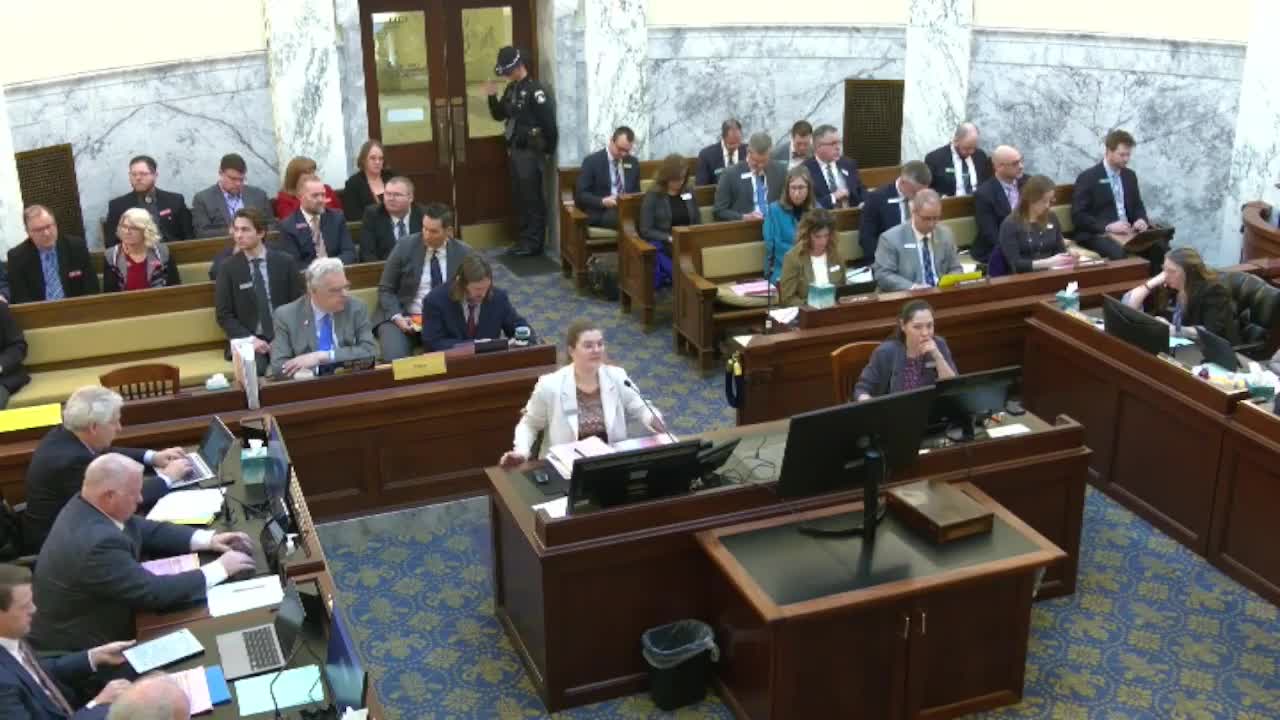
JFAC debates $2.5M digital access grant and DEI language; both substitute and original motions fail
Summary
JFAC debated a proposed $2.5 million Digital Access for All Idahoans grant on March 7, citing uses under the federal Digital Equity Act; after substitute and original motions split the joint committee, neither funding motion was approved and the committee deferred the item.
The Joint Finance-Appropriations Committee on March 7 debated $2.5 million proposed for a Digital Access for All Idahoans grant run through the Idaho Commission for Libraries and the scope of permitted uses under the federal Digital Equity Act.
Analyst Brooke Dupree presented the Commission for Libraries' budget and the enhancement items before the committee, including a $2.5 million Digital Access for All Idahoans grant, a $42,400 broadband reimbursement enhancement and a $40,000 federal subgrant line.
Senator Carlson offered an alternate motion that removed the $2.5 million digital access grant from the package, arguing the larger grant funded DEI‑oriented projects that the legislature has opposed. Carlson said committee research had found elements the senator described as "DEI." Senator Cook and other members pushed back, noting elements of the program focused on older adults, veterans and rural residents and that the grant flows to local libraries for local use. "This money is for digital training for our seniors to realize how to use the computers," Senator Cook said, adding libraries use the funds for devices, large-print books and cybersecurity.
Representative Tanner and Senator Wintrow questioned the basis for labeling the grant a DEI program and asked for the federal notice; committee staff later said the funding is under the Digital Equity Act. Senator Wintrow said she was uncomfortable with relying on an isolated website or search and urged caution before removing money targeted at helping people access information and services.
Vote sequence and outcome: the committee first considered the substitute motion to remove the $2.5 million. The transcript records a roll call with mixed votes (Senate 6–4; House 5–5; combined 11–9), and the chair announced that "The majority having failed to vote in the affirmative in the House, the motion fails and we will move on to the original motion." The committee then debated the original motion (to add $2.5824 million in total, including the $2.5 million grant). A later roll call on the original motion again split the committee (Senate 6–4; House 5–5; combined 11–9) and the chair announced the motion had failed for lack of a House majority and would be taken up at a later date. The committee then paused for a procedural dispute over how to handle failed motions between the House and Senate sides of the joint committee; co‑chairs said they will bring failed items back to JFAC rather than send them to either chamber under current legal advice.
Why it matters: The funds would have supported digital training, devices and cybersecurity at local libraries with an explicit federal program origin (Digital Equity Act). The committee's discussion shows cross‑chamber disagreement about whether the funds should be retained and highlights procedural disagreement about how the joint committee handles motions that fail on one side.
Speakers: Brooke Dupree (Legislative Services Office analyst) presented the item. Senators Carlson, Cook, Wintrow and Representative Tanner were principal debaters. Committee clerks and co‑chairs participated in the procedural discussion.
Next steps: The item was not approved on March 7; co‑chairs said failed motions will be handled in later JFAC sessions and some items may be brought back for reconsideration.