Get Full Government Meeting Transcripts, Videos, & Alerts Forever!
Get email alerts on the State Revenue Forecast topic
No spam. Unsubscribe anytime.
Joint finance committee accepts EROC revenue recommendation, adopts cautious targets for FY2025–26
Summary
The Joint Finance-Appropriations Committee accepted the Economic Outlook and Revenue Assessment Committee's revised general fund revenue recommendations, setting more cautious targets than the governor's budget for FY2025 and FY2026.
The Joint Finance-Appropriations Committee on Friday accepted a report from the Economic Outlook and Revenue Assessment Committee (EROC) recommending lower general fund revenue estimates than those in Governor Brad Little's budget for fiscal years 2025 and 2026.
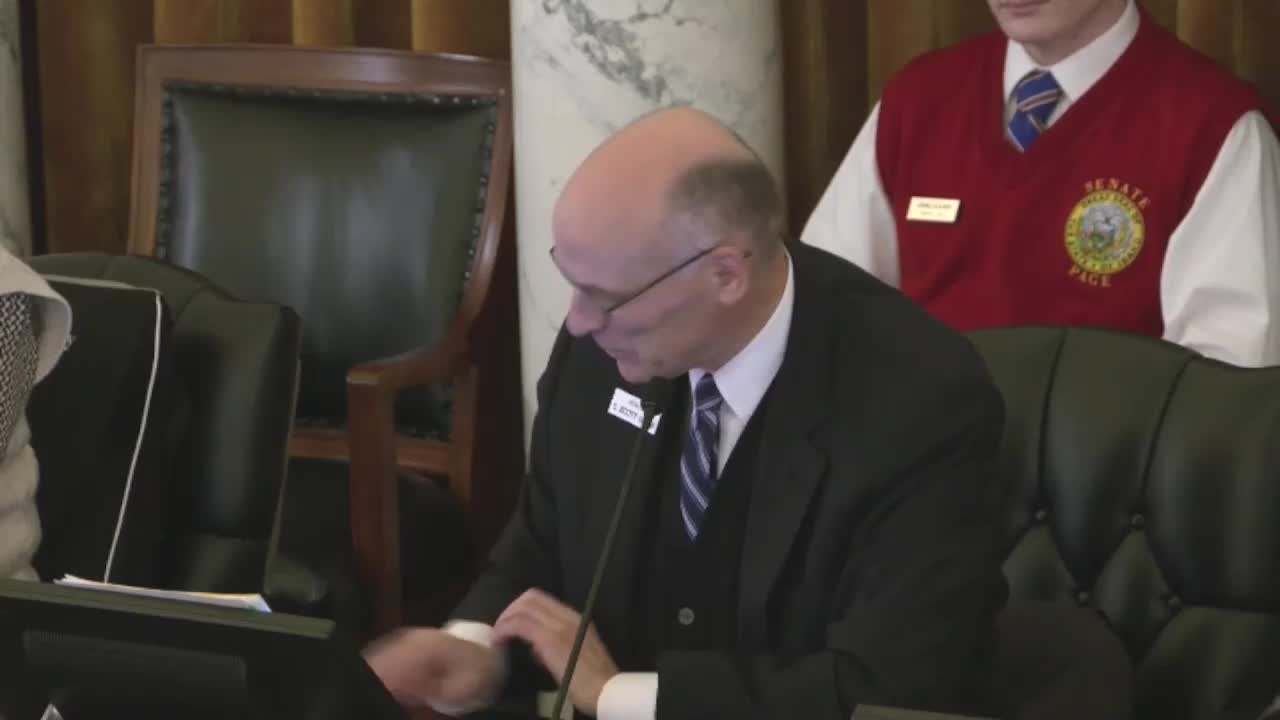
EROC co-chair Senator Kevin Cook told the committee the panel recommends setting available general fund revenues at $5.99 billion for fiscal 2025 and $6.40 billion for fiscal 2026. Those figures are below the governor's proposed totals: the governor's revenue forecast presented earlier showed roughly $5.95 billion for fiscal 2025 and $6.26 billion for fiscal 2026; EROC's recommendation represents a more cautious baseline than the governor's projections.
The committee framed the recommendation as part of its constitutional duty: the Idaho Constitution, article VII, section 11, requires that state appropriations be balanced within available revenues. Representative Jeff Ehlers, EROC co-chair, thanked committee members and the experts who testified for the committee's work.
EROC said its median projections reflect analysis of tax and business data and testimony from economists and industry representatives. The report noted uncertainty tied to Federal Reserve actions on inflation and to the potential effects of the presidential election on national economic conditions.
The Joint Finance-Appropriations Committee accepted the report by unanimous consent during the meeting. The acceptance places the EROC median revenue estimates before JFAC as the committee begins budget-setting hearings and signals a more conservative revenue baseline for appropriation decisions.
Why it matters: Revenue estimates set the envelope for discretionary spending decisions. A lower revenue baseline reduces the amount available for programs unless the committee opts to use reserves, transfers, or higher revenue assumptions later in the session.
What happens next: JFAC members will use the adopted revenue targets as they consider program maintenance bills, agency budgets and enhancement requests during hearings scheduled in the coming week.