Get Full Government Meeting Transcripts, Videos, & Alerts Forever!
Get email alerts on the Education Funding topic
No spam. Unsubscribe anytime.
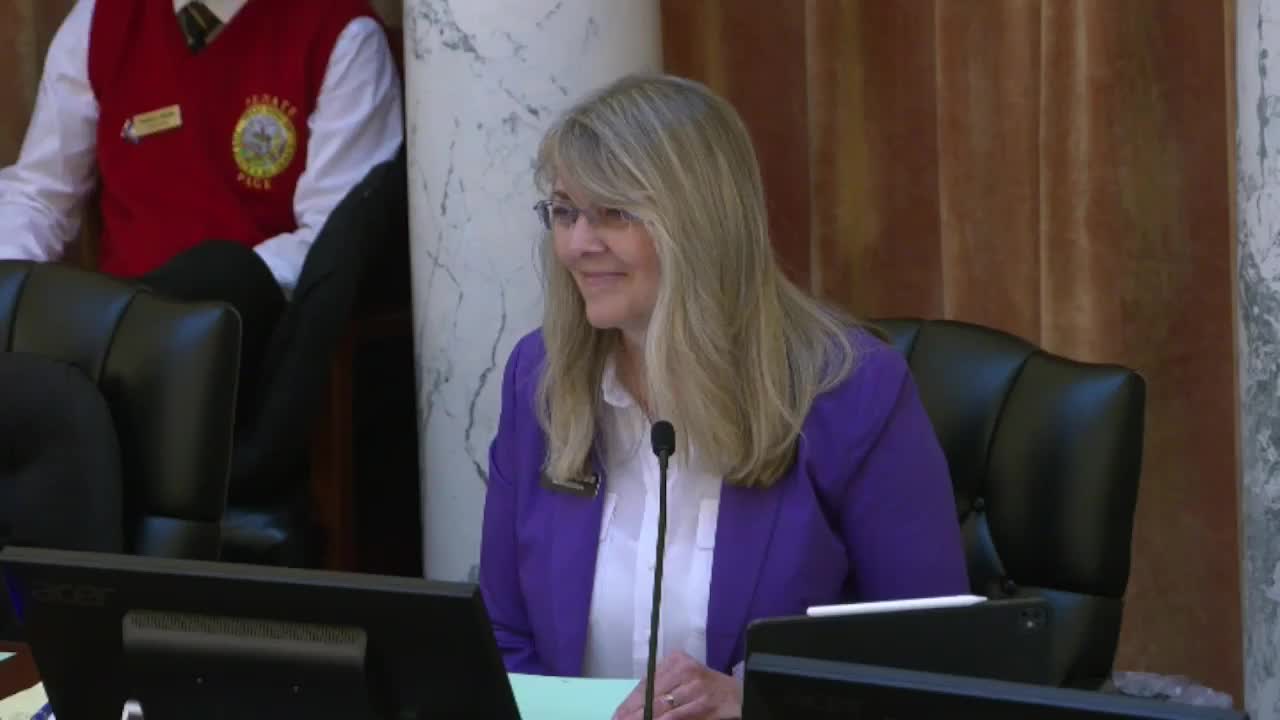
House Education Chair Doug Pickett urges balanced boost for rural schools, CTE and teacher pay
Summary
House Education Chairman Doug Pickett told the Joint Finance-Appropriations Committee that Idaho has increased K–12 spending and teacher pay over the past decade but still faces large facility, special education and other funding gaps, and urged continued investment in rural schools and career and technical education (CTE).
House Education Chairman Rep. Doug Pickett told the Joint Finance-Appropriations Committee on March 7 that the state has made significant progress on K–12 funding over the last decade but must keep focusing on rural schools, teacher recruitment and career and technical education.
"If we steadied the ship and allowed good fiscal policy to have its effect, that the good times would return," Pickett said, describing budgetary conditions after the 2008 recession and thanking the committee for subsequent investments.
Pickett said Idaho's K–12 budget has doubled over the last 10 years, from $1.4 billion to $2.8 billion, while student counts rose by under 9 percent, and that average K–12 teacher pay is "nearly $63,000 this school year," a roughly 42 percent increase over the decade. He thanked the committee for an additional $83 million in teacher salary increases approved this year and for offering school districts the option to enroll teachers in the state health insurance plan two years ago, a benefit he estimated at about $4,000 per teacher.
Why it matters: Pickett framed the choices facing Idaho as a balance between maintaining a classical academic foundation (math, science, communication and history) and expanding support for vocational and technical pathways. He said secondary demand for CTE is high but the largest capacity constraints are at the postsecondary level—community colleges—and that both secondary schools and community colleges struggle to recruit qualified CTE instructors because private-sector pay competes with public institutions.
Pickett stressed the centrality of rural public schools to Idaho communities and warned that inadequate funding for rural districts is a bigger threat than school choice. He cited definitions used in state law for rural districts (fewer than 20 students per square mile or districts in counties with fewer than 25,000 residents) and said about 80 percent of Idaho school districts meet that definition. He urged higher per‑student funding to cover special education, transportation, facilities, recruitment and retention, English language learners and gifted programs.
Pickett and others on the committee listed several estimated funding gaps: about $3 billion for school facilities statewide, an $83 million gap for special education, $5 million to retool teachers in phonics-based early literacy, and $35 million for outcome‑based funding. He also said his committee expects a report from the Office of Performance Evaluations on K–12 characteristics and funding later the same day.
On federal funding, Pickett said his committee is watching proposals for block grants or direct payments from the U.S. Department of Education and wants any federal assistance to be used for its intended K–12 purposes rather than redirected.
Speakers who questioned or responded briefly included Senator Woodward, who emphasized the governor's $25 million recommendation to add community college CTE capacity; Pickett said he and his committee "wholeheartedly support" that effort.
Looking ahead: Pickett urged continued targeted investments to sustain rural schools and expand CTE capacity without sacrificing core academic instruction.