Get Full Government Meeting Transcripts, Videos, & Alerts Forever!
Get email alerts on the Permanent Building Fund topic
No spam. Unsubscribe anytime.
Permanent Building Fund proposes $122 million in projects; lawmakers press Division of Public Works on timelines and deferred maintenance
Summary
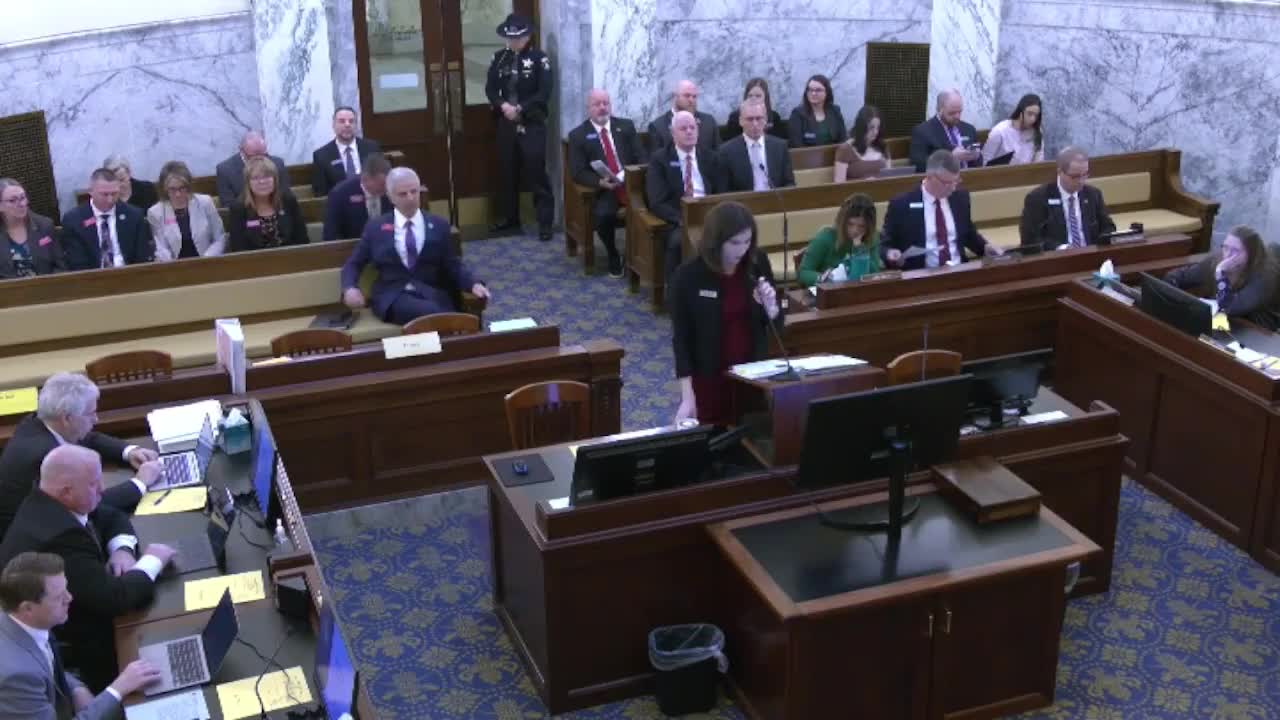
The Joint Finance-Appropriations Committee heard a presentation from Legislative Services analyst Frances Lippett on the permanent building fund and the Division of Public Works, which together manage state capital and deferred maintenance projects funded by the permanent building fund.
The Joint Finance-Appropriations Committee heard a presentation from Legislative Services analyst Frances Lippett on the permanent building fund and the Division of Public Works, which together manage state capital and deferred maintenance projects funded by the permanent building fund.
Lippett told the committee that the permanent building fund is structured for multi-year projects and that unexpended balances often become continuously appropriated pursuant to the statute cited in the presentation. She reported the total value of active public works projects is about $1.9 billion, of which roughly $1.4 billion is capital projects and about 42% of capital funding is committed. Lippett said the division typically expends $50 million to $70 million of appropriation in a project’s first year; in fiscal 2024 the division expended approximately $11 million of an original appropriation.
Why it matters: the permanent building fund finances large building and maintenance projects across state agencies and higher-education institutions; multi-year commitments and continuously appropriated balances make the fund’s near-term expenditures difficult to compare to standard annual operating budgets.
Lippett summarized the Division of Public Works’ FY2026 recommended package, which the transcript lists in line-item amounts: $6.5 million to expand a Department of Lands Ponderosa office (including security and restroom/shower improvements); $5.56 million for utilities to support a future readiness center in Bonneville County; $5.525 million toward a Lewiston District 2 facility for Idaho State Police (ISP) after prior attempts to purchase and retrofit an existing building failed; $2.5 million to add labs at Boise State’s Micron Center for Materials Research; $14 million toward a life sciences complex at Idaho State University; and $8 million for a joint military science and veterans assistance center at the University of Idaho. Lippitt also listed $12.5 million to restore an appropriation repurposed in FY2025 and about $68.2 million for alterations, repairs, accessibility and facilities maintenance statewide.
During committee questioning, Administrator Dale Reynolds and deputy Kelly Berard answered detailed operational questions. Reynolds said the Chinden Campus has about $70 million in completed work, roughly $30 million in projects in progress and an estimated $145 million–$160 million in additional deferred maintenance needs depending on scope; he said the campus is largely occupied and Building 3 remains vacant. Reynolds said three of eight Chinden buildings are leased by a private tenant (HP), which holds about 40% of the campus rental square footage; HP’s lease was extended through 2029 with an option for another five years.
Committee members pressed DPW on project pace and the department’s ability to deliver work within reasonable timelines. Reynolds said project timelines vary by delivery method but gave the example of a large prison project that, once under construction, is expected to take about 2.5 years to complete. Lippett and DPW staff agreed to supply a committee-requested listing of projects that have not started construction within the committee’s reporting thresholds and to provide the detailed capital report that DPW publishes to the committee’s SharePoint.
Ending: The committee did not vote on project approvals during the hearing. Members signaled interest in using existing report language that authorizes repurposing of appropriations for projects that have not reached construction milestones and asked DPW to provide the requested project-status lists and to respond with additional information on project bottlenecks and expected timelines.