Get Full Government Meeting Transcripts, Videos, & Alerts Forever!
Get email alerts on the Insurance Pbm Wildfire topic
No spam. Unsubscribe anytime.
Idaho Department of Insurance reports PBM compliance work, describes wildfire insurance pressures and 1332 waiver benefits
Summary
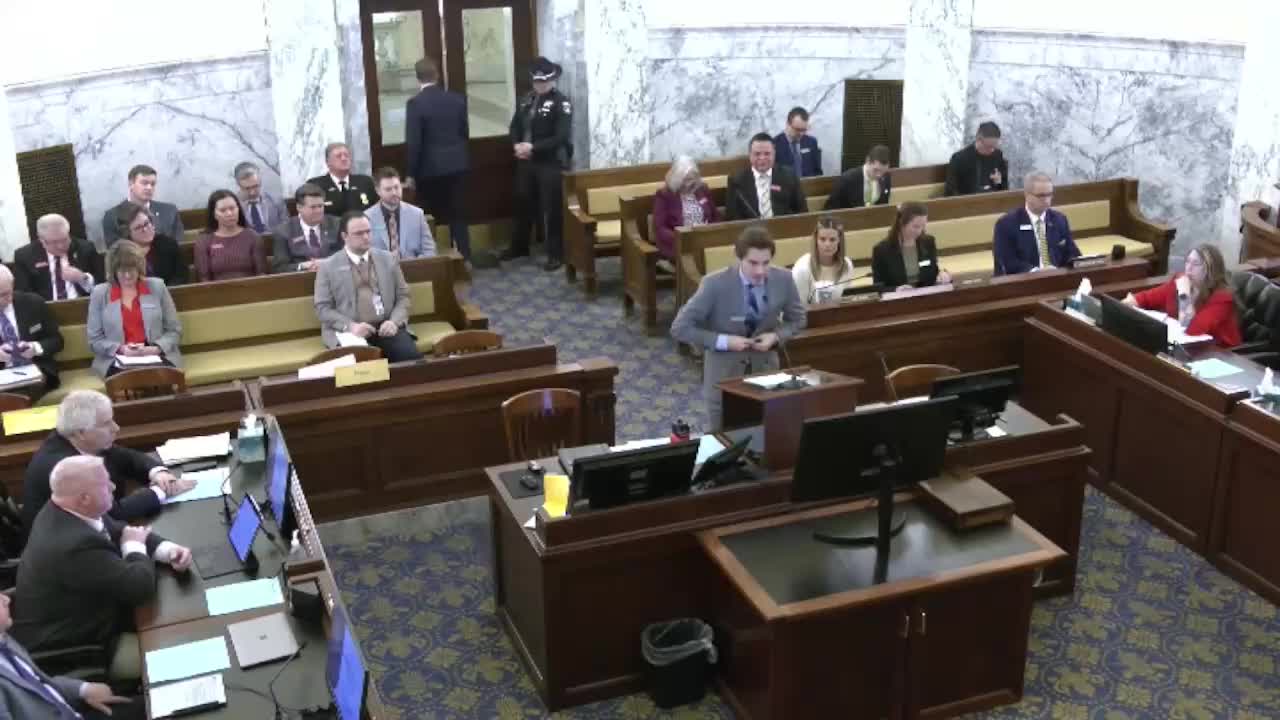
At a Jan. 21 JFAC hearing, the Department of Insurance described implementation work on pharmacy benefit manager reporting and enforcement, the state's use of a 1332 waiver and a high‑risk reinsurance pool to lower rates, and growing wildfire‑driven pressures on the homeowners insurance market.
The Idaho Department of Insurance told the Joint Finance Appropriations Committee on Jan. 21 that it is actively implementing last year’s pharmacy benefit manager (PBM) reform, collecting required PBM data and handling numerous consumer complaints while continuing work on a high‑risk reinsurance pool and a state 1332 waiver that leaders said has helped reduce individual health insurance rates.
Director Dean Cameron told the committee the agency hired staff last year to oversee PBM compliance and had received data submissions from most PBMs in the format required by statute, although a few PBMs had not yet submitted and the department was working to obtain that data. He said complaints to the department span issues from disputed dispensing fees to contractual disputes and nonresponsiveness by PBMs, and he promised a fuller report to the committee as data collection proceeds.
"She's receiving numerous complaints," Cameron said of the new staff analyst; "we're in the process of collecting data from PBMs. They were submitted a required format by which they would be submitting data to us. Most have complied and have submitted their data. And, there are a few that have not." Cameron told the committee the department is also using the PBM data to support statutorily required determinations of dispensing fees.
Republican Representative Furness asked Cameron to explain the state's 1332 waiver and the high‑risk pool. Cameron said the 1332 waiver—pursued with the federal government—helped the state match contributions to reduce premiums and that Idaho has seen reductions in individual health insurance rates compared with five years earlier on an age‑to‑age basis. He described the high‑risk pool as an existing reinsurance mechanism the department continued after the Affordable Care Act; the pool reinsures certain expensive claims (identified by CPT code), pays a share of those claims and spreads the cost to help hold premiums down for other enrollees.
On property insurance, Cameron told members the department has seen tightening in the homeowners market tied to catastrophic losses and reinsurance costs nationwide and several carriers' solvency issues. He said wildfire losses, inflationary and supply‑chain pressures and higher reinsurance costs have led some carriers to reduce writing in parts of Idaho or to nonrenew policies in certain areas. That has increased the use of surplus lines (the non‑admitted market) for homeowners coverage, which the director warned may reduce consumer protections.
"We had a homeowner call us a couple weeks ago from Pocatello, Idaho whose insurance company decided not to renew them. When asked the insurance company said it's because of wildfires in the region," Cameron said, noting that some carrier decisions have appeared inconsistent with local fire risk. He described proposals the department will present this year to create a pool with two functions: help homeowners harden structures against wildfire risk and provide a mechanism to help carriers remain in the Idaho market.
Peterson, the Legislative Services budget analyst, presented the department’s fiscal profile: the Department of Insurance has 75.5 approved full‑time positions (63.5 in insurance regulation and 12 in the State Fire Marshal). The agency reverted just under $2.2 million of its total FY2024 appropriation, split between personnel (about $917,000) and operating expenditures ($1,277,000). In FY2024 about 69.3% of expenditures were personnel costs and 29.5% were operating costs.
The department requested four enhancement items for FY2026: a staff actuary (1 FTP, $201,900 in ongoing funds and $3,000 one time for equipment), a regulatory compliance specialist (position at 80–95% of policy pay grades as described by the agency), compensation increases for the State Fire Marshal and deputies ($48,100 ongoing from the Arson, Fire and Fraud Prevention Fund), and $162,200 in one‑time capital outlay for State Fire Marshal replacement equipment (including turnout gear, cameras and two medium‑duty pickup trucks). Peterson closed his presentation and Director Cameron answered member questions.
Cameron also noted a trailer appropriation implemented after passage of House Bill 596, which amended section 41.349 of Idaho Code to revise definitions and reporting requirements for pharmacy benefit managers. The department said it received one FTP and $132,400 to implement that statutory change.
On wildfires, Cameron said Idaho burned just under one million acres the previous year, that the state lost over 140 structures (about 40 residences) and that mitigation measures and home hardening can make a difference in whether structures survive ember storms. He said the department is working with agents and carriers and intends to propose legislation to assist mitigation and provide options to keep carriers in the state market.
The committee asked for more detailed breakdowns of PBM complaints and the department said it will provide additional detail once data collection is further along. The Jan. 21 meeting did not result in a final appropriation; the enhancement requests and proposed legislation remain subject to JFAC and legislative action.
Less critical details: the Department of Insurance directs premium tax distributions to multiple statutory destinations (including a general fund share and contributions to a high‑risk reinsurance pool); the department described proposals this session intended to reduce homeowner rate pressures and expand mitigation support.