Get Full Government Meeting Transcripts, Videos, & Alerts Forever!
Get email alerts on the Viticulture Research topic
No spam. Unsubscribe anytime.
Idaho grape and wine industry urges support for research position, cites land, labor and water pressures
Summary
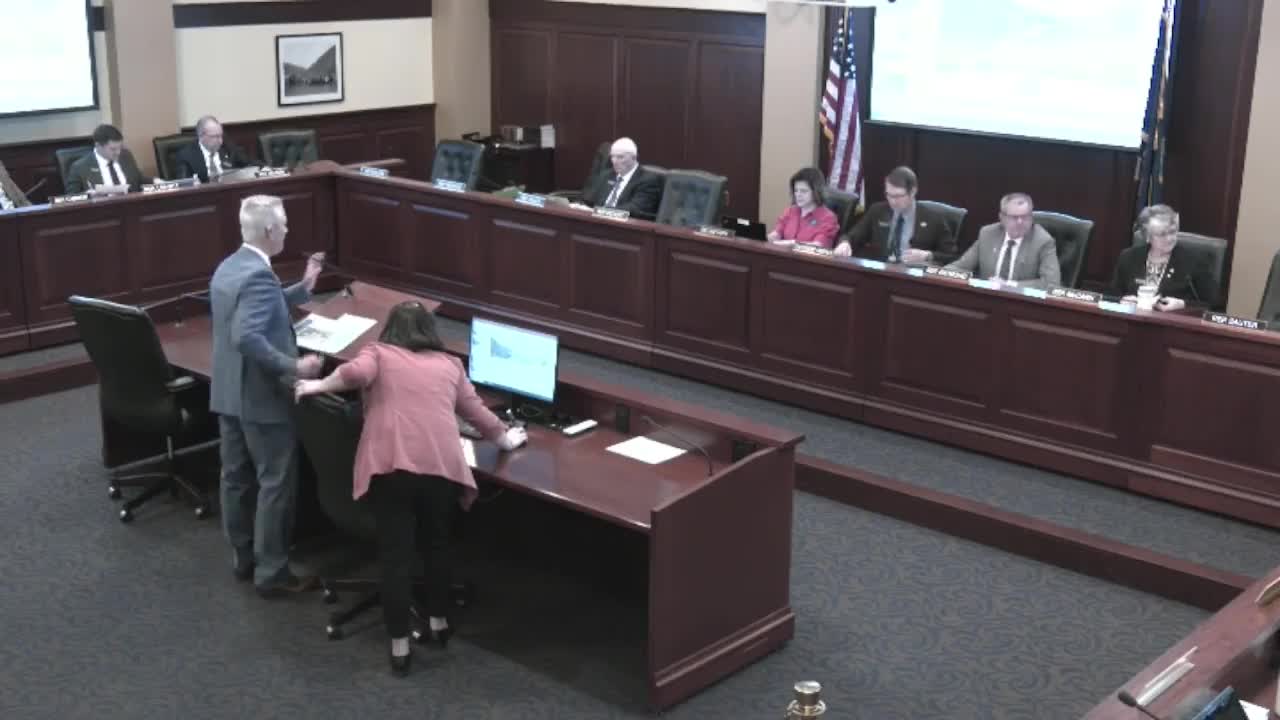
Representatives of the Idaho Grape Growers and Wine Producers Commission told the House Agriculture Affairs Committee that the industry has expanded but faces land loss, labor shortages and a lack of in-state viticulture research; they urged support for a University of Idaho viticulturist and described reliance on grant funding and local markets.
Roger Batt, legislative adviser for the Idaho Grape Growers and Wine Producers Commission, told the House Agriculture Affairs Committee the state's grape and wine industry has expanded but faces constraints on land, labor and research capacity.
"We really support having a viticulturist because we don't have one right now to help the industry out," Batt said, describing the commission's request for a viticulture position at the University of Idaho to provide local research and extension support. Batt told the committee Idaho now has about 1,350 acres of vineyards, 70 vineyard sites and roughly 2,800 tons of grapes harvested in 2023; he said the industry's total economic value in 2022 was approximately $314,000,000.
Commission director Moya Dolesby outlined the commission's funding model and reliance on specialty crop grants and event revenue. "We're funded by the wine excise tax," she said, and noted annual excise revenue of roughly $350,000 plus about $40,000 in optional industry assessments. Dolesby said specialty crop grants have been an important source of education and marketing funds but are not guaranteed and that a recent freeze of grant disbursements briefly threatened operations until funds were released.
Winemakers and growers described industry realities from both production and business perspectives. Melanie Krauss, owner and winemaker of Cinder Winery, said her businesses buy grapes from seven local growers on contracts and that local sales and the ability to ship directly to customers remain important for small wineries. "Selling locally is really important and then also being able to ship directly to our customers is, really important as well," she said, noting regulatory and licensing burdens for interstate direct shipping.
Grower and vineyard owner Jay Hawkins described capital intensity and timelines for planting and returns: "It normally costs between $20,000 and $25,000 per acre to plant and install the infrastructure to support a vineyard," he said, and estimated a 10-to-12-year return on initial investment for his first vineyard. He also noted that grapes can be water-efficient compared with some crops when using drip irrigation.
Committee members asked about mechanization, the economic development value of a U of I position, and distribution limits caused by state three-tier systems. Batt and the industry witnesses said a local viticulturist would speed diagnosis of pests and diseases, reduce reliance on out-of-state experts, and support variety trials and extension education. No committee action on this briefing was recorded in the transcript.