Get Full Government Meeting Transcripts, Videos, & Alerts Forever!
Get email alerts on the Employee Compensation topic
No spam. Unsubscribe anytime.
Major debate on pay increases for state employees ends with lawmakers withdrawing competing motions
Summary
Lawmakers vigorously debated two competing approaches to state employee pay (a flat $1.55-per-hour supplement vs. a merit-or-percent approach) and discussed market adjustments for IT and trooper pay; both the original and substitute motions were withdrawn to allow more time for staff work and further deliberation.
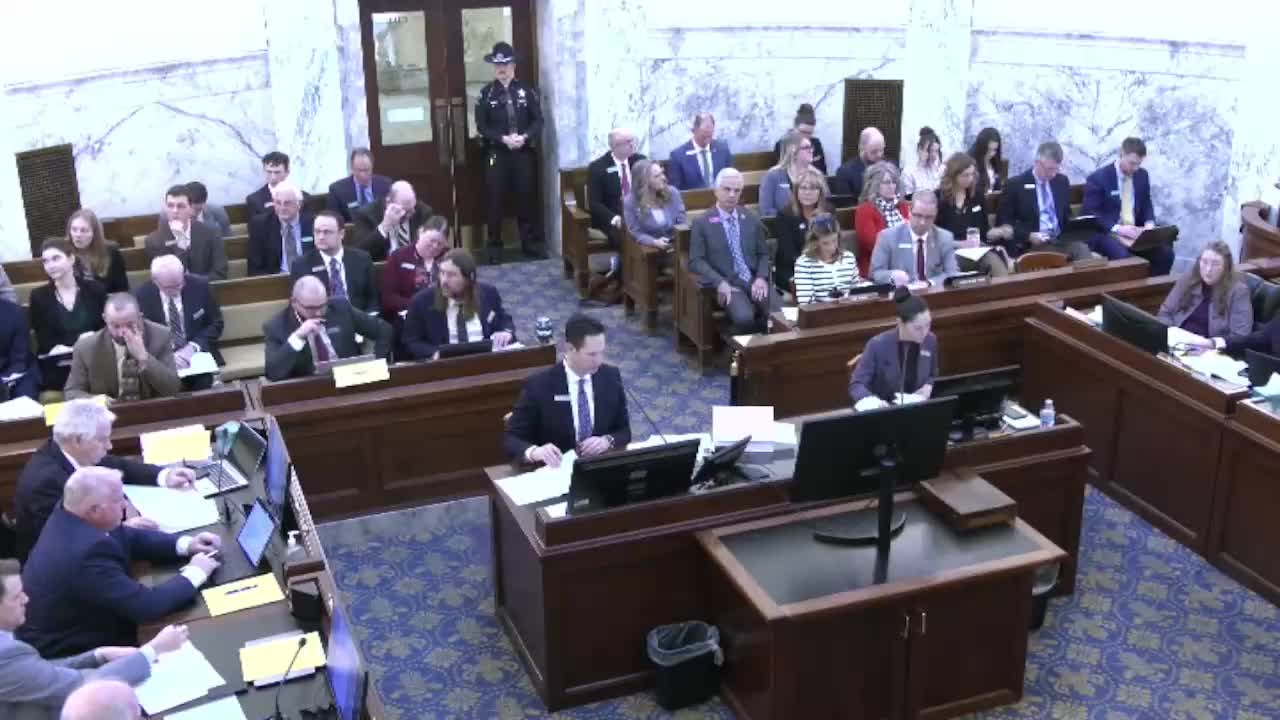
The Joint Finance and Appropriations Committee held extended debate over proposals to adjust state-employee pay for FY2026. Representative Furness read the CEC committeerecommendation: a $1.55-per-hour supplement for permanent state employees (with additional targeted increases: 8% for state troopers, $1.55 or 3% for nursing/healthcare workers, whichever is greater, and a 4.5% market adjustment for classified IT and engineering positions). Furness then amended the motion on the record to include classified and nonclassified IT and engineering staff omitted earlier.
Senator Cook offered a substitute motion framed as a merit-based structure: an ongoing annual increase of $1.55 per hour or 4%, whichever is higher, distributed on merit, plus the same targeted increases for troopers, nursing/healthcare workers and IT/engineering positions. Debate included broad policy arguments about equity, merit, and market competitiveness of state pay: - Senator Cook argued in favor of merit and market adjustments, highlighting critical recruitment and retention needs for high-skill positions and saying higher pay for top performers helps retain staff with heavy responsibilities. - Representative Furness and others argued the $1.55-per-hour approach provides larger percentage increases for lower-paid employees and helps reduce turnover at the bottom of the pay scale. - Senator Ward Engelking and others described long-term turnover trends and the committeeresponsibility to keep state compensation competitive.
Committee members and staff also discussed public-school support amounts (a separate line in the packet) and how to compare substitute and original totals. Representative Furness's original motion (as re-read) totaled $128,373,200 General Fund, $34,322,100 dedicated funds and $14,785,400 federal funds, for a combined $177,480,700. Senator Cook's substitute motion totaled $42,233,900 General Fund, $32,460,800 dedicated funds and $13,918,700 federal funds, for a combined $88,613,400.
After extended debate and several procedural adjustments to include omitted nonclassified IT staff, both sponsor groups agreed to withdraw their motions so staff could update and reformat the proposals for further review. Senator Cook formally withdrew his substitute motion by unanimous consent; Representative Furness likewise withdrew his original motion so the committee could pause and allow staff time to prepare corrected language and packet lines.
Why it matters: The committeelevel decisions on pay methodology (flat supplement, percentage, or merit-based) affect hiring, retention and pay equity across all state agencies and public schools. Lawmakers signaled the issue requires more time for technical accuracy and political consensus.
Next steps: The co-chairs and staff said they would reconvene the compensation proposals at a later session after staff produce corrected packet materials and that maintenance-budget work will proceed separately the following day.