Lifetime Citizen Portal Access — AI Briefings, Alerts & Unlimited Follows
Committee holds House Bill 4; sends RS31950 on multifactor authentication to second reading
Loading...
Summary
The committee held House Bill 4 in committee and approved sending RS31950—an updated version that clarifies multifactor authentication requirements and the Office of Information Technology Services' role—to the second reading calendar.
The House Commerce and Human Resources Committee on Wednesday voted to hold House Bill 4 in committee and to send RS31950 to the second reading calendar. The measures concern requiring multifactor authentication for state network access and clarifying the Office of Information Technology Services' (OITS) authority over executive-branch cybersecurity.
Representative Bridal Raybel, who identified herself as representing District 34, told the committee that House Bill 4 addresses a commonly identified weakness in network security: people. "House bill 4 addresses what's 1 of the most commonly, identified issues with network security and that's people," she said, and described multifactor authentication as a secondary confirmation beyond a password that confirms a user's identity before granting access to email, OneDrive or other state network services. Raybel said the bill "restores a strikeout" from the earlier version and does not change the bill's intent.
Raybel said about "88% of state employees have switched over and are doing multifactor," and that the remaining roughly 12% have been harder to enroll. She also said the RS narrows the language about OITS to apply to the executive branch and agencies, clarifying that OITS can direct cybersecurity activities for executive-branch agencies.
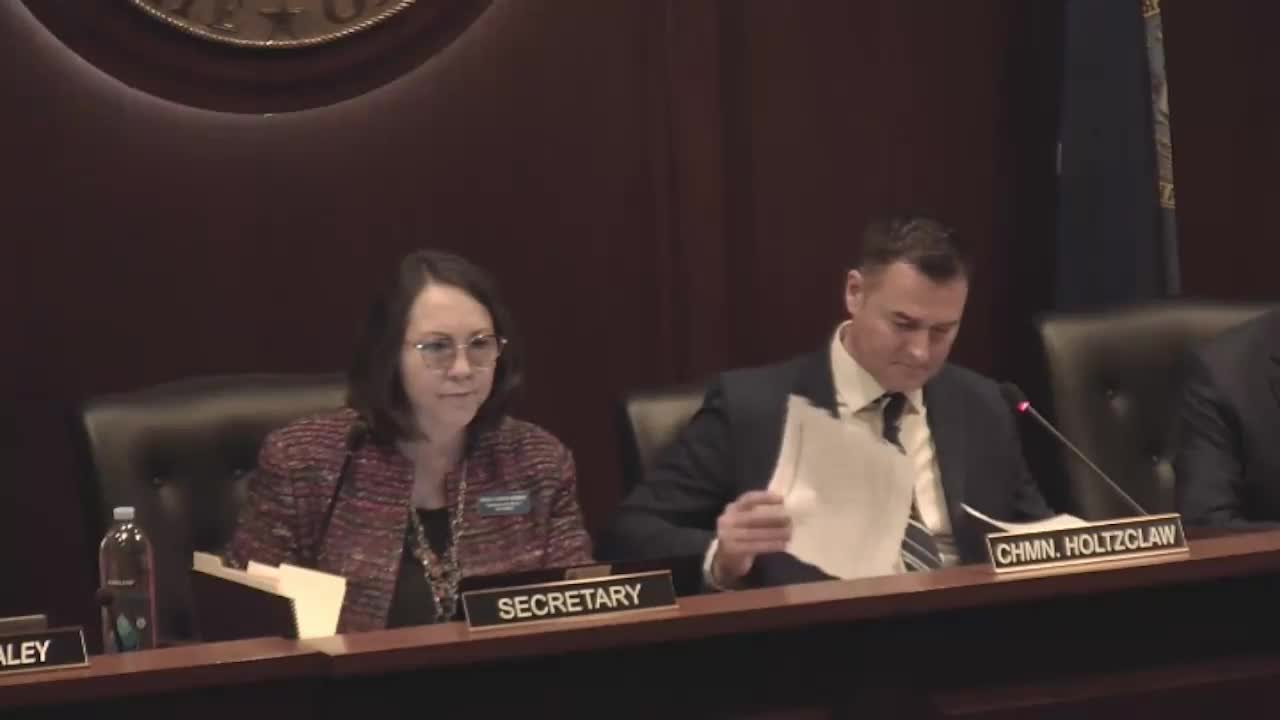
Representative Weber moved to hold House Bill 4 in committee; the motion passed by voice vote. Weber then moved to introduce RS31950 and send it to the second reading calendar; the committee approved that motion as well. Representative Fuhrman asked whether a committee recommendation (a "due pass") was required for sending the RS to the second reading calendar; the chair replied that it was not. Representative McCann asked why the RS was being sent to second reading rather than returning for a public hearing; the chair explained that because House Bill 4 had already received a public hearing and the RS was essentially the same, sending the RS to second reading would speed the process.
The committee did not record roll-call vote tallies in the transcript; the chair recorded both motions as passed by voice vote. The RS now proceeds to the chamber's second reading calendar, while House Bill 4 remains held in committee.