Get Full Government Meeting Transcripts, Videos, & Alerts Forever!
Get email alerts on the Education Finance topic
No spam. Unsubscribe anytime.
Committee reviews scholarships and grants budget; state board plans data on outcomes
Summary
The committee heard a presentation on the Office of the State Board of Education’s Scholarships and Grants program, which administers the Opportunity Scholarship, the Rural and Underserved Educator Incentive Program and other awards. The board said it will return performance and outcome data requested by members.
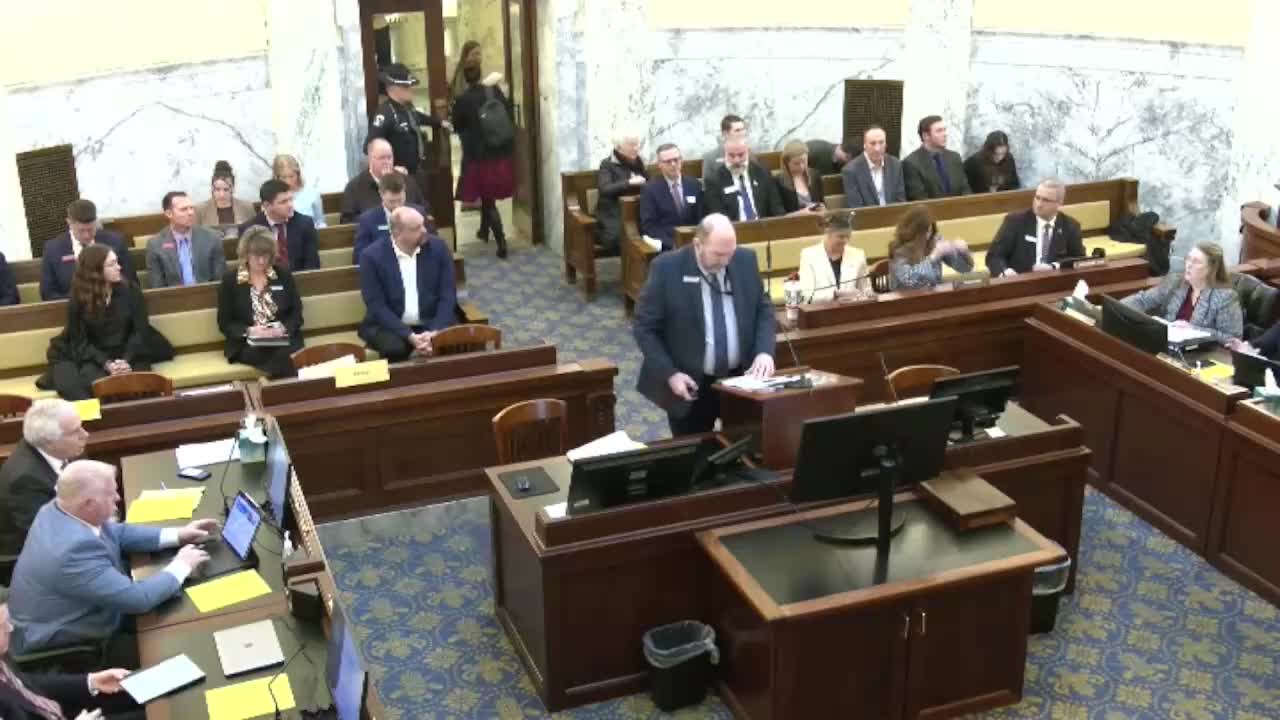
Kevin Campbell, budget and policy analyst with the Legislative Services Office, briefed the committee on the Scholarships and Grants program, one of the special programs administered through the State Board of Education. The program administers the Opportunity Scholarship, Armed Forces and Public Safety Officer Scholarship, the Gaining Early Awareness and Readiness Undergraduate (GEAR-UP) related grants, Idaho Work Study and the Rural and Underserved Educator Incentive Program.
Campbell said 99.5% of the program’s spending is trustee and benefit payments and roughly 0.5% is personnel costs because most spending is scholarship awards. The program has 1.35 authorized FTP and no vacancies reported in the materials.
Josh Whitworth, executive director of the State Board of Education, told the committee that some administrative load for the scholarship programs is borne by other State Board staff under different budgets, which reduces the personnel percentage shown in the Scholarships and Grants budget.
Members asked about performance and outcomes, specifically retention and recruitment for the Rural and Underserved Educator Incentive Program and whether the Opportunity Scholarship’s minimum GPA threshold (2.7 GPA in current materials) is limiting access. Whitworth said the board will provide additional outcome data, including cohorts, district-level allocations for the rural/underserved incentive program, and retention indicators. Campbell noted the Opportunity Scholarship appropriation was $7,000,000 in FY2021 and the Rural and Underserved Educator Incentive Program began in FY2023 with subsequent appropriations.
No final appropriation decisions were made at the hearing.
Why it matters: scholarship program funding and program design influence student access to postsecondary education and teacher recruitment in rural and underserved school districts.