Get Full Government Meeting Transcripts, Videos, & Alerts Forever!
Get email alerts on the Industrial Commission Budget topic
No spam. Unsubscribe anytime.
Idaho Industrial Commission seeks IRIS maintenance, staff and vehicle funding amid rising caseloads
Summary
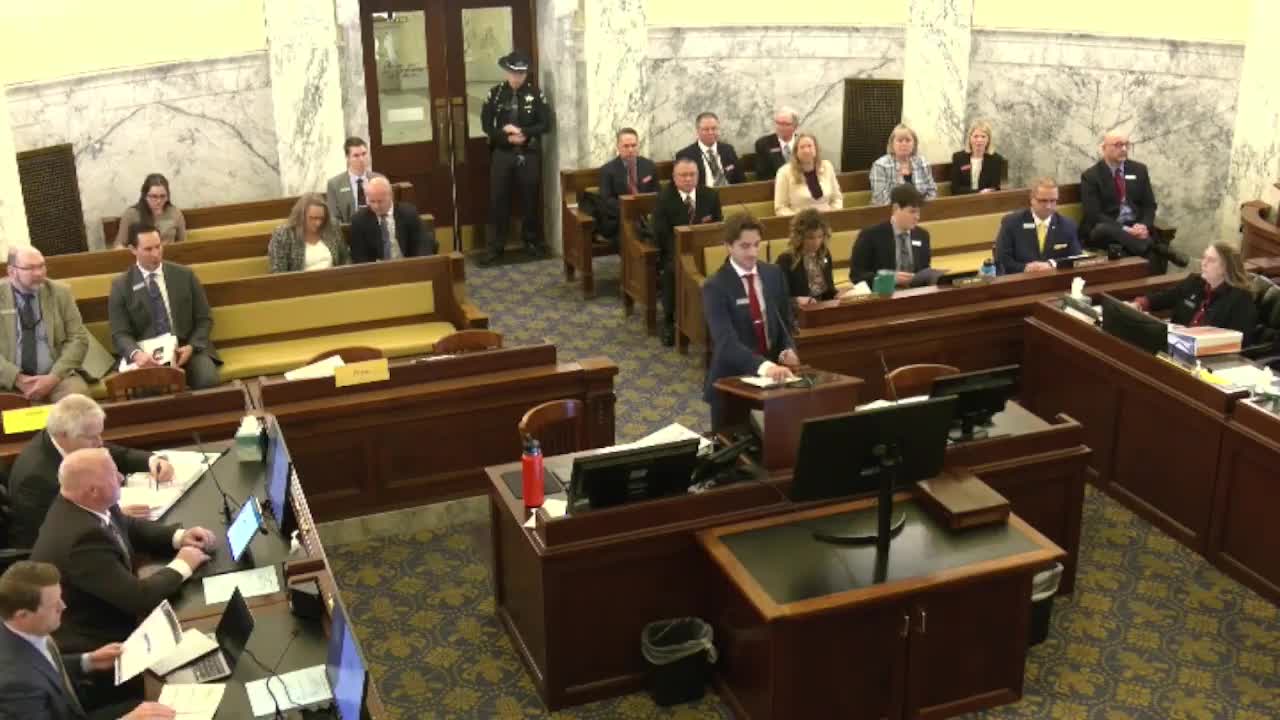
The Idaho Industrial Commission asked the Joint Finance Preparation Committee on Jan. 23 for ongoing and one‑time funding to support its information systems, fill vacant positions and replace aging field vehicles.
The Idaho Industrial Commission asked the Joint Finance Preparation Committee on Jan. 23 for ongoing and one‑time funding to support its information systems, fill vacant positions and replace aging field vehicles.
Noah Peterson, budget and policy analyst for the Legislative Services Office, told lawmakers the commission’s FY2026 budget includes 10 enhancement requests that would add $298,200 in ongoing appropriations and $554,200 in one‑time funding, with no new authorized full‑time positions. Peterson noted the agency has 130.25 FTPs total and had 12 vacant positions as of August; the commission plans to use some of those vacant FTPs to fund requested roles.
Why it matters: The Industrial Commission administers workers’ compensation adjudication, a rehabilitation program for injured workers and the Crime Victims Compensation Program. Funding decisions affect how quickly injured workers and victims receive benefits and how promptly staff can process payments and compliance actions.
Most requested increases relate to staffing and IRIS support. The commission asked for a one‑time $288,000 contract to provide long‑term technical support for IRIS (the Industrial Commission Redesign Information System). Peterson said the original plan anticipated support from the Office of Information Technology Services, which is not currently available, and that the one‑time contract is intended to bridge that gap until ITS can provide ongoing support.
Agency officials said IRIS modernized paper‑based workflows and increased data available to staff, but also shifted some tasks and increased downstream work. “IRIS did increase our business system efficiency,” Director George Gutierrez said, “but some responsibilities that used to fall to our referees are now shifting back to our legal associates to determine whether electronically received information meets statutory requirements.” Gutierrez told the committee the system has increased the volume of compliance referrals and produced “nearly 60% more cases” identified for follow‑up.
Key staffing requests described to the committee include: - a senior financial technician (ongoing $66,500) to help the fiscal team reduce payment turnaround in the Crime Victims Compensation Program; Peterson said the target turnaround time is 30 days and that, at the time of the budget submission in August, there were roughly 872 outstanding payments with an estimated turnaround of about 12 weeks; the additional position is intended to restore prior processing capacity; - a rehabilitation field consultant for Twin Falls and Burley (ongoing $32,300) to fund a position at a higher hourly rate in an area that handles “about 35% more cases” than the state five‑year average; - a referee (ongoing $111,600) to return the adjudication team to five referees after a retirement in 2020; the agency reported average case‑decision time increased from about 90 days to about 110 days after the vacancy; - reclassification for five adjudication associates (ongoing $25,500) to increase salary grade from H to I (roughly a $2 per hour raise); - a technical records specialist (ongoing $62,300) to help prepare employer‑compliance cases for referral to the Attorney General’s civil litigation division; and - a $30,000 one‑time contingency for IRIS recommended by ITS for unexpected costs.
The commission is also requesting four small sport‑utility vehicles for field staff (three for rehabilitation staff and one for compensation staff). Gutierrez said the vehicles being replaced range in model year from 2006 to 2011 and carry odometer readings between about 82,000 and 98,000 miles; several field vehicles have recurring mechanical problems and the commission argues replacements are needed for staff safety and reliability.
Fiscal history and funds: Peterson noted the commission is a dedicated‑fund agency and receives no general fund appropriation. The commission’s four funds are the Industrial Administration Fund, the Peace Officer Temporary Disability Fund, the Crime Victims Compensation Fund and a Miscellaneous Revenue Fund (seminar revenue). The Industrial Commission reverted $4,555,000 in FY2024; Peterson said $3,000,000 of that total was trustee and benefit payments and that roughly $2,400,000 of the trustee/benefits reversion came from the Crime Victims Compensation Program. The commission cannot unilaterally repurpose trustee/benefit appropriations without legislative approval.
On the IRIS project overall, Peterson told the committee the Commission received one‑time appropriations totaling $12,874,000 between FY2021 and FY2025 for development and related work. Gutierrez and staff said much of the earlier appropriation was for development phases and enhancements; current requests focus on maintenance, contracted support and replacement items (IT hardware, monitors, laptops and docking stations totaling about $104,200).
Governor’s recommendation: The governor’s budget includes a 5% compensation increase (CEC) for commissioners (about $22,400) but does not recommend the IRIS contingency fund. The governor’s recommended amounts were shown in the committee packet and differ from the full commission request in a few line items.
Committee reaction and follow up: Committee members pressed the commission on three themes—why IRIS increased downstream workload rather than reducing it, whether reverted funds could be used to fill positions, and full accounting of IRIS costs. Peterson directed operational questions about use of reversion and IRIS specifics to Director Gutierrez; Gutierrez said most reverted funds were trustee and benefit payments and would require special legislative action to be reallocated. Gutierrez also agreed to provide a more detailed written breakdown of IRIS expenditures and the ongoing support plan at the committee’s request.
No formal votes were taken at the hearing; the Commission presented its FY2026 enhancement requests and answered committee questions.
The committee is expected to review the commission’s written follow‑up on IRIS costs and more detailed vehicle/fleet information before making final budget decisions.