Get Full Government Meeting Transcripts, Videos, & Alerts Forever!
Get email alerts on the Department Of Agriculture Budget topic
No spam. Unsubscribe anytime.
Idaho Agriculture budget highlights quagga mussel response, investigator pay proposal
Summary
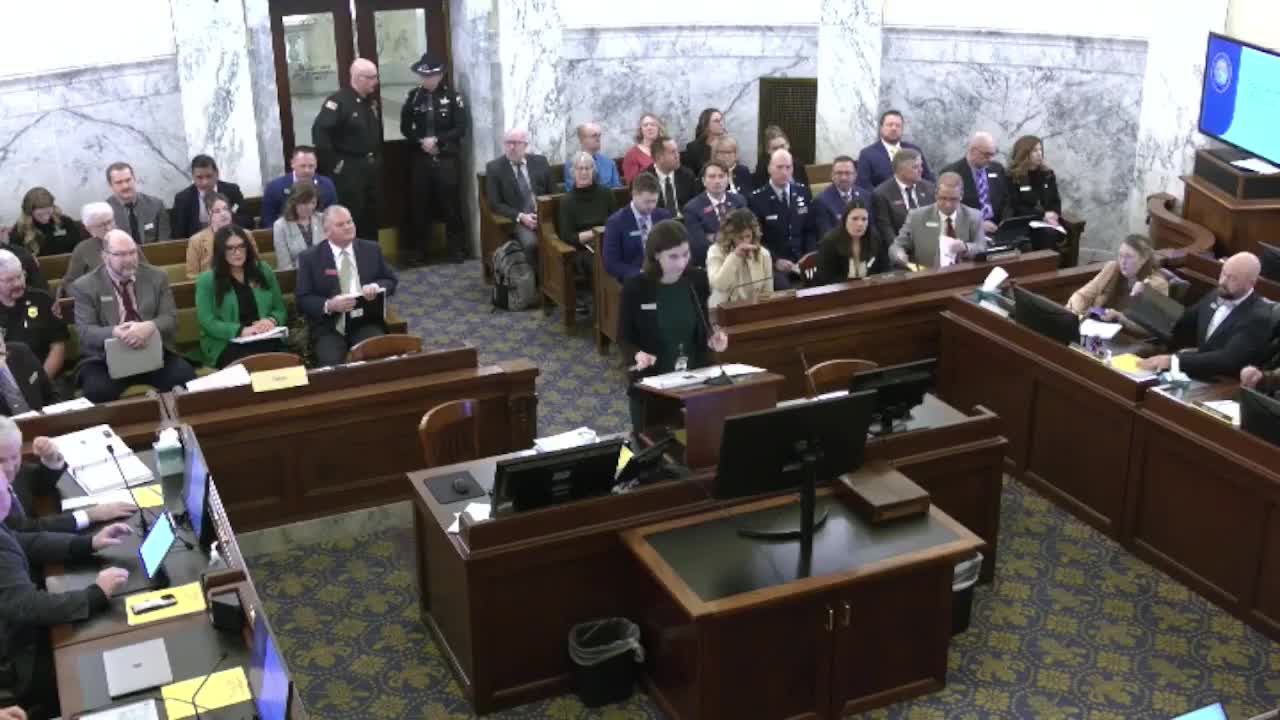
The Joint Finance Appropriations Committee on Friday heard an overview of the Idaho State Department of Agriculture’s FY2026 budget requests focused on quagga mussel response, funding for investigator pay, equipment replacements and other enhancements.
The Joint Finance Appropriations Committee on Friday heard an overview of the Idaho State Department of Agriculture’s budget, emphasizing funding tied to quagga mussel response and steps to retain and develop agricultural investigators.
Frances Lippett, a budget and policy analyst with Legislative Services, told the committee the department’s statutory responsibilities are set out in multiple titles of Idaho Code and described the department’s eight budgeted programs, led by plant industries and animal industries. Lippett said the department has maintained a roughly 91% staffing rate and that over 81% of appropriated personnel dollars were expended on personnel costs.
Why it matters: The department has drawn significant dedicated and one‑time general fund resources to respond to invasive quagga mussels and to support other emergent needs. Those choices affect the department’s dedicated fund balances and future appropriations.
Lippett said last session the Legislature provided a one‑time $5,000,000 general fund infusion to the invasive species fund and an ongoing $1.5 million general fund appropriation for quagga mussel response staffing and check‑station needs. She described the invasive species fund funding sources, noting the fund is primarily supported by a watercraft sticker fee collected by the Department of Parks and Recreation and used for inspection and decontamination stations.
Department director Chanel Tewell described operational actions the department took in calendar 2024: "By every measure, that work has increased," she told the committee, referring to expanded sampling and more watercraft inspections statewide after treatments on the Snake River. Tewell said Idaho doubled sampling and increased inspections last year and that in 2024 the department performed a treatment on the Snake River.
The department asked for several FY2026 items Lippett summarized. Notable requests include: - Ongoing enhancements totaling $518,300, including $340,400 to create a pay structure (career ladder) for the department’s 53 agricultural investigators to improve retention and career progression. Lippitt said 23 of those investigator senior positions have been with the department less than two years and only nine have 10 or more years’ experience. - Change in employee compensation for fresh fruit and vegetable inspectors (standard annual request for positions outside statewide CEC). - One‑time requests of about $1,110,000 for replacement items (including about $891,000 for vehicles and $214,700 for IT hardware such as laptops). - A FY2025 deficiency warrant request for exotic species response of $1,724,300.
Representative Mitchell asked specifically about the vehicle replacement request; Lippett said she would provide a list and recalled the request covered about 17 vehicles, mainly pickup trucks and a couple of SUVs. Senator Wintrow and others pressed Lippett to clarify the mix of general fund and fee revenue used for quagga mussel response; Lippett reiterated the Legislature provided an ongoing $1.5 million general fund appropriation for staffing and check stations and a prior one‑time $5 million general fund transfer into the invasive species fund.
On other topics, Tewell told the committee Idaho does not have state control over consumer meat inspection and described the federal preemption under the Federal Meat Inspection Act as a historical and practical limit on state influence. "If you talk to a federal inspector, they say that Idaho is the hardest state to staff excluding Alaska," she said, describing rural staffing challenges.
The presentation closed with Lippett confirming the governor recommended the department’s requested enhancements with adjustments to align pay proposals for fruit and vegetable inspectors with the statewide recommendation.
Looking ahead: The committee did not take a formal vote on the requests during the hearing. Staff said they will provide the vehicle list and any additional requested clarifications on grant and transfer items.