Get Full Government Meeting Transcripts, Videos, & Alerts Forever!
Get email alerts on the School Choice Voucher Like Program topic
No spam. Unsubscribe anytime.
RS 32171 introduced to create Idaho Education Opportunity Program; sponsor outlines eligibility, per-student transfer and fiscal estimates
Summary
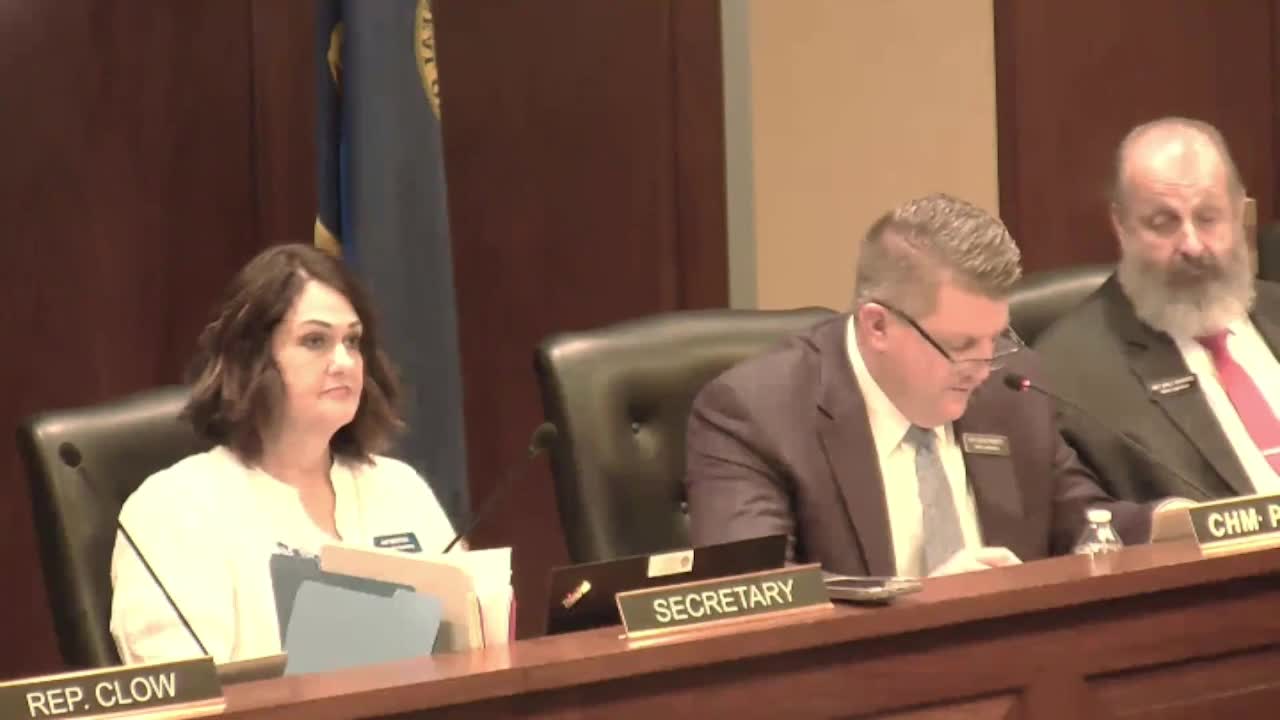
Representative Lance Clow presented RS 32171, the Idaho Education Opportunity Program, proposing that the state share of per‑pupil funding follow eligible students into education opportunity accounts for private tuition or personalized education plans.
Representative Lance Clow (District 25) presented RS 32171, the Idaho Education Opportunity Program (IEOP), a school‑choice proposal to allow the state portion of per‑pupil funding to follow eligible students who leave public schools into education savings accounts that may be used for private school tuition, curriculum and approved services.
Clow said eligibility would be limited: the student must be a prior public‑school student (grades 1–12) or a kindergarten entrant who has not previously attended private school. The bill sets an adjusted gross income (AGI) eligibility cap of $75,000. Clow explained the funding formula would be based on the state’s average per‑pupil distribution (he cited an estimated 2025 average of $8,440); 80% of that average would follow the student into an education opportunity account while 20% would remain with the resident district to "reserve a seat" and cover certain obligations. Using the 2025 average estimate, Clow said the typical amount that would follow a student would be roughly $6,700, with about $1,688 retained by the district.
Clow described special education treatment (he said special‑education students could be eligible for the full state amount), the ability to use account funds for a range of approved expenses, and the requirement that parents provide annual nationally normed assessment results or use local assessments to show a year of growth. Money left in an account could roll over year‑to‑year and, if re‑applied, could be used for post‑secondary education.
Clow also outlined a fiscal estimate in the introductory remarks: he said the State Department of Education would likely need two additional staff (estimated cost under $200,000 including benefits) to administer the program; third‑party administration fees were capped at 3.5 percent and he estimated about $730,000 for those costs in an early estimate; he projected an income‑tax reduction of roughly $8.6 million from permitting certain tuition deductions; and combined new program outlays and tax changes could total about $14 million in his rough projection. Clow said he estimated initial program participation around 3,100 students (roughly 2,000 switching students, 600 qualifying kindergarten entrants and about 500 personalized education plans), but he emphasized those are estimates contingent on capacity and qualifying families.
Committee members asked technical and policy questions: Representative Harris asked whether the $200,000 estimate for two staff included benefits (Clow said it does); Representative Church asked whether students must be admitted to a private school prior to receiving funds (Clow said there is no admission requirement but funds may be limited to approved uses and refunded if the student attends public school); Representative Tanner asked how homeschoolers would be treated (Clow said families choosing a personalized education plan would no longer be classified as homeschoolers under the program and tutors cannot be immediate family); Representative Thais and others expressed philosophical and implementation questions that the sponsor said would be handled in a full hearing.
Representative Mendoza moved to introduce RS 32171; the committee voted to introduce the RS on a voice vote. The RS will proceed to a full bill hearing for more detailed fiscal analysis, enrollment projections, and implementation rules.